Satellite Radio Not Working in a Car: Signal and Receiver Checks
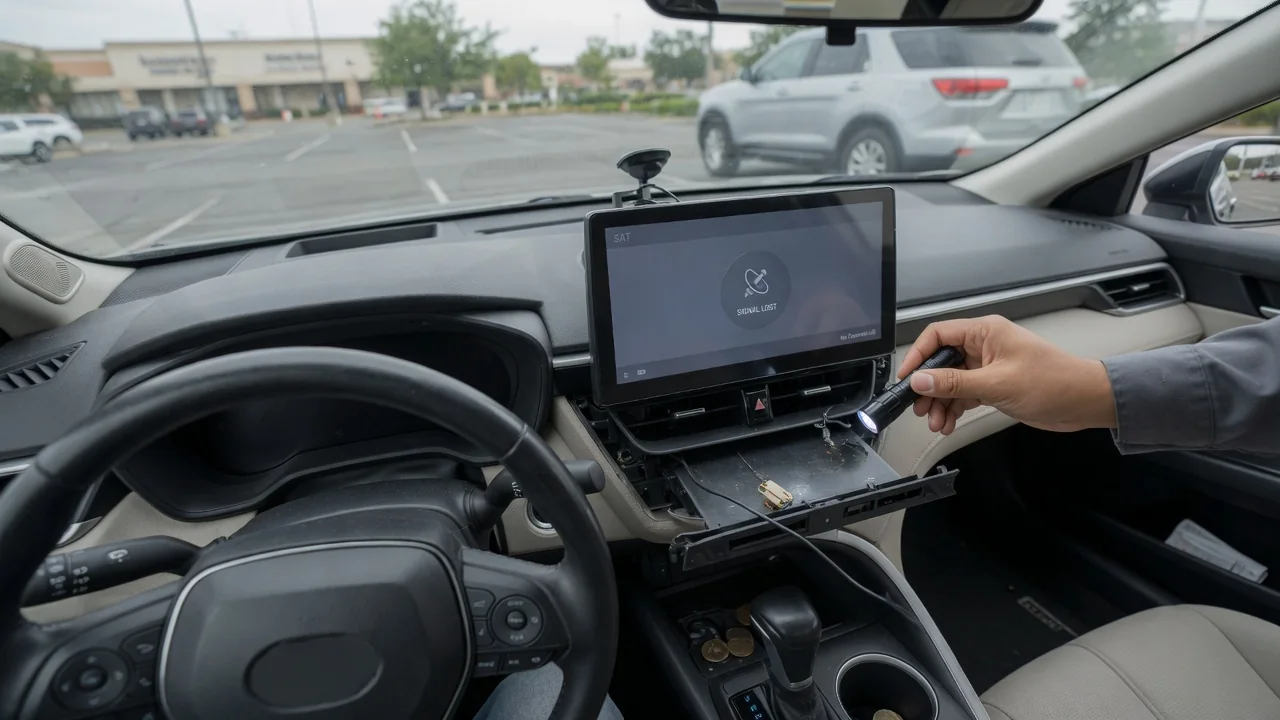
When Sirius radio is not working in a car, the cause usually falls into one of three areas: the signal reaching the antenna, the activation status of the receiver, or the hardware between the roof and the dashboard. This guide explains how each part behaves, what the display messages tend to suggest, and which checks make sense before a professional diagnosis.
What This Topic Covers
Satellite radio not working in a car can mean several different things, and the distinction matters. Some drivers see every channel go silent, others can tune only a preview or information channel, and some find that the satellite source has vanished from the audio menu altogether. Each pattern points in a different direction. Silence everywhere with a signal-related message suggests reception, a limited channel lineup suggests the receiver is not currently authorized, and a missing source suggests the head unit is not communicating with its tuner.
The scope here is the vehicle side of the problem: the antenna, the cable run, the tuner module, the head unit and the power feeding them. Subscription and billing matters belong to the service provider and are not something a vehicle inspection can settle. Details also vary widely between vehicles. Menu names, message wording, tuner location and even the way the radio identification number is displayed differ by manufacturer and model year, so the owner's manual remains the reference for anything specific to one car.
How It Works in a Vehicle
A satellite radio system starts with a small antenna, commonly housed in a roof-mounted fin or a low puck on the roof or trunk lid. It receives a digital broadcast from satellites and, in many urban areas, from ground-based repeaters that fill in where buildings block the sky. Because the antenna contains an amplifier, it needs power as well as a signal path, and both travel through a coaxial cable routed behind the headliner and trim panels to the tuner.
The tuner may be built into the head unit or housed in a separate module elsewhere in the vehicle, linked to the audio system through the car's data network. It decodes the broadcast and checks whether the receiver is authorized to play each channel. Authorization arrives over the air as a signal addressed to that radio's unique identification number, which is why a receiver generally needs a clear view of the sky and time with the ignition on before a newly activated or refreshed service starts playing.
Common Variations
Factory-installed systems and add-on receivers fail in different ways. In a factory system, the antenna often shares its housing with navigation and cellular antennas, so damage to that housing or water entering its seal can affect more than one function. Aftermarket setups frequently use a magnetic antenna with a thin cable routed through a door or trunk seal, where pinching and chafing are common. Dock-style receivers add another variable, since they may depend on an auxiliary cable or a short-range FM link to reach the car's speakers.
The messages on the display vary too, though they fall into recognizable families. Wording about no signal or acquiring signal points toward reception conditions. A message asking to check the antenna usually means the tuner sees an open or shorted antenna circuit, which is evidence worth investigating rather than proof the antenna itself has failed, because a loose connector or damaged cable can produce the same warning. Messages about an unsubscribed or unavailable channel relate to authorization. Exact wording is manufacturer dependent and should be confirmed for the specific vehicle.
Everyday Use and Observations
Anyone asking why is my Sirius radio not working in my car should first notice where and when it cuts out. Dropouts in parking garages, tunnels, under bridges, beside tall buildings or beneath dense tree cover are normal behavior, because the antenna needs a line of sight to the sky. If sound returns within moments of driving back into the open, the system is probably healthy. A loss that persists on an open highway under a clear sky deserves closer attention.
Other clues are easy to gather from the driver's seat. Compare satellite with FM and Bluetooth audio; if all sources are silent, the fault lies with the amplifier or speakers rather than the satellite side. Note whether the trouble began after a windshield replacement, roof rack installation, body repair, battery disconnection or software update. Roof cargo carriers and some metallic items placed over the antenna can weaken reception. A radio that has sat unused for a long period may also need time outdoors to receive a fresh authorization signal.
Limits and Next Steps
Owner checks have sensible boundaries. It is reasonable to park outside with an unobstructed sky, switch the vehicle off and back on, confirm the correct source is selected, look over the antenna housing for cracks or looseness, and consult the manual for the fuse that protects the audio system. Finding the radio identification number in the menu is also useful, since the provider needs it to confirm status and resend an activation signal. Whether the account itself is active is a question only the provider can answer.
Beyond that point, diagnosis usually requires tools and access that make professional help worthwhile. Tracing an antenna cable means removing headliner or pillar trim, which may sit near side curtain airbags and should not be disturbed casually. A technician can measure the antenna circuit, check for stored codes in the audio or tuner module, and verify software levels. Any such code narrows the search but still needs testing to confirm a cause, and its meaning should be checked against information for that exact vehicle.