FM Radio Not Working in a Car: Antenna and Tuner Checks
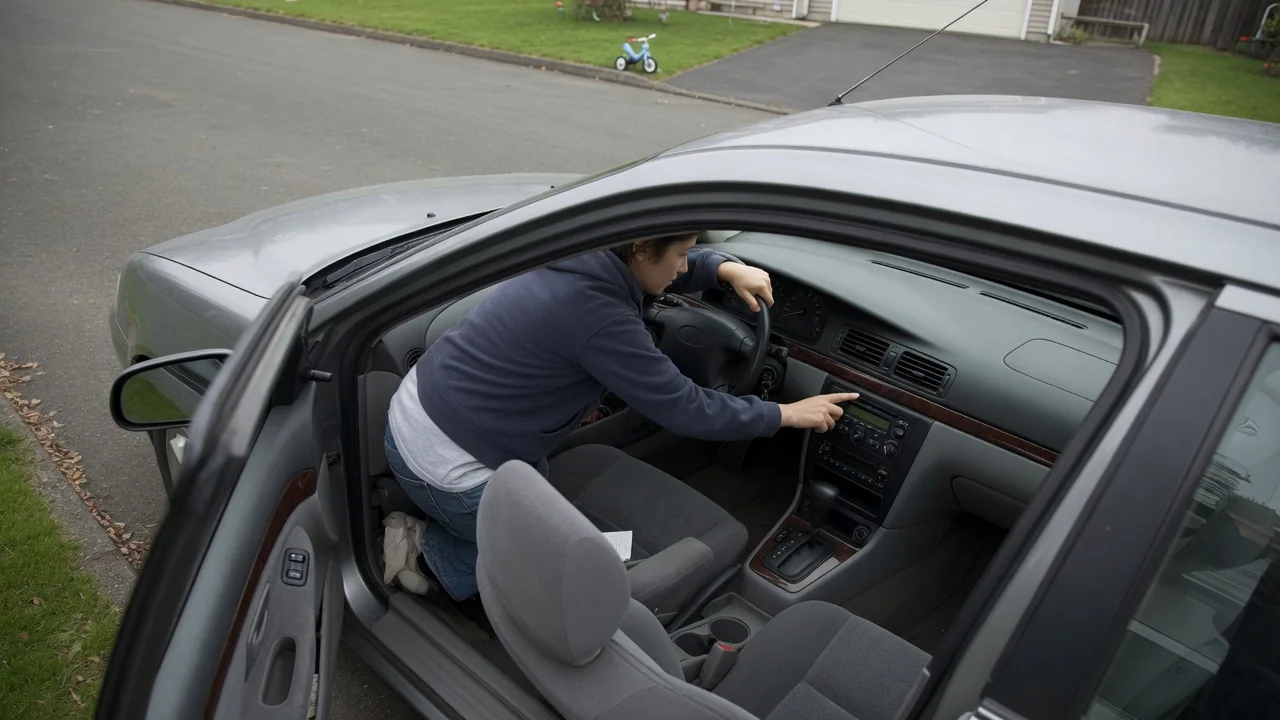
When the FM radio in a car is not working while other audio still plays, the fault usually sits somewhere between the antenna and the tuner inside the head unit. Comparing FM against AM, Bluetooth, and other sources narrows the search quickly, and a few careful observations can show whether the signal path or the receiver itself deserves attention first.
What This Topic Covers
This discussion focuses on reception faults that affect the FM band specifically: stations that vanish, fade into hiss, or refuse to hold during a scan while the rest of the audio system behaves normally. If Bluetooth streaming, a USB drive, or a phone connection plays cleanly through every speaker, the amplifier, wiring to the speakers, and the speakers themselves are doing their job. That single comparison moves suspicion away from the sound output side and toward the parts that capture and decode broadcast signals.
Drivers asking why FM is not working on a car radio often assume the head unit has failed, yet the antenna, its cable, a signal booster, or a simple setting can produce the same symptom. What can be observed from the driver's seat includes whether the display shows a frequency, whether scanning stops on any station, and whether static is present or the output is completely silent. Antenna location, amplifier design, and tuner layout differ between vehicles, so the details need to be confirmed for the specific model.
How It Works in a Vehicle
An FM broadcast reaches the car as a weak radio signal collected by the antenna, which may be a mast on the fender or roof, a short fin housing, or thin conductors printed into the rear or side glass. The signal travels along a shielded coaxial cable to the tuner, often passing through a small amplifier that needs its own power feed from the radio or the vehicle wiring. The tuner selects one frequency, demodulates it, and hands audio to the same amplifier stages the other sources use.
Because every source shares the final audio stages, a clean signal from Bluetooth or a disc proves that portion of the chain. Anything unique to broadcast reception then becomes the area of interest: the antenna element, its ground connection to the body, the coaxial lead and its plugs, the booster and its supply, and the tuner circuitry. A loss of power to an antenna amplifier can leave strong local stations faintly audible while distant ones disappear, which looks very different from a tuner that produces nothing at all.
Common Variations
The pattern across bands offers a useful clue. When AM and FM are both weak or absent, a shared component such as the antenna, its cable, or a common amplifier supply is a reasonable suspect, although some vehicles route the two bands through separate paths. When AM works normally and only FM is missing, the fault may lie in the FM section of the tuner or in a band-specific part of the antenna system. Glass-mounted antennas can also suffer from damaged grid lines or aftermarket window tint containing metallic film.
Aftermarket head units add their own variations. Many require an adapter to match the factory antenna plug, and vehicles with a powered antenna amplifier often need a dedicated wire connected to switch that amplifier on; if it is left unconnected, reception drops sharply after the installation. Radios imported from another market may be set to a different tuning region or frequency step, so local stations never land exactly on a selectable channel. Vehicles with a separate tuner module mounted away from the dash introduce additional connectors and network communication into the picture.
Everyday Use and Observations
Daily driving reveals a great deal before any panel comes off. Reception that is fine in town and fails in open country suggests a weak signal path rather than a dead tuner, while static that changes when the rear defroster is switched on points toward a glass antenna circuit. Noise that rises and falls with engine speed, or that appears only when a phone charger or dash camera is plugged in, indicates electrical interference being picked up alongside the broadcast rather than a failed radio.
Simple visual checks are worth making. A mast that is loose, bent, corroded at its base, or missing after an automatic car wash explains a lot, and water stains near a roof-mounted base can hint at corrosion beneath. Note whether the problem began after a windshield replacement, a stereo installation, a battery disconnection, or bodywork, since each of those can disturb a connector or setting. Checking that the radio is not muted on the tuner source and trying several strong local stations rules out a single broadcaster being off the air.
Limits and Next Steps
Observation and source comparison can narrow the cause but cannot confirm it. Verifying the antenna cable, the booster supply, and the tuner input usually requires access behind the dash or trim, where airbag wiring, fragile clips, and delicate connectors make careless work costly. A technician can test continuity and shielding of the coaxial lead, check for supply voltage at the antenna amplifier, and substitute a known good antenna to see whether stations return, which separates a signal path fault from an internal tuner fault with reasonable confidence.
Some vehicles store fault codes for the audio system or antenna circuit, and these can be read with suitable diagnostic equipment. Such a code is evidence to interpret alongside the symptoms, not proof that a particular part has failed, and many are manufacturer specific, so their meaning should be confirmed against information for the exact vehicle. If testing shows the antenna path is sound and the FM section alone is dead, repair or replacement of the head unit or tuner module becomes the logical discussion to have with a qualified audio or electrical specialist.