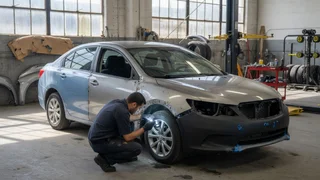
Salvage Vehicle Inspection: What It Is and How It Works
A salvage vehicle inspection is the check a state requires before a car that has been branded "salvage" can return to the road. When an insurer declares a vehicle a total loss, or a state's damage criteria are met, the title is usually converted to a salvage title. In most states a salvage-titled vehicle cannot be registered or legally driven on public roads. After the vehicle is repaired, the owner applies for a rebuilt, reconstructed or similarly named title. The salvage inspection is the step that makes that new title possible. The main point is that this is primarily a legal and administrative inspection, not a mechanical quality review. In many states its main purpose is to confirm the vehicle's identity and the legitimate origin of the replacement parts, so stolen vehicles and stolen components are not laundered through rebuilds. Some states add a roadworthiness or safety component and some do not. Procedures, names, fees and inspecting agencies differ by state, so the requirements of the state where the vehicle will be titled always control.
Where the salvage inspection fits in the title process
Although each state sets its own rules, the path from a salvage title back to a registrable vehicle usually follows the same general sequence.
The vehicle is declared a total loss or otherwise meets the state's salvage definition, and a salvage title or certificate is issued. The owner or rebuilder repairs the vehicle and keeps records of the repairs and of every major part used. The owner applies to the state motor vehicle agency for a rebuilt or reconstructed title and schedules the required inspection. An authorized inspector examines the vehicle and its paperwork. If the vehicle passes, the state issues a title that carries a permanent brand showing the vehicle's salvage history, and the vehicle can then be registered. If it fails, the owner corrects the problems and arranges a retest.
Depending on the state, the inspection may be carried out by the motor vehicle agency, the state police or highway patrol, or a licensed private inspection station that the state has authorized for salvage work. The inspecting body often tells you which agency handles salvage inspections when you apply for the rebuilt title.
What inspectors typically examine
Inspection criteria are set at the state level. The categories below are common, but no single state necessarily checks all of them.
Vehicle identification
Vehicle identification checks are the core of most salvage inspections. The inspector compares the vehicle identification number (VIN) on the dashboard plate, door jamb label and other locations with the salvage title and application documents. They look for signs of tampering, missing or replaced VIN plates and mismatched labels. If a VIN plate is damaged or missing, states generally have a separate procedure for assigning or restoring an identification number, and that has to be resolved before a rebuilt title can be issued.
Proof of parts origin
Rebuilders are commonly asked to show where major replacement parts came from. Examples include body panels, doors, hoods, bumpers, airbags, engines and transmissions. Acceptable proof usually means itemized bills of sale or receipts for new parts. For used parts, it usually means documentation identifying the donor vehicle, often including that vehicle's VIN. Missing or vague receipts are a frequent cause of delays or rejection, because the inspector cannot rule out that a part was stolen.
Repair documentation and photos
Some states ask for photographs of the vehicle before repairs began, along with a written description of the damage and the work performed. Photos show the inspector that the damage was actually repaired rather than concealed. Even where photos are not mandatory, keeping them is good practice and can help if questions arise.
Safety inspection items
Where a state includes a safety inspection, it usually covers basic equipment such as brakes, steering, suspension, lights, horn, tires, glass, mirrors, wipers and seat belts. Airbag systems are a particular focus after a collision, since a deployed airbag must be properly replaced. A warning lamp that stays on can draw scrutiny. Some states use their standard periodic safety checklist for rebuilt vehicles, and others require a separate, more detailed review.
Emissions test
An emissions test may be required as a separate step if the vehicle will be registered in an area with an emissions program. Whether it applies depends on the state, county and the vehicle's age, fuel type and powertrain. Electric vehicles, for example, typically have no tailpipe test. Repairs involving the engine, exhaust or emission control components can affect the result, so it is sensible to confirm everything works before the test.
How a salvage inspection differs from other inspections
Several inspections can sound similar but serve different purposes. The table below summarizes the general distinctions. Exact requirements depend on the state.
Inspection | Main purpose | When it applies | What it does not do; Salvage vehicle inspection | Verify identity, parts origin and, in some states, basic safety before issuing a rebuilt title | Once, after a salvage vehicle is repaired | Does not certify repair quality or remove the salvage brand; Periodic safety inspection | Confirm that required safety equipment works | At set intervals in states that require it | Does not review title history or parts origin; Emissions test | Confirm that the vehicle meets emissions standards | At registration or renewal in covered areas | Does not evaluate structural repairs or safety; Pre-purchase inspection | Give a buyer an independent view of condition | Optional, arranged by a buyer or seller | Has no legal effect on title or registration
The most important difference for buyers is that passing a salvage inspection does not certify that the repairs were done well. An inspector focused on VINs and receipts may never assess frame alignment, weld quality or how crash structures were restored. Anyone buying a rebuilt vehicle should still consider an independent pre-purchase inspection by a qualified technician, ideally one with collision repair experience.
Preparing for the inspection
Good preparation is mostly a matter of paperwork and completeness. Before the appointment, owners and rebuilders generally benefit from the following.
Have the original salvage title or certificate and the completed rebuilt-title application required by the state. Organize itemized receipts and bills of sale for all major parts, including donor-vehicle VINs for used components. Keep before-and-after repair photos and a written summary of the work done. Make sure all VIN plates and labels are present, legible and undisturbed. Confirm that lights, brakes, horn, wipers, seat belts and airbag systems work and that no warning lamps remain on. Complete any required emissions test, or know whether it must happen before or after the salvage inspection. Bring identification and the fee payment method accepted by the inspecting agency.
If the vehicle fails: the retest
A failed salvage inspection is usually not final. The inspector typically notes the reasons, such as missing receipts, a VIN discrepancy or a defective safety item. The owner fixes the problem and schedules a retest. Whether a retest carries an extra fee, and how long the owner has to complete it, varies by state. Problems with VINs or parts that cannot be traced are the hardest to fix, so careful record-keeping during the rebuild matters more than anything done on inspection day.
What passing means for ownership
After passing, the owner receives a branded title, often labeled rebuilt, reconstructed or rebuilt salvage. In some states the paperwork includes a test certificate or inspection record that must be submitted with the title application. The brand stays with the vehicle permanently and usually carries over if the car is retitled in another state. It also typically appears in vehicle history reports.
The branded title has practical effects. Rebuilt vehicles generally sell for less than comparable clean-title vehicles. Some insurers limit coverage options on them, and some lenders are reluctant to finance them. Buyers should factor these effects into the purchase price. Sellers in many states are required to disclose the vehicle's branded status.
Bottom line
A salvage vehicle inspection is the state-mandated gate between a salvage title and a rebuilt title that allows registration. It centers on vehicle identification and proof of where parts came from, and depending on the state it may add a safety inspection and an emissions test. It is a one-time administrative step, not an evaluation of repair quality, and passing it does not erase the vehicle's history. Check your state motor vehicle agency's current requirements before starting a rebuild, and keep complete records throughout. That gives the best chance of passing the first time without a retest.