Replace Hyundai i20 headlight glass
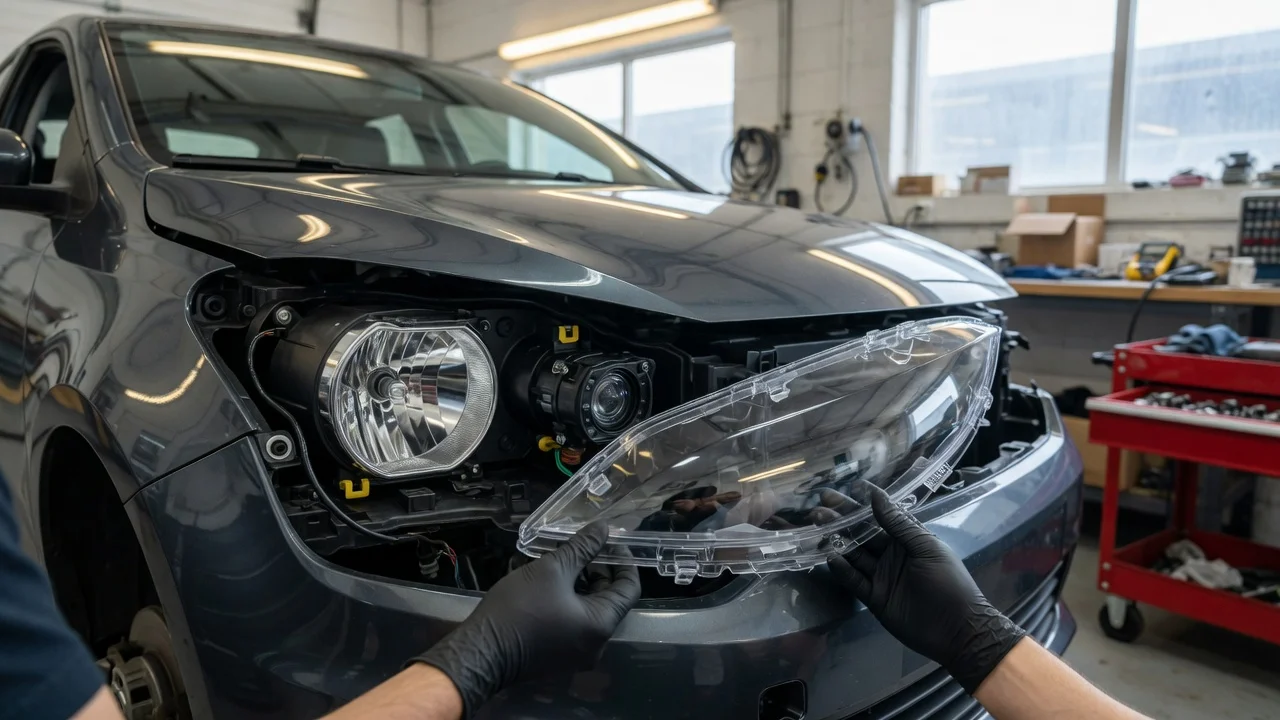
Can you replace only the headlight glass on an i20?
On a Hyundai i20 the outer “glass” is almost always a polycarbonate lens bonded into a sealed headlamp. The usual repair is to replace the complete left or right headlamp unit, not a factory-serviceable outer lens. Aftermarket lens-only covers exist for some generations, but they are not the standard workshop method and they only suit a matching lamp housing. The part that fits depends on generation, model year, market, left- or right-hand drive, and whether the lamp is halogen, projector, or LED.
Lens-only cover versus a full headlamp
A complete headlamp includes the housing, reflector or projector, inner shields, adjusters, and the sealed outer lens. That is the part Hyundai catalogues, and it is the route that restores the original weather seal and beam pattern when the old unit is cracked, misted inside, or the housing itself is broken.
A lens-only cover is an aftermarket outer shell meant to be fitted onto an existing housing after the old lens is cut or unbonded. It can be cheaper when the internals are undamaged, but the result depends on a correct seal, clean mating faces, and a housing that matches that cover. Poor sealing lets in moisture; a warped or mismatched shell can scatter the beam or throw the aim off. If the reflector is dull, the adjusters are seized, or the projector is damaged, a new outer cover will not fix the light output.
When a new lens is enough, and when it is not
Surface haze or yellowing with a sound housing: professional polishing or a UV-resistant restoration may recover clarity without any new part. Deep cracks, holes, or a lens that has already been sanded thin need replacement. Crack or chip in the outer lens, internals dry and bright: a matching aftermarket lens cover is a possible option if you can reseal the unit and then check aim. A complete lamp is the more predictable repair. Moisture, condensation that does not clear, or corrosion inside: replace the whole lamp. A new outer cover on a wet housing will fog again. Broken mounting tabs, smashed housing, or a lamp that will not hold aim: replace the complete unit. LED or projector lamps with failed modules, daytime running lights, or levelling motors: those faults sit in the assembly, so a glass-only part will not restore function.
What must match before you order
Left and right lamps are not interchangeable. Identify the side from the driver’s seat, then confirm the generation. The i20 has been sold in several distinct body generations, each with its own lamp shape, mounting points, and connector. A facelift within a generation can also change the lamp, so year and a photo of the current unit matter more than the model name alone.
Lamp technology has to match the car’s wiring and the hole in the bumper or wing. Halogen reflector units, projector halogen or HID units, and LED units differ in depth, connector, and how they sit in the body. Fitting an LED-style shell onto a halogen car, or the reverse, is a common mismatch. Market and drive-side also matter: a lamp built for one lighting regulation or for right-hand drive will not necessarily beam or mount correctly on a different-market car.
Use the vehicle identification number (VIN) or the part number moulded or labelled on the back of the existing lamp when you can. If those marks are missing or unreadable, a parts counter still needs year, market, trim, and whether the car has halogen or LED lights. Unresolved differences between trims and facelifts should be treated as a no-fit until a matching unit is confirmed.
What replacement involves
A complete lamp is typically released from behind the bumper or inner wing: battery tray or air-box clearance on one side, a few body bolts, the multiplug, and any levelling connector. After the new unit is in, the beam must be aimed. Many markets require a headlamp aim check after a lamp is disturbed. If you fit a lens cover instead, the old unit usually has to come off the car anyway so the joint can be cut, cleaned, bonded, and left to cure before refitting and aiming.
After either job, check for even panel gaps, a dry interior after a hose test or the next wet drive, working dipped and main beam, indicators and daytime running lights, and a level cutoff on a wall or aim bay. Persistent misting, a rattling reflector, or a beam that sits too high or too low means the seal or the aim is still wrong.
Choosing the next step
If the lens is only weathered and the lamp is dry inside, start with restoration. If the lens is cracked or the housing is wet or broken, budget for a complete matching headlamp for that side. Treat a lens-only cover as a conditional repair for a sound, generation-matched housing that you are prepared to reseal and re-aim. Confirm generation, side, and halogen versus LED before paying for any part. Specific prices, stock, torque figures, and which aftermarket covers fit which year were not supplied here, so those details need a VIN-backed parts lookup or a quote from a workshop that can see the car.