Replace a Brake Pressure Sensor: What the Job Involves and When It Changes
The short answer
On many vehicles, the brake pressure sensor is a separate part. It screws into the master cylinder or the ABS/stability control hydraulic unit, and it can be replaced without replacing anything else. Three conditions change that answer. First, on some vehicles the sensor is built into the hydraulic unit and is not sold separately, so the repair means replacing or rebuilding the whole unit. Second, removing the sensor opens the brake hydraulic system, so the brakes must be bled afterward. Third, many vehicles need a diagnostic scan tool to calibrate or initialize the new sensor before stability control, traction control or brake assist will work correctly. Which of these apply depends on the make, model year, market and brake system fitted to your vehicle.
What the sensor does
A brake pressure sensor measures the hydraulic pressure you create when you press the brake pedal. The stability control and brake assist systems use that reading to judge how hard you are braking and how quickly. When the reading is missing or implausible, the control module usually turns on warning lights for ABS, stability control or traction control. It also stores a diagnostic trouble code and may switch off some of those functions. Normal braking through the pedal and hydraulics typically remains, but the electronic safety systems that depend on the sensor may not be available.
Confirm the diagnosis before buying a part
A warning light alone does not prove the pressure sensor has failed. Several other faults can set similar codes or symptoms:
Damaged or corroded wiring or connectors between the sensor and the control module; A fault in the ABS/stability control module itself; Low brake fluid or air in the hydraulic system; A faulty brake light switch, which is a separate part that tells the car when the pedal is pressed; A brake fluid level sensor or brake booster vacuum sensor, which are different parts with similar-sounding names
Reading the stored trouble codes, and live sensor data if the tool can show it, is the practical first step. Code definitions vary by manufacturer, so interpret them using information for your specific vehicle.
Is the sensor serviceable on your vehicle?
Whether the sensor is sold on its own, and where it is mounted, differs between manufacturers and can change across model years, trims and markets within the same model line. Vehicles with and without stability control may use different hydraulic units. Some vehicles use more than one pressure sensor. To confirm the correct part, match it using your vehicle identification number, or match the part number printed on the old sensor or hydraulic unit. A listing that only gives make and model is not enough to confirm fit. No vehicle-specific compatibility data was supplied for this article, so check the details for your car.
What the replacement job involves
Where the sensor is serviceable, the general sequence is similar across vehicles. Exact steps, tightening specifications and fluid type come from the service information for your vehicle and are not covered here.
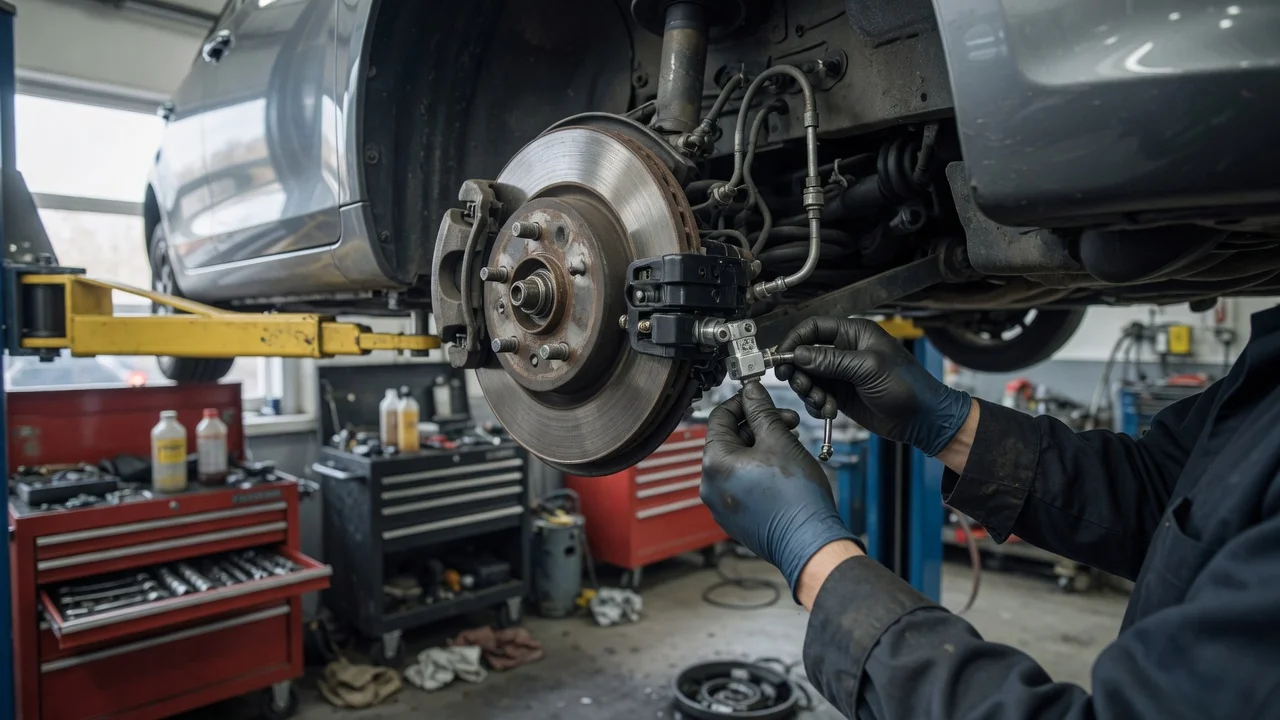
Disconnect the battery if the service procedure calls for it, then unplug the sensor's electrical connector. Limit fluid loss and protect painted surfaces, because brake fluid damages paint. Unscrew the old sensor and fit the new one with any new seal supplied, tightening it to the specified value. Top up with the brake fluid type your vehicle specifies. Bleed the brakes. Some systems need a scan tool to cycle the ABS pump and valves so trapped air is fully removed. Run the sensor calibration or zero-point initialization with a scan tool if the vehicle requires it. Clear the codes, confirm the warning lights go out, and check that the pedal feels firm before driving.
DIY or workshop?
Unscrewing a sensor is often the easy part. The bleeding and the calibration usually decide whether a home repair is practical. Do it yourself only if you have the correct service procedure, can bleed the brakes properly, and have a scan tool that supports bleeding and calibration for your make. Otherwise, a workshop with manufacturer-level diagnostic equipment is the more reliable choice. A poorly bled system or an uncalibrated sensor can leave you with a soft pedal or with stability systems that do not work, so the brakes should be confirmed working correctly before the vehicle goes back on the road. No prices or labor times were supplied, so get a quote that covers the part, the bleeding and any calibration, not just fitting the sensor.