Repair a Truck Body: A Practical Guide to Damage Assessment, Rust Repair, and Structural Decisions
What Is the Essential Answer to My Question?
Repairing a truck body means restoring the load-bearing structure, the exterior panels, or the corrosion protection. The scope of the repair depends on whether the damage is cosmetic, affects the bed or cab structure, or has compromised corrosion-resistant coatings. Panel repair is often feasible with basic metalworking and refinishing tools, while structural damage to frame rails, body mounts, or crumple zones generally requires professional measurement and welding equipment.
Assessing the Type of Truck Body Damage
Start by separating surface damage from structural deformation. Surface damage includes dents, scratches, and paint cracking on removable or non-load-bearing panels such as fenders, hoods, doors, and bedside skins. Structural damage affects components that support the cab, bed, suspension, or towing loads. A dent in a bedside that does not alter the wheel arch or the bed floor is usually panel damage. A shifted bed gap, a door that no longer closes squarely, or visible buckling near body mount points indicates possible structural movement.
Vehicle age and construction also matter. Older body-on-frame trucks often isolate bed and cab damage from the frame, which can simplify repairs. Modern trucks use high-strength steel and aluminum alloys in specific areas. Some aluminum panels require different filler, primer, and corrosion treatment than steel, and some high-strength steel sections cannot be straightened safely with heat.
Repairing Dents and Panel Damage
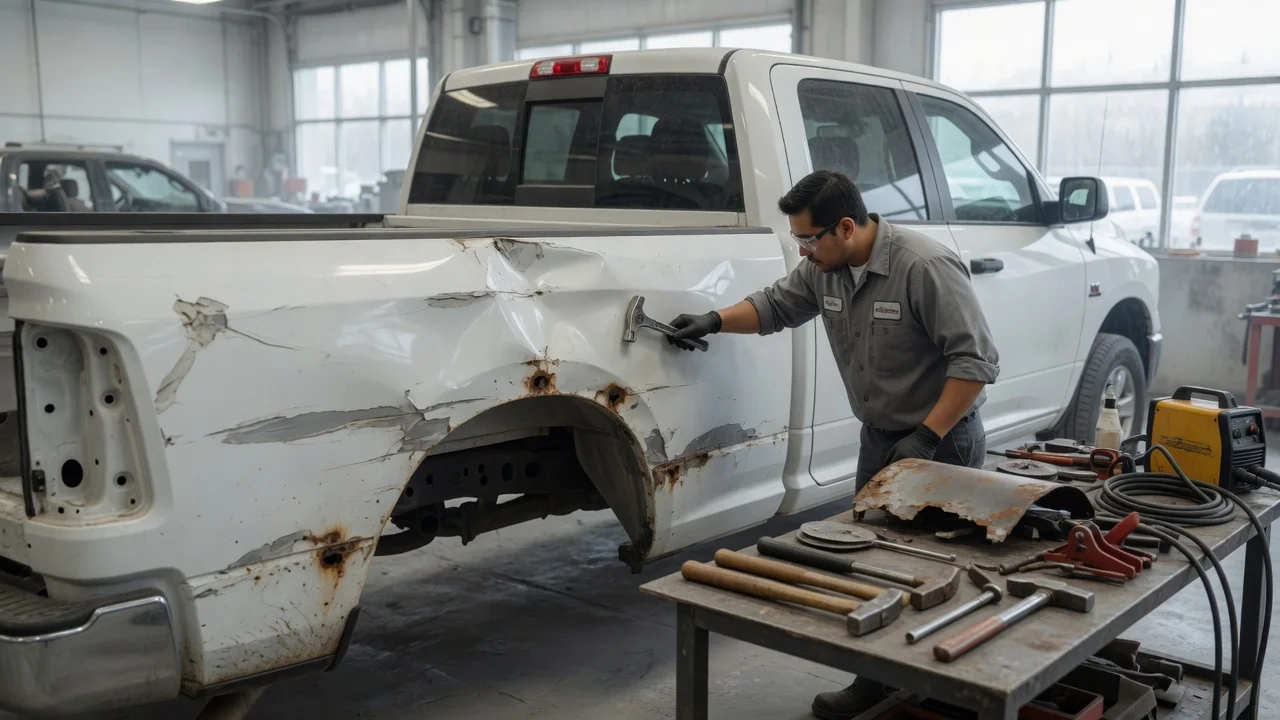
For shallow dents in accessible steel panels, paintless dent repair is an option when the paint is intact and the metal has not been stretched sharply. Deep creases or torn metal require conventional bodywork: hammer and dolly work, stud welding or pulling, body filler, sanding, primer, and repainting. Filler should be applied in thin layers over properly prepared metal, not used to bridge holes or replace missing structure.
For aluminum truck panels, avoid cross-contamination from steel tools that have been used on steel bodywork. Steel particles embedded in aluminum can cause galvanic corrosion. Use separate abrasives and dedicated tooling if possible.
Truck Body Rust Repair
Rust is a material loss and must be removed, not merely covered. The correct repair sequence is to cut or grind away corroded metal until only clean, solid material remains, treat the surrounding area with a rust converter or inhibitor appropriate for the metal, weld or bond in a replacement patch, seal the repair, and repaint. On a truck bed floor, wheel arches, rocker panels, and cab corners are common rust points.
Surface rust can sometimes be removed with mechanical abrasion and treated. Perforation rust, where the panel has holes or loses rigidity, requires patch panels or section replacement. If rust has reached body mount areas or frame rails, stop using the truck for heavy loads or towing until a professional can assess the remaining metal thickness.
What Could Explain This Symptom, and What Should I Check Next?
If you notice a crack, a growing rust blister, or a panel that is separating, inspect the back side of the panel where possible. A rust blister with a brown stain often means moisture entered from behind, frequently from a clogged drain, failed seam sealer, or trapped debris. A crack at a body mount or around a bed bolt suggests load-related flexing rather than simple corrosion. Check for loose bolts, broken welds, or missing reinforcement before patching the visible crack.
For a dent accompanied by a new vibration or pulling, check the frame and suspension mounting points. A wheel opening that is no longer centered over the tire, or a bed gap that is wider on one side, can indicate that the impact shifted the body on its mounts or bent a frame horn. In that case, straightening only the visible panel will not correct the underlying condition.
When to Stop and Seek Professional Diagnosis
Stop using the truck and have it inspected if any of the following is present: visible cracking or rust perforation in frame rails or crossmembers, body mount fasteners that have torn through the floor, a cab or bed that has shifted relative to the frame, or damage within the crumple zones of a modern truck. These conditions can affect crash performance, load carrying, and towing safety. Welding on modern high-strength steel frames may require controlled heat input and specific filler material, which is outside the scope of most DIY repairs.
Materials and Preparation
Basic panel repair requires clean metal, an epoxy or etch primer for bare metal, compatible body filler, sanding blocks, and a sealed topcoat. For rust repair, budget for weld-through primer, patch panel material of similar thickness, and seam sealer. Moisture-cured urethane seam sealer works well on exterior seams, while paintable caulking is not a substitute for welded or bonded repair sections.
Cost and Effort Expectations
Cosmetic panel repair is moderate in cost but high in preparation time. Rust repair costs more because it includes cutting, fitting, welding, and refinishing. Replacement bed sides, cab corners, and floor pans vary by model year and availability. A repair that looks inexpensive at the start can become structural once hidden corrosion is uncovered, so inspect behind the visible damage before committing to a method.