Renault Duster Service Schedule: How It Works and What to Expect
The short answer
There is no single Renault Duster service schedule that applies to every vehicle. Renault sets maintenance intervals for each generation, engine and market, so the correct plan for a given Duster depends on its model year, its powertrain (petrol, diesel, LPG bi-fuel or hybrid) and the country it was built for. The authoritative schedule for any individual vehicle is the one in its own owner's handbook or service booklet, or the one a Renault dealer in its home market can pull up from the vehicle identification number (VIN).
For US readers there is an important qualification: the Duster has never been sold through Renault dealers in the United States. Any Duster in the US is a private import, and no US-market factory schedule exists for it. The plan to follow is the one written for the market the vehicle came from.
What the Duster is, and why that affects maintenance
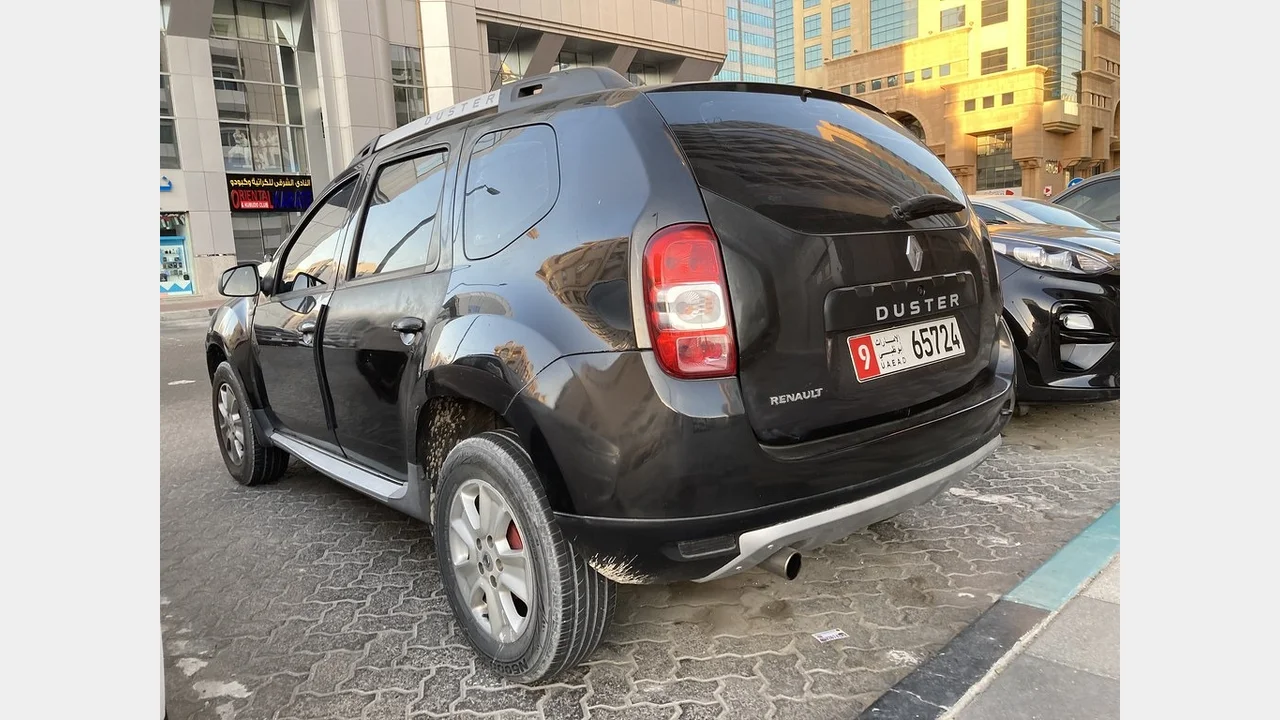
The Duster is a compact SUV sold under the Dacia badge in Europe and under the Renault badge in markets such as Latin America, India, Russia, parts of Africa and the Middle East. A closely related version was also sold as the Nissan Terrano in India. The first generation arrived in 2010, the second around 2017 to 2018, and a third generation followed in 2024.
Across these generations and markets the Duster has used a wide range of engines, transmissions and drivetrains, including two-wheel and four-wheel drive. Each combination can carry its own intervals and service items. A plan written for a diesel four-wheel-drive Duster in one country may not match a petrol two-wheel-drive Duster in another, even if the two look nearly identical.
How Renault structures the schedule
Like most manufacturers, Renault expresses service intervals as a distance or a time period, whichever comes first. The time limit matters for low-mileage vehicles: engine oil and brake fluid age even when the car is rarely driven, so a Duster that covers little distance still needs periodic servicing.
Many Dusters also have a service indicator in the instrument cluster that warns when maintenance is due. Depending on the model, it may count down a fixed interval or estimate oil life from driving conditions. The indicator is a reminder, not a replacement for the written schedule, and it typically needs to be reset after each service.
Schedules are usually split into a basic recurring service and larger services at longer intervals that add further inspections and replacements. Renault may also revise recommended intervals over a model's life, so two Dusters of different model years can have different plans.
Items commonly covered in a Duster service plan
The exact intervals vary, but the following items appear in the maintenance plans of most cars in this class, the Duster included. Use this as a guide to what a service should cover, not as a source of timings.
Item | What is done | Why it matters; Engine oil and oil filter | Replaced with oil meeting the specification and viscosity listed for the engine | Protects internal engine parts; using the wrong grade can affect wear and warranty coverage; Air filter | Inspected and replaced | A clogged filter restricts airflow; dusty and unpaved roads shorten its life; Cabin (pollen) filter | Inspected and replaced | Affects ventilation airflow and air quality inside the cabin; Spark plugs (petrol engines) | Replaced at a set interval | Worn plugs can cause misfires and higher fuel consumption; Fuel filter (especially diesel engines) | Replaced or drained at a set interval | Protects the injection system from contaminants and water; Brake fluid | Replaced on a time-based interval | Brake fluid absorbs moisture over time, which reduces braking performance; Coolant | Level checked; replaced at a long-term interval | Protects against overheating, freezing and internal corrosion; Timing belt and accessory belt | Inspected or replaced, depending on engine design | A failed timing belt can cause serious engine damage on many engines; Brakes, tires and suspension | Inspected for wear, damage and leaks | Core safety items, especially for vehicles used off pavement; Transmission, transfer case and differential fluids (where applicable) | Checked or replaced according to drivetrain | Relevant mainly to automatic and four-wheel-drive versions; Battery, lights, wipers and underbody | Inspected | Catches routine wear before it becomes a failure
Timing belt or chain: check before you assume
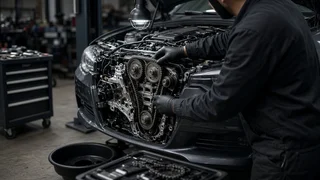
Whether a Duster engine uses a timing belt or a timing chain depends on the specific engine. Belt-driven engines need the belt, and usually the tensioner and related parts, replaced at a stated distance or age, whichever arrives first. Chain-driven engines generally do not have a fixed replacement interval but still benefit from regular oil changes with the correct oil.
Because a timing belt failure can be costly, this is one of the most important items to confirm for your exact engine. If a used Duster has no record of a belt replacement and it is near or past the recommended point, treating the belt as overdue is a common precaution.
Normal versus severe operating conditions
Many manufacturer schedules distinguish between normal use and severe or arduous conditions. Severe use often includes frequent short trips, extended idling, towing, very dusty or unpaved roads, extreme heat or cold, and heavy loads. These conditions are common for an SUV like the Duster, particularly in the markets where it is popular.
Under severe conditions, the handbook may call for shorter intervals for oil changes, air filters and some inspections. If your driving matches that description, following the severe-use guidance is the safer choice even if the vehicle never leaves paved roads for long.
Powertrain-specific differences
Petrol engines: include spark plug replacement and, for turbocharged versions, close attention to oil specification. Diesel engines: typically add fuel filter service and, where fitted, attention to emissions equipment such as a diesel particulate filter, which can be affected by repeated short trips. LPG bi-fuel versions: may include additional checks on the gas system and its filters. Hybrid versions of the third generation: add checks related to the hybrid system, while conventional items such as oil, filters, brakes and fluids still apply. Four-wheel-drive versions: may include checks or fluid changes for the transfer case and rear differential that two-wheel-drive versions do not need. Automatic and dual-clutch transmissions: may have their own fluid inspection or replacement requirements.
How to find the correct schedule for your Duster
Check the owner's handbook or service booklet supplied with the vehicle; this is the primary reference. Note the model year, engine code and transmission, which are usually found in the vehicle documents or on labels in the engine bay. Use the VIN to have a Renault or Dacia dealer in the vehicle's market of origin identify the exact specification and applicable plan. If the handbook is missing, ask the dealer network in the origin country for the maintenance plan for that VIN. Review the service history to see which larger services, such as timing belt or coolant replacement, have already been done.
Considerations for owners in the United States
Because the Duster was not sold through US dealers, owners here generally cannot rely on a local Renault service department. An independent shop experienced with European or imported vehicles is the usual option. Bringing the original handbook, engine details and service records helps the shop apply the correct intervals and fluid specifications.
Parts such as filters, belts and brake components may need to be sourced through importers or online suppliers rather than local stores, so planning ahead for scheduled items avoids delays. Specified fluids, especially engine oil meeting a particular Renault standard, may also need to be ordered in advance.
Keeping records
Recording each service with the date, distance and work performed makes it easier to see what is due next and supports resale value. For an imported vehicle with no local dealer history, a clear paper trail is particularly useful when selling or when a future mechanic needs to know what has already been replaced.
Bottom line
The Renault Duster service schedule is a set of time-or-distance intervals that Renault defines separately for each generation, engine and market. The items covered are familiar, including oil, filters, spark plugs or fuel filters, fluids, belts and safety inspections, but the timing depends on your specific vehicle and how it is used. For a Duster in the United States, the correct reference is the schedule for its country of origin, confirmed through its handbook or a dealer using the VIN.