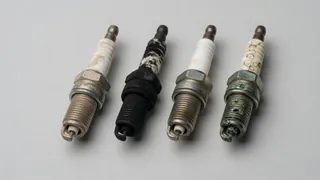
Reading spark plugs by color: diagnostic chart

When an engine runs unevenly, misfires, or feels down on power, the deposits left on the spark plug insulator and electrodes become a diagnostic record of the combustion event. Reading that evidence requires comparing the observed color and texture against a car spark plug color chart, not treating every tan or black mark as an immediate component failure. A light tan or grayish deposit often indicates normal operation, while dry black soot, wet oil, white blisters, or greenish corrosion point toward different air-fuel, oil-control, or thermal problems. The chart narrows the likely system at fault and helps decide whether further checks should focus on ignition, fueling, mechanical sealing, or heat range.
Essential answer
A car spark plug color chart works because the firing end sits inside the cylinder where it is exposed to combustion temperature, fuel mixture, oil, and additives. The resulting color is not a random stain; it reflects how completely the fuel burns, whether the plug is operating in the correct temperature window, and whether unwanted material is entering the chamber. For that reason, the chart is a starting point for interpreting symptoms rather than a verdict on one part. A trouble code, freeze-frame data, and live data can add context, but the physical appearance shows the cumulative result of many combustion cycles.
The essential answer is that plug color separates normal combustion evidence from abnormal patterns that require specific investigation. A clean, light tan or gray-brown insulator with minimal electrode erosion generally supports correct heat range and acceptable mixture control. In contrast, fluffy black carbon suggests an overly rich condition or weak ignition, while a wet, oily appearance points to oil entering the cylinder through worn guides, rings, or positive crankcase ventilation issues. Each appearance narrows the diagnostic path, so the chart should guide confirmation testing, not replace it.
Diagnosing a problem
Diagnosing the cause behind an unusual plug color should begin with the operating conditions that produced it. A high-speed highway pull, a long idle, a cold start, or repeated short trips can all change the insulator color, so service information about symptom conditions matters. If the plug is black and dry, the next check is whether the condition appears on one cylinder or all cylinders. A single sooty plug suggests a localized ignition problem such as a weak coil, faulty wire, or injector imbalance, while evenly dark plugs across the bank may indicate a shared air-fuel control issue, a dirty air filter, or a coolant temperature reading that keeps the mixture rich.
A white or blistered plug deserves particular caution because it can indicate excessive combustion temperature, lean mixture, over-advanced timing, or an incorrect heat range. In that case, avoid high-load operation until the cause is understood, since sustained heat can damage the piston or valves. Manufacturer-dependent codes and appearance patterns require vehicle-specific confirmation, because one engine family may tolerate a color that signals trouble in another. Freeze-frame data from the moment a fault was recorded can reveal whether the problem occurred under load, at idle, or during warm-up, helping a confirmation test target the right system instead of replacing parts from color alone.