Polaris 500 oil capacity
What the capacity actually is
There is no single factory oil capacity that covers every machine sold as a Polaris 500. That name is a family of all-terrain and utility vehicles built around a roughly 500 cc engine, offered over many years as Sportsman 500, Ranger 500, Magnum 500, Scrambler 500, and related variants. Engine oil volume, whether the transmission shares the crankcase, and the size of a refill with a new filter all change with the specific model and model year.
A verified quart or liter figure for a named year and chassis is not available in the source material for this article, so no generic 500 fill volume is stated as a specification. The supported next action is to identify the exact model name, model year, and engine, then use the capacity printed for that machine in the owner’s or service manual and finish the job on the dipstick.
Which fluid you are measuring
On many Polaris 500 ATVs and side-by-sides, engine crankcase oil is a separate system from transmission oil and from front and rear gearcase fluid. Asking for “oil capacity” without naming the housing can mix those figures. Use the engine-oil specification only for an engine oil change. Transmission, demand-drive or front gearcase, and rear gearcase each have their own fluid type and volume where they are separate.
Housing What the number applies to; Engine oil Routine crankcase drain and fill; confirmed on the engine dipstick with the vehicle level. Transmission A separate fill on many 500 models; do not treat this volume as engine oil. Front gearcase / demand drive A small, dedicated housing on many 4x4 machines, with its own fluid spec. Rear gearcase Another dedicated housing on many 4x4 machines; capacity is not the engine fill.
What changes the published fill
A dry fill after a rebuild or a fully emptied crankcase is larger than a routine drain-and-fill, because oil remaining in galleries, the filter, and the pan is no longer in the engine. A refill that includes a new oil filter is larger than a drain that reuses the old filter. Generation, 2x4 versus 4x4 layout, and whether the machine is an ATV or a Ranger-style utility vehicle all affect which capacities apply. Market and trim can also change related service items even when displacement is still marketed as 500.
How to confirm the fill on your machine
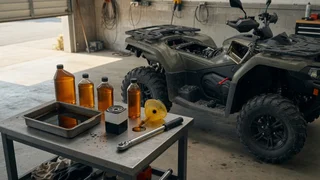
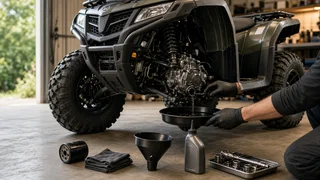
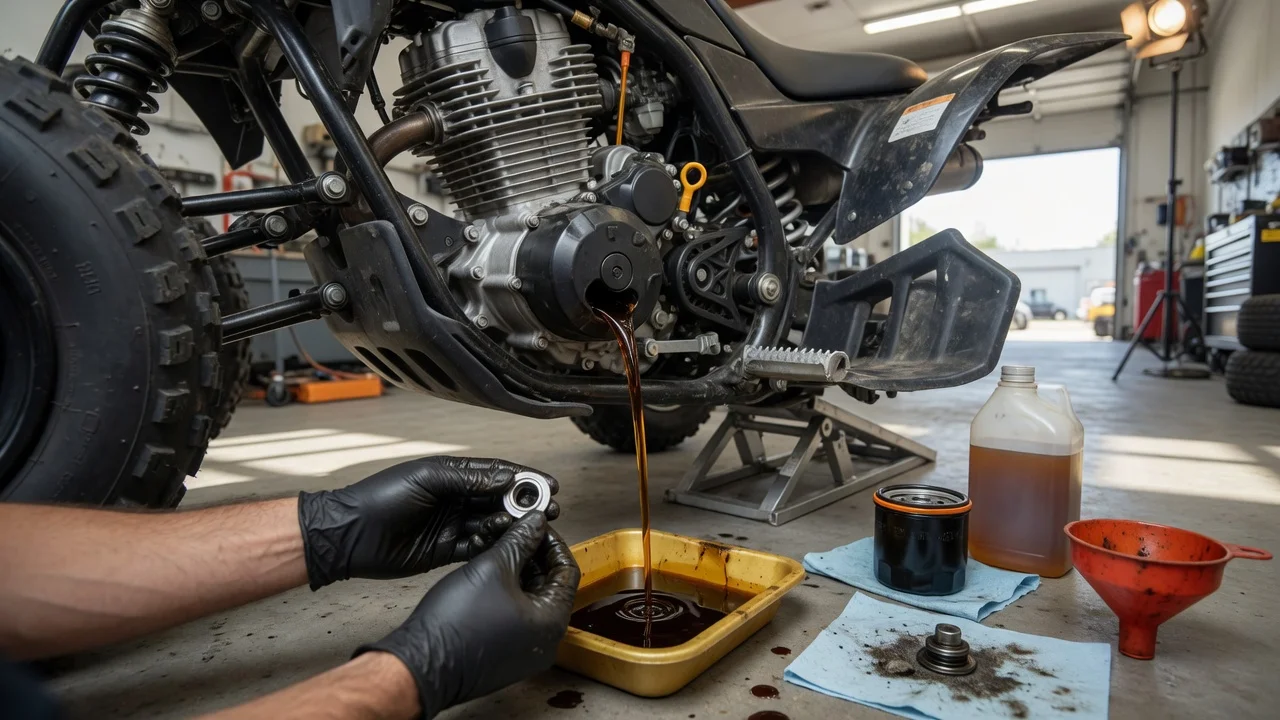
Identify the full model name and model year from the vehicle identification label or owner’s manual, not from the “500” badge alone. Use the engine-oil capacity and viscosity listed for that exact machine, and keep transmission and gearcase specs on their own lines. Park on level ground. If the manual calls for a warm drain, run the engine briefly, shut it down, and drain while the oil is warm. Install a new filter when the service interval includes one, because that volume is often part of the stated refill. Add oil gradually, then read the engine dipstick with the machine level. Fill only to the full mark. A manual capacity is a starting quantity, not a substitute for the dipstick.
If the dipstick reads low after a short run and a recheck, add a small amount and recheck. If it reads over full, drain the excess. Overfill can aerate oil and raise crankcase pressure; underfill can starve the lubrication circuit. When the manual and the dipstick disagree after a correct drain, trust the level mark on a level machine and treat the printed capacity as approximate.
Gap that still needs your model year
This article does not assign a numeric engine-oil, transmission, or gearcase capacity to any Polaris 500 variant, because those figures are model-year specific and were not supplied as documented specifications here. Match your VIN, model name, and year to the factory capacity table for that machine before you buy oil or set a fill quantity.