Parking within 25 ft of crosswalk
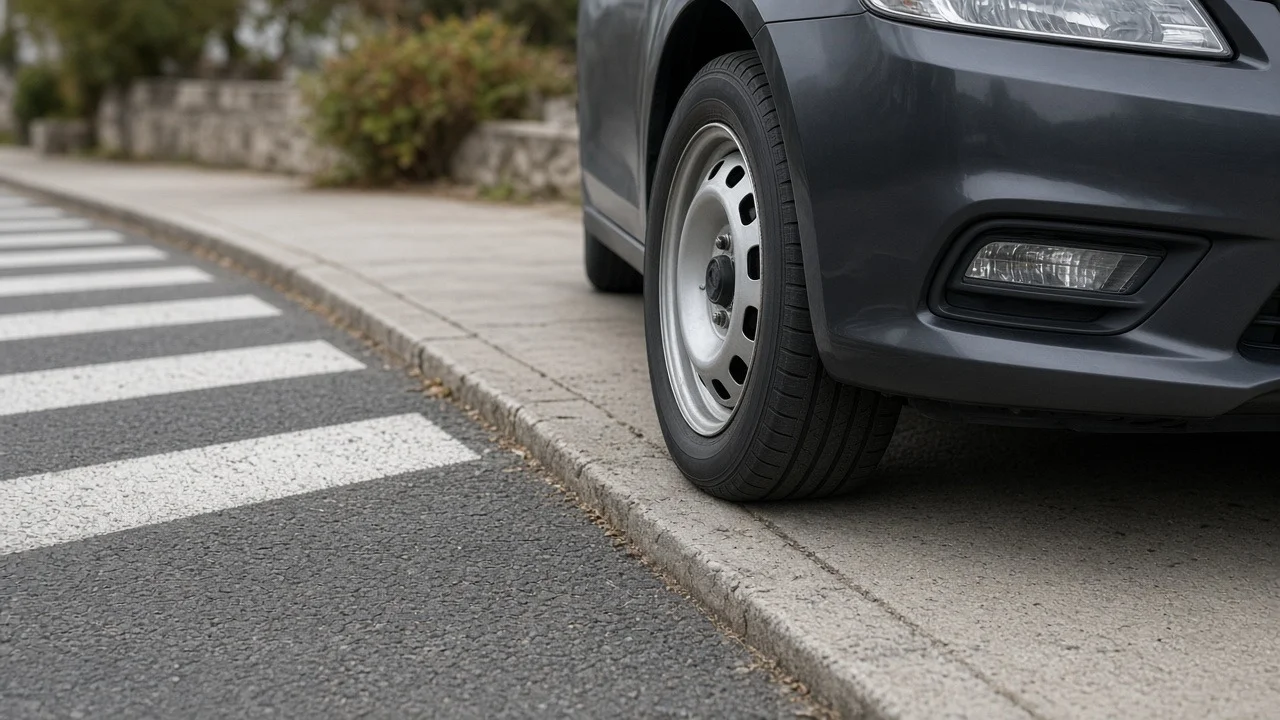
Parking within 25 ft of crosswalk markings is often restricted because the space directly before a marked crossing keeps sightlines clear for both drivers and pedestrians. A vehicle stopped too close can hide a person stepping off the curb and force other motorists to swing wide. Understanding why the buffer exists is more useful than remembering a single number, because the exact distance comes from state law or local ordinances and can change where signs are posted. The restriction is a safety clearance rule, not a vehicle capability issue, and it affects how drivers judge available space at intersections and midblock crossings.
Essential answer
The question about parking within 25 ft of crosswalk requires a qualified answer. The 25-foot figure is a common example of a safety buffer, but it is not a universal rule for every street in the United States. State vehicle codes and municipal parking rules set the actual no-parking distance, and a driver should read posted signs and the local rules for the specific road rather than assume one number applies everywhere. The restriction exists primarily to preserve a clear zone where approaching drivers can see pedestrians preparing to cross and where people at the curb can see oncoming traffic.
When a vehicle occupies that approach zone, it does not need to be large to create a hazard. A compact car parked near the painted lines can block the view of a child or a person using a wheelchair just as effectively as a truck. The useful automotive reasoning is to think of the rule as a sight triangle, not a paint boundary. Before leaving a vehicle, judge whether the parked position shortens the reaction time available to other drivers. If the available clearance looks tight, the safer interpretation is to move farther back even when a specific distance is not posted.