Stuck Parking Brake Shoes: Diagnosis and Release
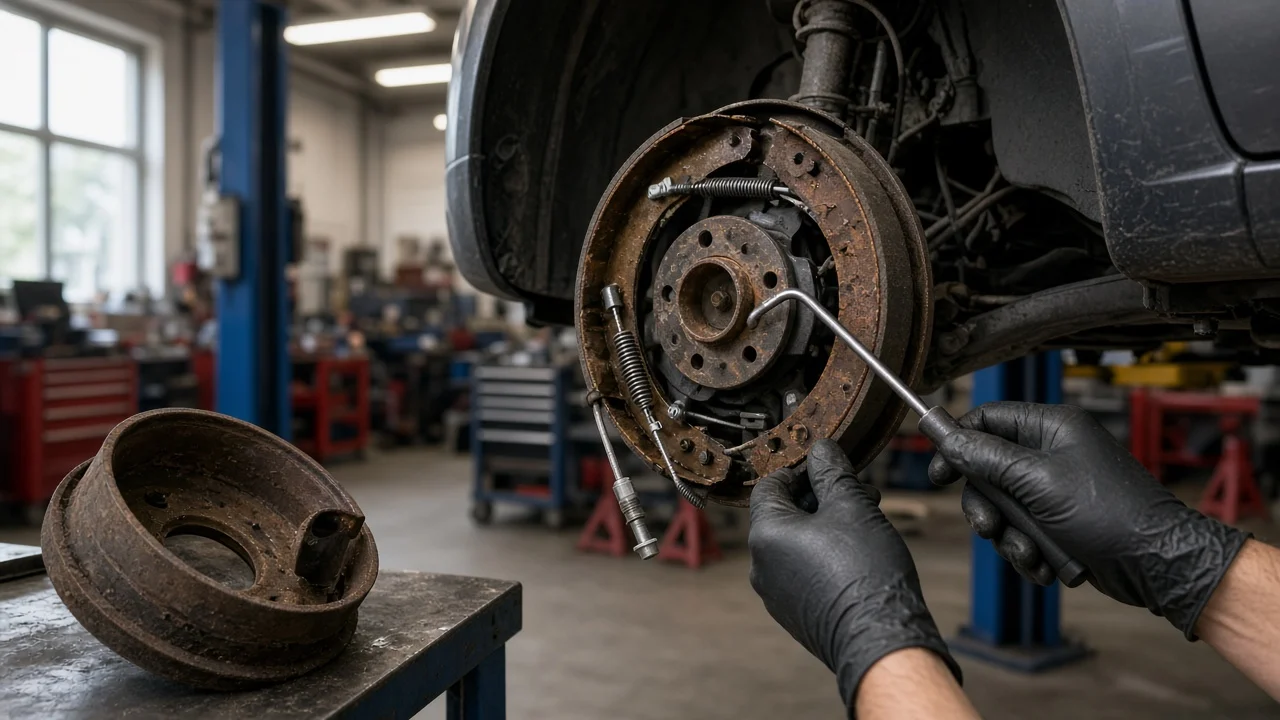
When parking brake shoes stay stuck against the drum, the vehicle may refuse to roll, drag on one side or overheat a rear wheel. The fault can be in the shoes, the cable, the lever or an electronic actuator, and the right way to release it depends on which one it is. This guide covers how to describe the problem, separate the likely causes, check things in a sensible order and decide how urgently the car needs attention. Always use the service information for your specific vehicle.
Establish the symptoms
Start by writing down exactly when the problem appears. Does the vehicle refuse to move at all after sitting overnight, or does it roll but feel as if it is towing something? Note whether it happens after rain, a car wash or a freezing night, after the vehicle has stood for weeks, or only after the parking brake was applied hard on a slope. Recent work matters too. New rear shoes, brake pads, brake rotors, a drum replacement, a cable change or a battery disconnection on a car with an electronic parking brake can all change how the system behaves.
Then record any other signs. Typical clues include a parking brake warning light that stays on, a hand lever or pedal that does not return fully, a clunk or bang when the car finally breaks free, and a grinding or scraping noise from one rear corner. Others are a burning smell, smoke, or one rear wheel that is noticeably hotter than the other after a short drive. Note which side seems affected and whether the car pulls. Do not touch a wheel or drum to compare temperature, because a dragging brake can be hot enough to burn skin. Heat radiating from the wheel or a smell is enough to note.
Distinguish plausible causes
On vehicles with rear drums, the parking brake usually acts on the same shoes as the service brakes. Many cars with rear disc brakes use a small drum-in-hat design, where dedicated parking brake shoes sit inside the hub of the rotor. Others apply the parking brake through the rear caliper, either with a cable lever or an electric motor. Knowing which layout your vehicle has narrows the list quickly.
Shoes stuck to the drum by rust are a common cause when the car has sat in damp conditions. The friction material can bond to a corroded drum surface, and it typically releases with a single bang once the vehicle moves. That pattern points to corrosion and makes a cable fault less likely. A seized or frozen cable is more likely when the lever releases but the shoes stay applied, when the problem follows freezing weather, or when the cable's outer sheath is cracked or swollen. Other mechanical faults cause drag that continues even with the cable slack, often after recent brake work. These include an over-adjusted or seized self-adjuster, broken or weak return springs, and a seized operating lever behind the backing plate.
Electronic parking brakes add other possibilities. The motor or actuator may fail to retract, there may be a wiring or switch fault, or the system may have been left in service mode after rear brake work. A stored fault code and a warning message point that way, though a mechanical seizure behind the actuator can produce the same symptom. Finally, not every rear drag comes from the parking brake. A sticking service brake caliper, a hydraulic restriction or a wheel bearing fault can feel similar. If the drag remains when the parking brake is clearly released, keep those causes on the list.
Checks in a useful order
Begin with safe observations that need no tools. Park on level ground, confirm the lever, pedal or switch is fully released, and watch whether the warning light goes out. Apply and release the parking brake two or three times, which sometimes frees a sticky cable or nudges the shoes off the drum. If the vehicle still will not roll, try Drive and then Reverse, or first gear and reverse in a manual, using very light throttle to see whether it breaks free. Stop if it does not move with light effort. Forcing it with high engine power can damage shoes, drums, springs or the drivetrain. In freezing conditions, letting the vehicle warm up in a heated space is safer than repeated forcing. Never use a flame near brake components, hoses or brake fluid.
The next checks need basic tools and the vehicle safely supported on stands, with the front wheels chocked. With the rear wheels off the ground and the parking brake released, try turning each rear wheel by hand to find which one drags. Look at the cable where it is visible, the equalizer under the car and the levers at each backing plate for slack, corrosion or binding. Where the design allows it, slacken cable tension at the adjuster and check whether the wheel then turns freely.
Work beyond this point belongs to someone with the service information and experience for the vehicle. Vehicle-specific procedures are needed to back off a self-adjuster through an access hole, remove a stuck drum or a drum-in-hat rotor, inspect springs and shoes, or put an electronic parking brake into service mode with a scan tool. Shoes and drums have wear limits. The maximum drum diameter is often marked on the drum, and the manufacturer specifies the minimum shoe lining thickness. Confirming correct vehicle fitment of any replacement parts is part of that job.
Interpret the findings
If the car released with a single bang after sitting and now rolls freely with no noise, smell or heat, the most likely explanation is shoes that rusted to the drum. That explains the release but says nothing about the condition of the parts. A rusty drum surface, contaminated friction material or a weak spring can make it happen again, so an inspection is still sensible. If the wheel turns freely once cable tension is removed, the probable fault is the cable, equalizer or lever rather than the shoes. If the wheel still drags with the cable slack, the problem is inside the drum or with the service brake components on that corner.
A stored electronic parking brake fault narrows the search but does not prove the actuator has failed, because a seized mechanism can trigger the same code. Likewise, a hot wheel confirms drag but not its source. Before replacing parts, confirm the cause by inspection. Look for the seized cable, the broken spring, the scored or glazed shoe, or the actuator that does not move when commanded. Replacing shoes, cables or a motor on suspicion alone often leaves the real fault in place.
Urgency and next action
Stop using the vehicle and arrange professional service if you notice any of these signs: smoke, a strong burning smell, grinding metal, a pull to one side, or a brake pedal that feels different. The same applies to a brake warning light together with low brake fluid, or a wheel that stays hot after driving. Heat from a dragging brake can damage the drum, rotor, wheel bearing and seals, and can reduce braking performance. If the parking brake has stopped applying properly, do not rely on it to hold the vehicle until it is repaired. Use wheel chocks and leave the car in gear or Park. There is no reliable safe distance for driving a car with a dragging rear brake.
When booking the repair, give the technician the make, model, year and VIN, and say whether the parking brake is cable-operated or electronic. Describe the conditions that triggered the problem, which wheel was affected, any warning lights or fault messages, how the car was released and any recent brake work. This lets the shop prepare the right service procedure and confirm parts fitment before the vehicle arrives.