P30 Parking Brake Shoes: Fitment and Selection
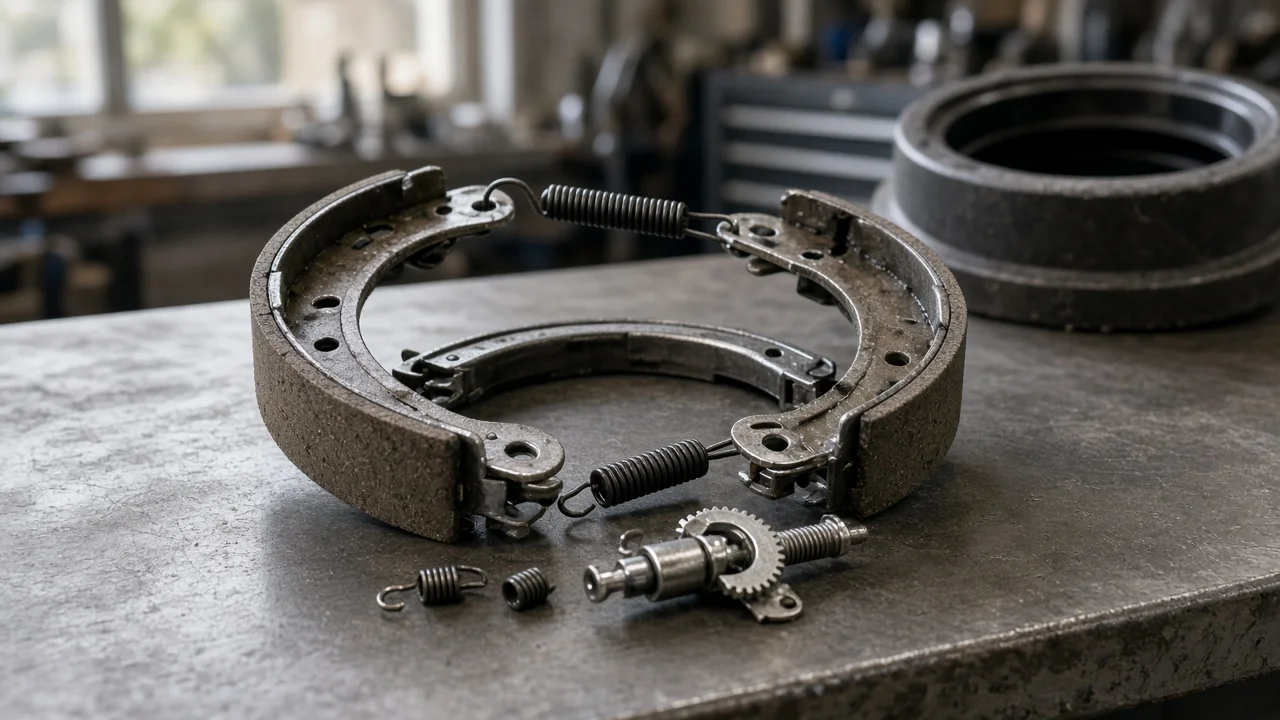
Replacing the parking brake shoes on a P30 chassis is rarely as simple as ordering by model name. Many P30 step vans and motorhome chassis hold the vehicle with a drum mounted on the driveline behind the transmission, while other configurations use the rear wheel drums. This guide explains how to confirm which system you have, which measurements decide fitment, what separates one shoe set from another, and when the job belongs in a professional shop.
Define the job the product must do
A parking brake has one task: hold a stopped vehicle in place. On a P30 that often means holding a loaded motorhome or delivery body at or near its gross weight, sometimes on a grade, sometimes for weeks without moving. It is not designed to stop a moving vehicle, and its shoes are sized for static holding rather than repeated heat from deceleration. On a driveline-mounted system, the shoes clamp a drum on the transmission output, so the holding force reaches the wheels through the driveshaft and differential. If a rear wheel is off the ground or a driveline component fails, that brake cannot hold the vehicle.
Before shopping, note how the vehicle is used and what failed. A motorhome that sits for months tends to suffer corrosion, glazed linings and seized hardware. A route van applied dozens of times a day wears linings and adjusters faster. Shoes soaked in transmission fluid from a leaking tailshaft seal point to a separate repair. If the parking brake does not hold now, chock the wheels whenever the vehicle is parked and do not rely on the transmission alone until the system is repaired.
Check compatibility
Start by confirming where the parking brake actually is. Look under the vehicle just behind the transmission: a drum attached to the output yoke, with a cable or lever running to a backing plate, indicates a driveline brake. If there is nothing there, the parking function is most likely built into the rear wheel brakes, and the shoes you need are a different part entirely. The P30 was produced over many model years and finished by numerous body builders, so the chassis designation alone does not settle vehicle fitment.
Gather the identifying details a parts supplier needs: VIN, model year, GVWR, transmission type and any chassis data plate information. Then measure. Record the drum inside diameter and the lining width, and compare the diameter against the maximum figure usually cast or stamped on the drum. Check the shoe arrangement as well: anchor style, adjuster type, spring locations and how the cable or lever attaches. The most reliable approach is matching the new shoes against the old ones side by side before installation, confirming web shape, lining position and hole locations.
Features that affect the choice
Friction material is the main variable. Because a parking brake works mostly at rest, a stable friction level and resistance to glazing and corrosion matter more than high-temperature fade performance. Many linings carry a two-letter edge code that indicates a tested friction coefficient range for cold and hot conditions. It is a more useful comparison point than labels such as heavy duty or premium, though it says nothing about wear life or how the lining behaves after long storage.
Construction is the next consideration. Linings may be bonded or riveted to the shoe; both are workable, but on a vehicle exposed to road salt or long idle periods, ask how the lining is attached and inspect the old shoes for signs of the lining lifting from the steel. Relined or exchange shoes reuse original steel cores, which preserves geometry but usually involves a core charge. Also check whether a hardware kit is included. Springs and adjusters lose tension and corrode, and reusing tired hardware is a common reason a fresh set fails to hold.
Limitations and ownership costs
New shoes cannot compensate for a drum worn beyond its maximum diameter, a scored or cracked drum, a seized cable, a worn ratchet in the apply lever or an adjuster that will not turn. Linings contaminated with oil or transmission fluid cannot be reliably cleaned and should be replaced along with the seal that caused the leak. Budget for these parts when you price the job. Wear limits for lining thickness and drum diameter come from the vehicle-specific service information, not from the shoe packaging.
Installation on a driveline brake may require disconnecting the driveshaft, and the vehicle has no parking brake while the work is under way, so the wheels must be chocked securely on level ground. After assembly, the shoes have to be adjusted to the drum and the apply mechanism set according to the service procedure. Driving with the parking brake partly applied can overheat and glaze new linings quickly, and is a common cause of early replacement.
Keep the scope clear. This repair does not involve the service brake system: brake pads, brake rotors, the caliper on each wheel and the brake fluid are inspected and maintained separately. A driveline parking brake is mechanical and has no hydraulic connection. If you notice a soft pedal, pulling, grinding or a warning light while driving, stop using the vehicle and have the braking system checked professionally rather than treating it as a parking brake issue.
Build a practical shortlist
Narrow your options with a short checklist. Confirm the brake location, either driveline or rear wheel. Record the measured drum diameter and lining width and verify the drum is within its limit. Match web shape, anchor, adjuster and cable attachment against the old shoes. Compare the lining edge code and attachment method rather than marketing names. Note whether springs, adjusters and retainers are included, whether a core charge applies, and what return terms the seller states if the part does not match.
Any set that passes those checks is a reasonable candidate, and the decision then comes down to included hardware, core terms and availability. If the drum is past its limit, the apply mechanism is damaged, the vehicle is heavily loaded on uneven ground, or you lack the equipment to support a heavy chassis safely, have a qualified brake technician complete the repair and verify that the parking brake holds before the vehicle returns to service.