Operation of a starter motor
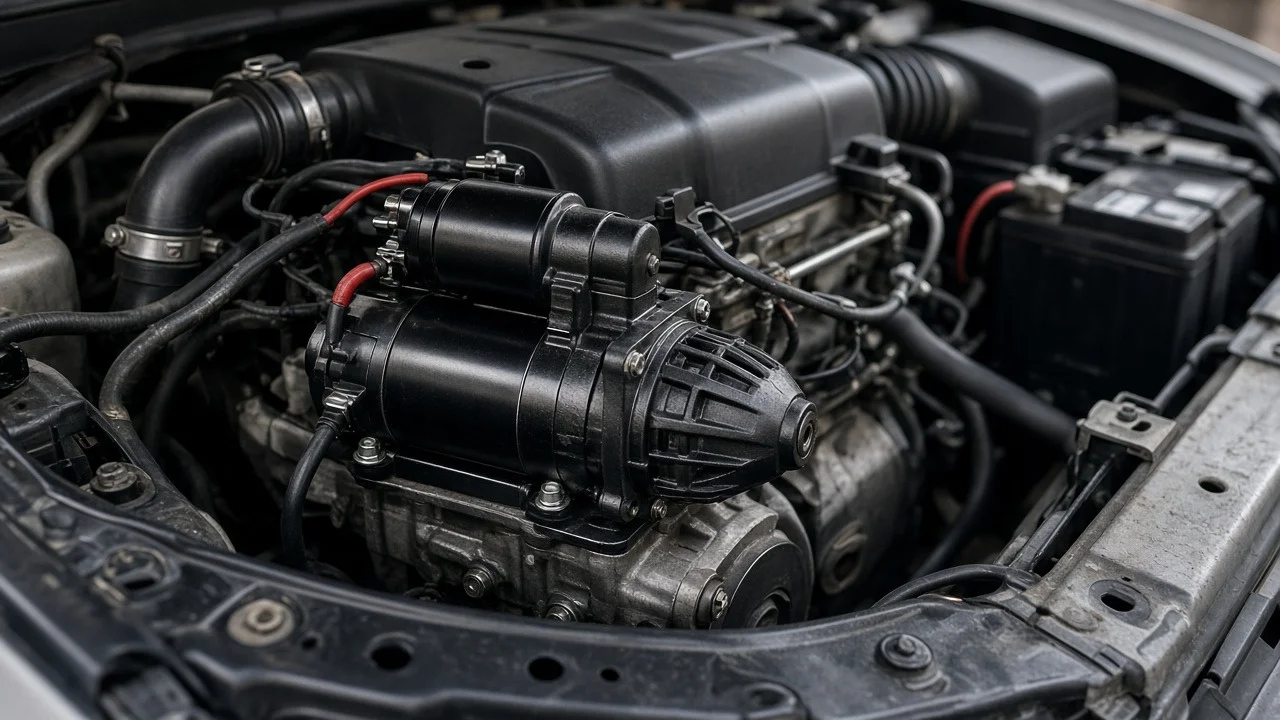
A starter motor turns the engine until combustion can sustain itself. The operation of a starter motor depends on a brief, high-current draw from the battery through the starter circuit, coordinated by the ignition switch. Drivers usually notice the system only when cranking speed drops or a quiet click replaces rotation. Understanding the sequence from key turn to engine idle helps separate simple power problems from mechanical failures, guiding accurate diagnostic checks before parts are replaced.
Essential answer
The starter motor is an electric machine that rotates the engine’s crankshaft for starting. It does not keep the engine running; once combustion begins, the starter disengages. Its essential function is converting stored battery energy into enough torque to overcome compression and friction at low temperatures or after long sits.
Operation is momentary but demanding. Very high current flows only while the control circuit is energized. Because starting ability depends on battery state of charge, fuel delivery, and mechanical health, slow rotation can indicate a weak battery, high resistance, or engine friction. The starter itself is just one part of that chain.
How it works
When the ignition switch moves to start, a small signal reaches the solenoid. The solenoid closes heavy contacts and shifts a pinion gear toward the flywheel. Full battery current then spins the motor armature, turning the pinion and crankshaft until the engine reaches a speed where fuel ignition can take over.
The overrunning clutch allows the pinion to spin freely if the flywheel briefly drives it during startup. Releasing the key cuts the control signal, the solenoid opens, and a return spring pulls the pinion away. This prevents continuous engagement that would destroy the starter at engine speeds far above its design range.
Strengths, limitations and suitability
The starter’s main strength is producing high torque from a compact package for a very short time. It tolerates heavy current because its duty cycle is limited. Gear reduction designs improve cranking speed without a larger motor. In everyday use, reliability is generally strong, but connections and battery voltage affect it more than many other components.
Its limitations are thermal and electrical. Repeated long cranking cycles overheat windings, solenoids, and contacts. High resistance in cables, grounds, or ignition switch signal wire reduces available current. Vehicles with frequent short trips or extreme heat may see intermittent failure at wiring terminals long before the motor itself wears out.
Procedure
Before testing, confirm the transmission is in park or neutral and the parking brake is set. Begin with the battery: clean terminals, tight connections, and sufficient state of charge are prerequisites. A simple voltage check while cranking often separates a battery problem from a starter or wiring issue because cranking speed reveals how much power is reaching the motor.
A proper starter circuit test follows the high-current path from battery positive, through the solenoid, into the motor, and back through ground. Check for heat at terminals after a short crank attempt; heat indicates resistance. Also verify that the ignition switch signal reaches the solenoid during the start request. Use manufacturer guidance for exact test values and safety procedures.
Diagnosing a problem
A starter that clicks once without cranking usually means the solenoid is receiving signal, but the heavy contacts are not closing or high-current flow is interrupted. Low battery state of charge, corroded cable ends, or a failing solenoid can create this single-click symptom. Rapid multiple clicks often point to insufficient voltage reaching the control circuit.
Slow cranking with a known-good battery suggests high resistance or a failing starter brush/commutator path. Fuel delivery and mechanical compression also affect required cranking speed, so a healthy starter may still fail to start a vehicle with other problems. A fault code is evidence to interpret, not proof that a specific part has failed. Manufacturer-dependent codes require vehicle-specific confirmation.