What Does a Starter Motor Do?
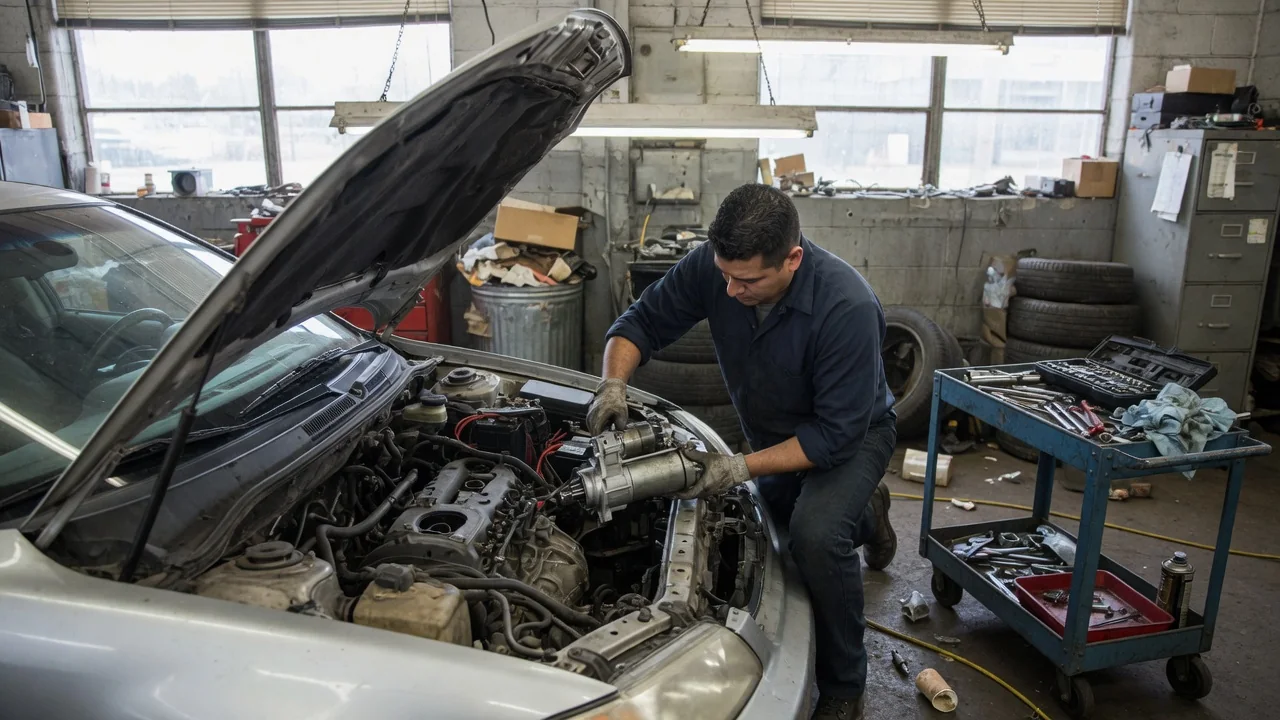
An engine cannot begin running on its own; it has to be spinning before fuel, air, and spark can produce combustion. So what does a starter motor do? It converts battery power into the rotation that turns the crankshaft for those first few revolutions, then gets out of the way. Understanding that brief job makes starting problems far easier to interpret.
Electrical path
Cranking begins with a request, not with heavy current. Turning the key or pressing the start button sends a small control signal, often through a relay and a safety switch that confirms the transmission is in park or neutral, or that the clutch pedal is pressed. On many modern vehicles a control module also checks the immobilizer and key before allowing the signal through. Only then does the solenoid mounted on the starter receive the command to act.
The solenoid works as a heavy-duty switch. When energized, it closes large internal contacts that connect the battery's thick positive cable directly to the motor windings, while the engine block and ground straps complete the return path. Because the starter draws far more current than most other components on the vehicle, clean terminals and sound cables matter enormously. Drivers often see the evidence as dash lights dimming briefly during cranking; exact wiring, relay locations, and fuse layouts differ by manufacturer.
Engagement
Electrical rotation alone accomplishes nothing until it reaches the engine. As the solenoid pulls in, it also moves a lever that slides a small pinion gear along the starter shaft into mesh with the ring gear on the flywheel or flexplate. The pinion is tiny compared with the ring gear, so the gearing multiplies torque, letting a compact electric motor rotate the crankshaft against compression, moving pistons and valves so the engine can draw in air and fuel.
Once combustion takes over, engine speed rises quickly beyond what the starter can supply. An overrunning clutch in the drive lets the pinion freewheel rather than being driven by the engine, and when the start command ends, a spring retracts the gear. A harsh grinding, or a high-pitched whirring while the engine stays still, suggests the gears are not meshing properly, though worn ring gear teeth can produce similar sounds. Designs vary, with some starters using internal reduction gears.
No-crank clues
A no-crank condition means the engine does not rotate at all, which is different from an engine that cranks normally yet fails to fire. The sounds and lights offer the first clues. Rapid clicking with dimming dash lights usually points toward low battery voltage or poor connections rather than the starter itself. A single solid click with lights that stay bright suggests the solenoid is acting but the motor is not turning, which may involve worn contacts or internal wear.
Complete silence shifts attention to the control side: the relay, fuse, ignition switch, range or clutch switch, or an immobilizer that does not recognize the key. A security indicator flashing on the dash is worth noting. Some vehicles store fault codes related to the starter circuit, but a code is evidence to interpret, not proof that a part has failed, and manufacturer-specific codes need confirmation against information for that exact vehicle before any conclusion is drawn about the cause.
Everyday Use and Observations
In normal driving the starter works for only a moment per start, so most drivers barely notice it. A healthy system produces an even, brisk cranking rhythm followed almost immediately by the engine catching. Cold mornings make cranking sound slower because thickened oil adds drag while the battery delivers less current. Push-button vehicles handle the timing automatically, keeping the starter engaged until the engine runs, whereas a traditional key leaves the duration to the driver.
Vehicles with automatic stop-start systems ask far more of the starter, restarting the engine many times in a single trip, and they typically use starters and batteries designed for that duty. Many hybrids take a different route entirely, spinning the engine with a motor-generator, so there may be no conventional starter to hear. Knowing how your own vehicle normally sounds is valuable: gradual changes such as slower cranking, intermittent hesitation, or a new noise are easier to catch against a familiar baseline.
Limits and Next Steps
The starter's responsibility ends once the crankshaft is spinning at cranking speed. It cannot supply fuel, create spark, or correct a mechanical fault, so an engine that turns over strongly but never runs needs investigation elsewhere. It is also built for short bursts; prolonged cranking generates considerable heat in the motor and drains the battery quickly. If the engine does not start after a few brief attempts, pausing between tries is kinder to the components than holding the key.
When symptoms persist, the sensible order is to confirm the basics before condemning the starter. Battery state of charge, terminal condition, and cable and ground integrity can all mimic a failing starter, and proper testing measures voltage drop and current draw under load rather than guessing. Starter location and access differ widely between vehicles, and the cables carry enough current to cause injury or damage if mishandled, so anything beyond visual checks is best left to a qualified technician with vehicle-specific service information.