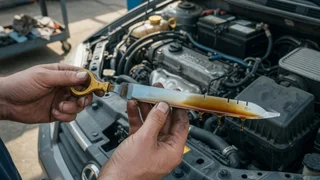
Oil smeared on the dipstick

Oil smeared on a dipstick usually looks alarming but is often a normal result of how the indicator tube is shaped, how the vehicle sits, or how the dipstick was handled. In many engines, the long blade passes through an oil-filled or oil-misted passage, and liquid clings to it during removal. Before assuming a serious problem, drivers should separate a legitimate high level reading from an artifact of checking technique. The pattern of the smear, the flat surfaces, and repeat measurements help determine whether the engine truly contains excess lubricant or whether the appearance is misleading.
Essential answer
When oil smeared on the dipstick extends well above the full mark, the first step is to interpret the film itself. A thin, irregular streak on one side of the blade frequently happens because the tip drags through residual lubricant inside the guide tube or because the stick touches the tube wall while being withdrawn. The relevant level is the continuous band of oil that reaches across both flat sides, not the faint wipe created by that contact path.
A genuine overfill can also produce a high reading, but it does so more consistently across repeated checks. Adding too much during a service, a leaking fuel pressure regulator diluting the sump, or incomplete draining before a refill can raise the level. The distinction matters because an accurate reading should be taken after the engine reaches operating temperature, sits on level ground for a few minutes, and is checked with a clean, reinserted dipstick.