How to use a car oil dipstick
What a car oil dipstick is
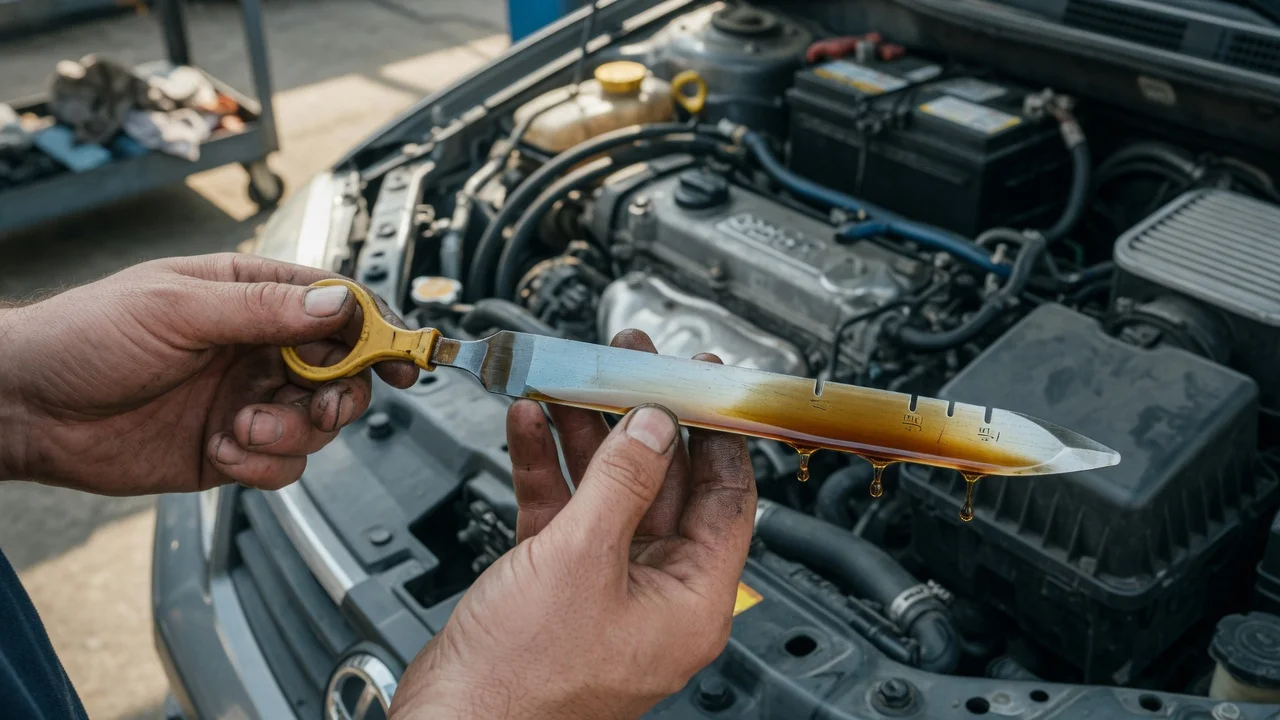
A car oil dipstick is a marked metal rod that sits in a tube leading into the engine oil sump. You use it to see whether the engine has a safe amount of lubricating oil. With the vehicle on level ground and the engine off, pull the stick, wipe it clean, push it fully home, pull it out again, and read the oil film against the low and high marks. The correct level is anywhere in that marked band.
Two conditions change the method. Some vehicles have no physical engine-oil dipstick and show oil level only on an electronic display; use that procedure in the owner’s manual. Automatic-transmission fluid often has a separate dipstick and a different check, commonly with the engine idling and the fluid at operating temperature. Use the engine-oil stick only for engine oil.
What you need
You need the owner’s manual for that vehicle, a clean cloth or paper towel, and, if a top-up is likely, engine oil that matches the grade and specification in the manual. Park on a level surface with the parking brake set. Confirm you are checking engine oil.
Owner’s manual for the specific model year, market and engine; Clean lint-free cloth or paper towel; Engine oil matching the manual’s specification, if a top-up may be needed
Draining an overfilled sump, investigating milky or metallic oil, diagnosing a dry stick after a correct check, and any oil-level procedure on a vehicle with no dipstick and no working electronic reading are jobs for a qualified technician.
How to check engine oil with the dipstick
Park on a level surface, apply the parking brake, and switch the engine off. A slope tilts oil in the pan and gives a false reading. Wait for oil to drain back into the sump for the time given in the owner’s manual for that engine. The wait can differ for a cold engine and for a check soon after driving; that interval is vehicle-specific and is not a single universal figure. Open the hood and find the engine-oil dipstick by its labeled handle, often yellow, orange or red. If you cannot find a stick, stop. The vehicle may use electronic oil-level measurement only. Pull the dipstick out by the handle. Hot oil and nearby metal can burn skin. Keep hands clear of the exhaust, radiator fan and drive belts. Wipe the marked end dry with a clean cloth so the next reading shows only oil from the sump. Push the dipstick fully into its tube until it seats. A partly inserted stick reads low. Pull the stick out again, hold it level, and read the top of the oil film against the low and high marks at once, before the oil creeps along the metal. Push the dipstick fully home and close the hood.
Completion check
The check is complete when the stick was fully seated on the second insertion, the oil film falls between the low and high marks, the oil appears as a continuous film without a milky look or obvious metal particles, and the dipstick is pushed home again.
What the reading means
Oil between the marks means the level is acceptable. Add oil only if the manufacturer’s notes for that model tell you to keep it near the high mark for the way you use the car.
Oil at or below the low mark means the engine is short of oil. Add the specified oil through the oil filler cap in small amounts, wait for it to reach the pan, and repeat the wipe-and-reinsert check. Stop adding when the film is inside the marked band.
Oil above the high mark means the sump is overfilled. Leave the filler closed. Excess oil can foam, stress seals and damage the catalytic converter. Have surplus oil drained by a qualified technician if the film is clearly over the upper mark.
A dry stick after a correct, fully seated check means the engine may be critically low on oil. Leave the engine off. Add the specified oil if you can identify the filler and the correct grade, then recheck, or have the vehicle recovered for service.
When to stop and get qualified service
The oil is milky or the colour of coffee with milk, which can indicate coolant in the sump. The oil smells strongly of fuel, or metal flakes or grit are visible on the stick. The level drops again soon after a correct top-up. You cannot identify the engine-oil dipstick or the oil filler. You have added the specified oil and the level is still below the low mark.
Limits of this check
A dipstick measures oil level in the sump under the conditions of that check. It does not measure oil pressure, remaining additive life or filter condition. Darker oil can still be within a normal service interval. Capacities, the approved oil specification, whether to check the engine hot or cold, the required wait after shutdown, and whether a given vehicle has a physical stick at all depend on model year, market and powertrain. Those details are in the owner’s manual for that vehicle and do not transfer across unrelated engines.