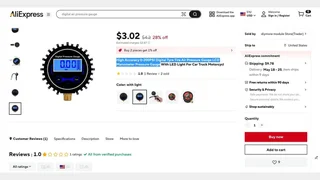
Nitrogen Tire Pressure Gauge

A nitrogen tire pressure gauge serves the same basic job as any tire gauge, but the purchase decision matters more when you want clean, repeatable readings without introducing moisture or contamination into a nitrogen-filled tire. Dry nitrogen is sensitive to measurement habits and tool condition, so the gauge you choose should support the accuracy and repeatability you expect. This guide explains what to check when comparing tools for passenger cars, trucks, trailers, or motorcycles. It focuses on practical features that affect everyday inflation checks: reading clarity, connection quality, calibration stability, and how the gauge handles the tire's specified pressure range.
The direct answer
Choose a nitrogen tire pressure gauge that gives a clear digital or dial reading in psi, with a short air release path that does not empty the tire while you seat the chuck. The most useful tool combines an accurate measurement range with a solid valve connection and a pressure rating that covers your vehicle specification. There is no single gauge required for nitrogen; the gas does not demand a separate measuring principle, but a clean dedicated tool helps avoid introducing moisture or oil residue.
The practical condition is your expected inflation pressure. A gauge made for high-pressure commercial tires can be less readable at passenger-car pressures, while a low-range gauge may max out before a loaded truck or trailer. Accuracy and calibration matter more than a nitrogen label. Look for a gauge that holds the reading after removal, displays units you use, and seats firmly on the Schrader valve to limit gas loss during each check.