Nissan Altima Tire Pressure in Cold Weather
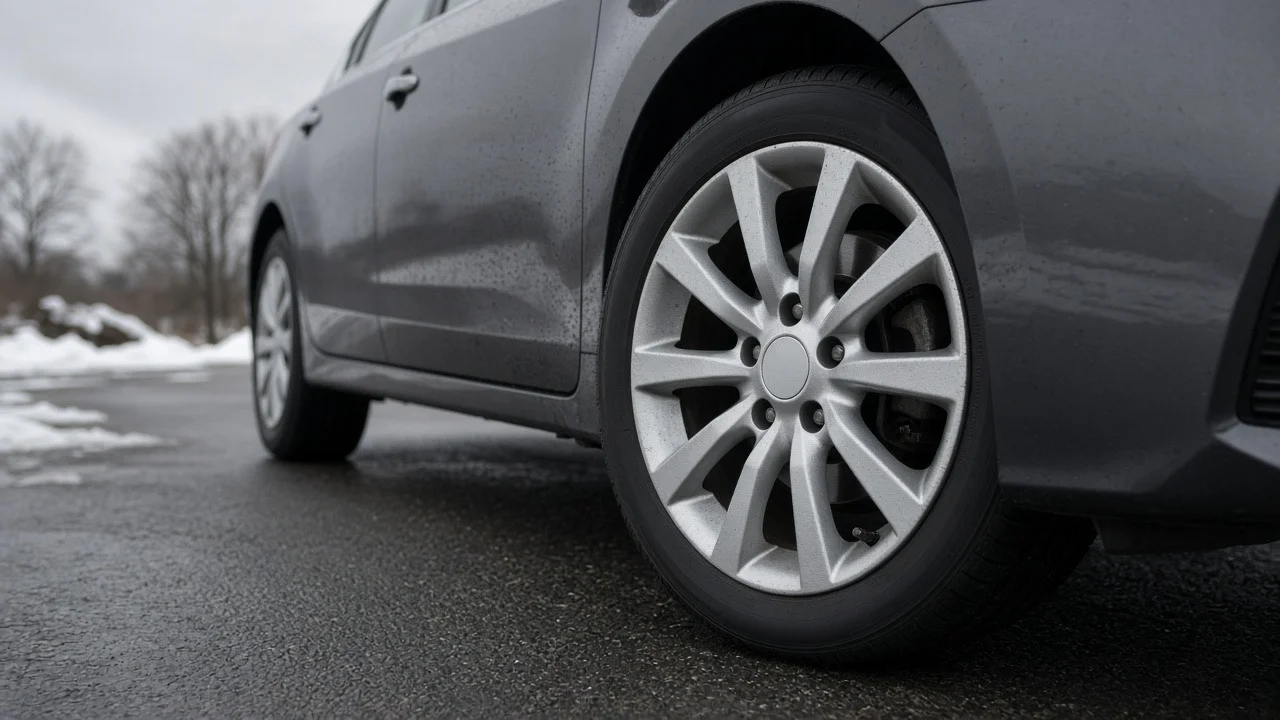
Cold weather changes the air inside a Nissan Altima tire more than many drivers expect. As ambient temperature drops, the nitrogen and oxygen molecules move less energetically, so inflation pressure falls and the tire’s contact patch can change subtly. The question is not whether the pressure will shift, but how much attention the condition deserves during a cold snap. Understanding the relationship between temperature, the vehicle placard, and tire size helps an owner separate a normal seasonal adjustment from a slow leak or an underlying tire problem.
Essential answer
A Nissan Altima driven into colder weather will typically show a lower tire pressure reading on the instrument cluster or a handheld gauge. That decrease is a normal physical response to falling temperature, not automatic evidence of a puncture. The correct starting point is the inflation pressure listed on the vehicle placard, often found on the driver’s door jamb, rather than the maximum figure molded into the tire sidewall. Inflating back to that recommended value, measured when the tires are cold, usually restores proper load support and tread contact for the existing tire size and load index.
The concern behind “Nissan Altima tire pressure cold weather” is separating ordinary pressure loss from a genuine fault. If one tire drops far more than the others, or if the warning returns quickly after correction, the cause may be a bead seal, valve stem, tread puncture, or wheel corrosion. Temperature alone lowers all four tires in a fairly even pattern. Because a pressure monitoring system only reports a threshold condition or a measured value, the driver should still verify each tire individually and match the reading to the placard pressure rather than assuming a warning light proves a failed component.