New brake pad thickness
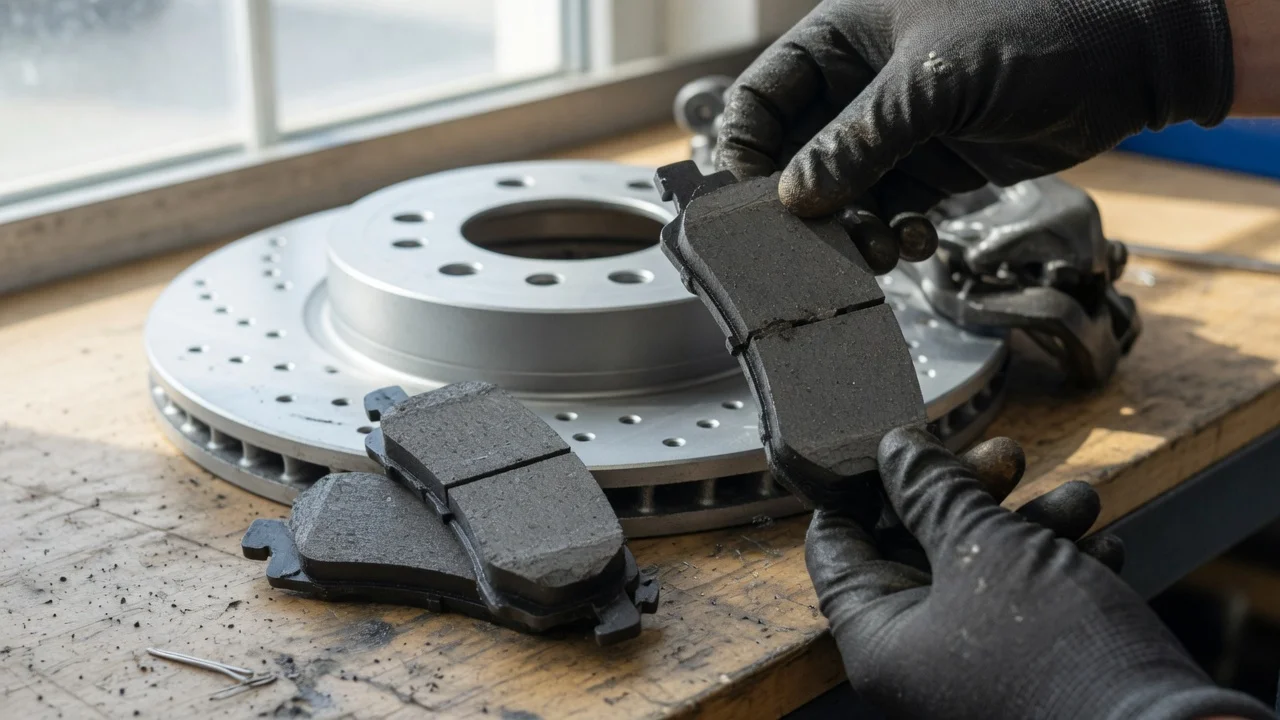
Typical thickness of a new brake pad
A new disc brake pad on a typical passenger car has about 10 to 12 millimetres of friction material, measured from the steel backing plate to the pad face. That range is a service rule of thumb, not a universal specification. Compact-car and some aftermarket pads can start nearer 8 to 10 mm. Many SUV, light-truck and performance pads start at 12 to 14 mm or thicker. Front pads are often built thicker than rear pads on the same vehicle. The figure that applies to a given car is the thickness specified for that model year, brake package and pad part number.
What the measurement includes
Service specifications refer to the friction lining alone. The backing plate is a separate steel layer, commonly several millimetres thick, and it stays in place for the life of the pad. Measuring the whole pad, plate included, overstates remaining lining. Use a pad-thickness gauge or a caliper on the friction face, and check the inboard and outboard pads on each caliper; they can wear at different rates. Quote remaining thickness in millimetres of lining, and note whether the reading is front or rear.
How new thickness relates to replacement
Most passenger-vehicle pads are treated as due for replacement when about 2 to 3 mm of friction material remains, or when the audible wear indicator contacts the rotor. Some manufacturers publish a different minimum. New-pad thickness is a starting point for estimating lining life; the replacement decision is made against the vehicle’s minimum specification and the condition of the rotors, hardware and hydraulic parts. A recently fitted set on a typical passenger car that still shows around 10 to 12 mm of lining is consistent with new or nearly new pads.
Why the number changes from car to car
Pad volume is sized for vehicle mass, brake duty, caliper piston area and the intended lining compound. Ceramic, semi-metallic and organic pads sold for the same vehicle can differ slightly in starting thickness. Optional performance or heavy-duty brake packages use different pad shapes and often a different starting height. Drum-brake shoes use a separate lining-thickness specification and are outside the disc-pad figures above. Commercial vehicles, motorcycles and dedicated racing pads sit in other ranges. Without a year, make, model and brake-package identification, an exact millimetre specification cannot be stated.
What to check for your vehicle
Look up the pad specification for the vehicle’s year, generation, powertrain, trim and market, and confirm whether the car has the standard or optional brake package. Compare that figure with the part number on the pad or box. Aftermarket pads listed for the same application can vary a millimetre or two from the original-equipment height. If you are inspecting work already done, measure lining thickness at several points on each pad and record front and rear separately. If a set sold as new is well below the typical 10 to 12 mm passenger-car range, or below the thickness published for that part, have the job rechecked before the vehicle goes back into service.
Limits of a generic answer
The 10 to 12 mm passenger-car range is an industry-typical starting thickness drawn from common service practice. It is not a substitute for the manufacturer’s pad drawing or the thickness marked for a specific part. Exact OEM millimetre values for individual models, and any legal minimums that apply in a given market, are not supplied here and should be read from the vehicle’s service information.