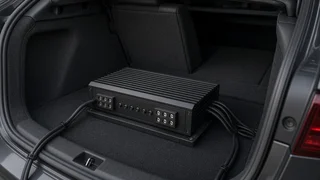
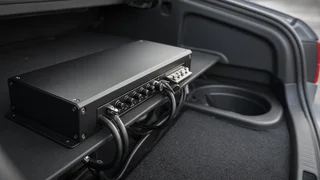
MOSFET Power Car Audio Amplifiers

A MOSFET power car audio amplifier uses metal-oxide-semiconductor field-effect transistors in its output stage to increase the low-level signal from a head unit into usable speaker power. Unlike older bipolar designs, the switching behavior of these transistors shapes how the amplifier manages current, heat, and musical transients. For car audio listeners evaluating an upgrade, the term indicates a particular output-device technology rather than one brand or power rating. Understanding that distinction helps connect an audio source through proper speaker wiring to the vehicle integration and performance you actually hear.
Essential answer
A MOSFET power car audio amplifier is an amplifier whose output section relies on MOSFET transistors to control current delivered to speakers. In vehicle audio, the head unit supplies a relatively weak preamp signal; the amplifier increases that signal so it can drive speakers with enough voltage swing and current to produce clean volume. The MOSFET designation refers specifically to the semiconductor type used in the power supply or output stage. These metal-oxide-semiconductor devices switch and modulate current rapidly, which influences how efficiently the amplifier converts the vehicle electrical system's energy into an audio waveform rather than waste heat.
The practical scope includes both full-range and subwoofer amplifiers, and the label does not by itself tell you whether an amplifier is class AB or class D. That is important because a class AB design using MOSFETs operates differently from a class D design using the same transistor family. What unites them is the use of a field-effect gate rather than a current-driven base to control conduction. In a car environment with limited voltage, this approach often supports tighter thermal behavior and faster response to musical peaks, though actual performance still depends on the amplifier's supporting circuitry, board layout, and the impedance of the connected speaker wiring.