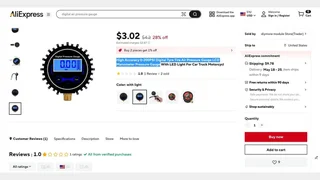
Milwaukee Tire Pressure Gauge

Choosing a tire pressure gauge involves more than spotting a familiar brand on the shelf. For drivers comparing the Milwaukee tire pressure gauge against analog and digital options, the practical question is whether the tool reads repeatably, connects securely to the valve stem, and displays a usable measurement range. Accuracy, calibration, unit selection, and the way the gauge seats on the Schrader valve all affect the reading you record. A commercial search usually means weighing durability and convenience against vehicle specification needs, so the buying decision should center on repeatable measurement and easy connection rather than brand recognition alone.
The direct answer
The direct answer for most buyers is conditional: a Milwaukee tire pressure gauge can be a sensible choice when its measurement range covers the inflation pressures you need and the display is easy to read in the lighting where you work. The chief caveat is compatibility with valve access and expected accuracy. A gauge that cannot seat squarely on the valve stem will leak air during the reading or produce an unstable number. Before purchasing, confirm that the connection style works with recessed valve stems on your wheels and that the gauge displays values in the units you prefer.
For routine passenger-vehicle use, a reliable gauge should return a steady reading on the first or second placement and agree closely with a second check. If the target pressure falls near the middle of the measurement range, small errors matter less than readings taken near the gauge’s limits. Calibration can drift after hard use or temperature swings, so a gauge that cannot be recalibrated should at least produce repeatable results when you test it against another known-good instrument. That repeatability tells you more about real-world usefulness than a long feature list.