Mercedes Vito Steering Angle Sensor
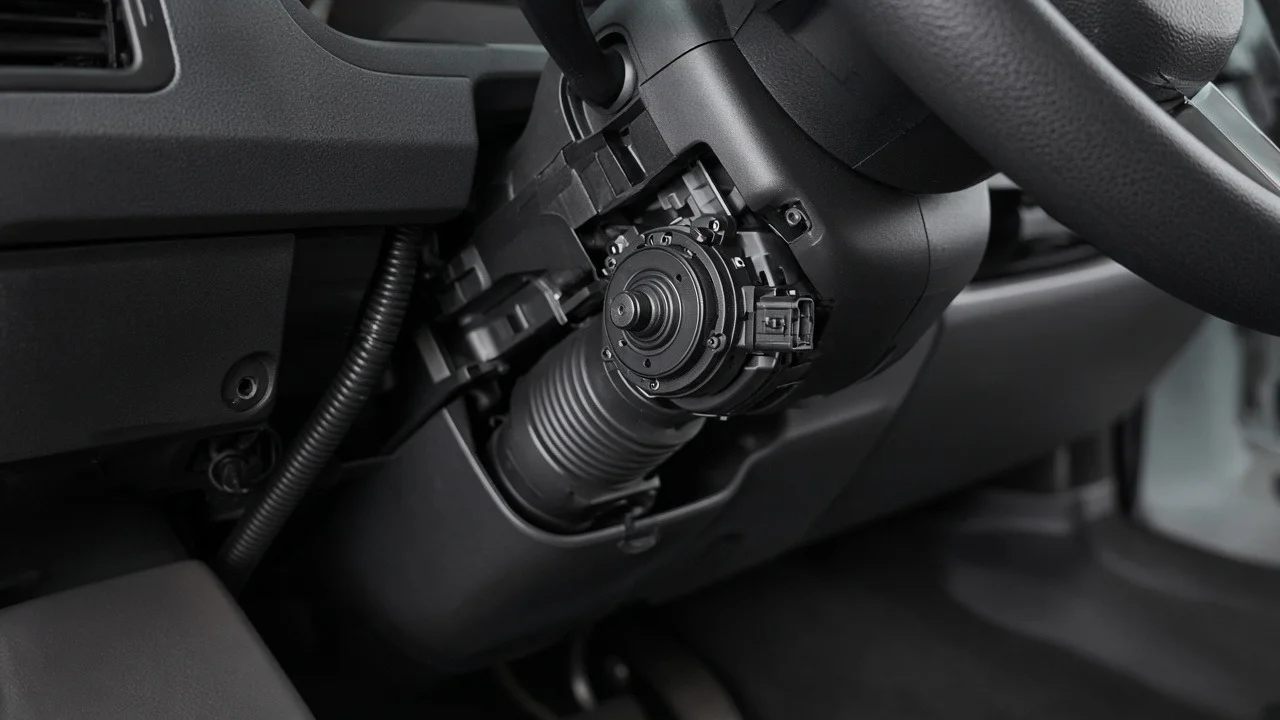
A steering angle sensor is a small but central part of the stability control and electric power steering logic in a Mercedes Vito. When the van reports a fault for this input, the driver may notice warning lights, heavier steering effort, or stability-control behavior that no longer matches the road conditions. The issue can involve the sensor itself, its installation, wiring, or the steering system data that the module expects. The W447 generation and earlier Vito models both depend on this signal, so understanding what the sensor reads and why the fault appears is the first step toward a realistic repair decision.
Essential answer
The essential answer is that the steering angle sensor measures where the driver is pointing the front wheels and sends that position to control modules. In a Mercedes Vito, this information is used for systems such as stability control, traction control, and power steering assistance. When a steering angle sensor fault appears, it means a module is not receiving a plausible or synchronized steering position signal. That does not automatically prove the sensor has failed; the cause may also be wiring, a connector, incorrect installation, or lost calibration after work on the steering column.
For the W447 Vito and the earlier generation, the sensor is located in the steering column area and must understand both steering direction and how far the wheel has been turned. If the signal is missing or out of range, the system may deactivate stability intervention or request a basic setting. The practical meaning for an owner is that the fault should be treated as a symptom to interpret rather than a parts replacement order. Confirming the exact vehicle configuration and reading the stored data is necessary because a manufacturer-specific code can change the diagnosis.