Mercedes Steering Angle Sensor Reset and Calibration
Direct Answer and Scope
On most Mercedes-Benz vehicles, a steering angle sensor reset is not a standalone button procedure. The sensor must be recalibrated using a diagnostic scan tool after the steering angle is centered and, in many cases, after a short straight-line drive. The exact process depends on the chassis generation: W203 models commonly require a reset through the electronic stability program or steering control module, while W204 and later vehicles typically need the sensor zero point normalized through the steering column module or ESP control unit. If the steering wheel is off-center, the sensor signal is invalid, or a steering fault message appears in the instrument cluster, a simple battery disconnect usually does not clear the stored angle.
When a Reset or Calibration Is Needed
A steering angle sensor reset typically becomes necessary after a wheel alignment, steering rack or column repair, clock spring replacement, or when diagnostic trouble codes point to steering angle plausibility or zero point faults. Common symptoms include an illuminated ESP or traction control warning light, a steering angle sensor fault code such as C1140 or C1142, or steering that feels heavier than normal because the stability system is receiving incorrect data. On many Mercedes models, the system may also reduce power assistance or limit other functions until the sensor is normalized.
Model and Generation Differences
The procedure varies by platform. On W203 C-Class models, the steering angle sensor is often integrated into the steering column module and can be reset using a compatible diagnostic tool through the ESP or steering column control module. On W204 models, the sensor zero point is usually learned through the ESP control unit or the electric power steering control module. Later Mercedes vehicles with direct steering systems may require a separate steering angle initialization routine before a short road test completes the calibration.
Required Tools
A Mercedes-compatible diagnostic scan tool is required. Generic code readers may display fault codes but commonly cannot perform the steering angle sensor reset or calibration routine. Tools with appropriate Mercedes coverage include professional-grade devices used in workshops or well-documented multi-brand diagnostic systems. The ignition must be on and the engine off for most initial routines, though some later steps require the engine running.
General Reset and Calibration Procedure
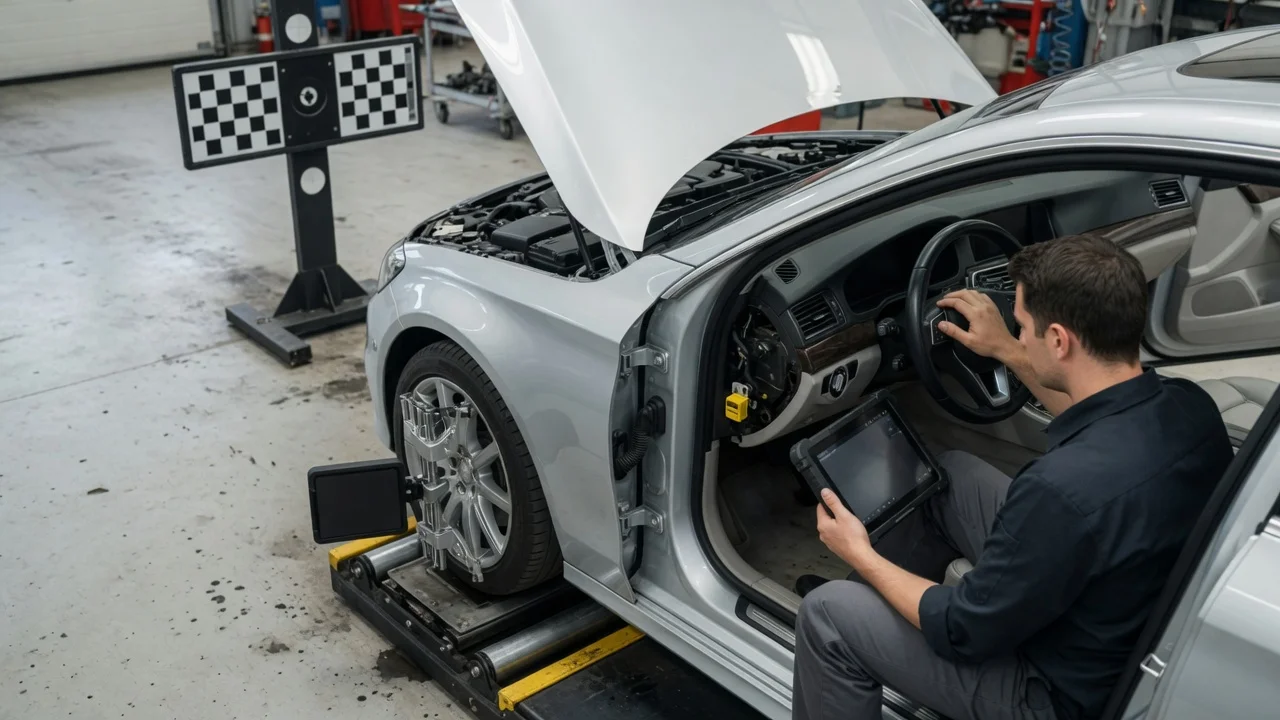
Begin by ensuring the front wheels are pointed straight ahead and the steering wheel is centered. Connect the diagnostic tool and turn the ignition on. Select the steering angle sensor, ESP control unit, or steering column module from the vehicle menu. Look for a function labeled something similar to steering angle sensor initialization, zero point calibration, or normalization. Follow the guided procedure. On some platforms, the tool asks you to turn the steering wheel from lock to lock and return to center. The tool then writes the zero point.
Completing the Learning Drive
After the electronic reset, many Mercedes systems require a short drive to finalize learning. This typically means driving straight ahead at a low to moderate speed for a brief distance until the warning light clears. If the light returns or the steering angle reading remains implausible, the sensor itself may be faulty, the wheels may not be truly centered, or an additional chassis fault may be present.
Common Pitfalls
Disconnecting the battery without performing the diagnostic reset usually does not clear the stored steering angle zero point. Using a generic scan tool may show the fault but lack the reset function. An off-center steering wheel after alignment can cause an immediate plausibility fault even after reset. A failing steering angle sensor or damaged clock spring can prevent successful calibration.
When Professional Service Is Advisable
If the vehicle does not hold the calibration, the steering angle reading fluctuates while stationary, or the warning light returns after repeated resets, the sensor or related wiring may need diagnosis. In such cases, a workshop with Mercedes diagnostic equipment can distinguish between a zero point problem, a mechanically misaligned column, and internal sensor failure.