Mercedes-Benz Brake Pads: Choosing the Right Set and Knowing When to Replace Them
The short answer
There is no single brake pad that fits every Mercedes-Benz. The correct pad depends on the specific vehicle: model, generation, model year, powertrain, trim, market and, importantly, the brake package fitted at the factory. Two cars carrying the same model name can use different calipers and rotors, and therefore different pads. The most reliable way to identify the right part is to match it to the vehicle identification number (VIN) or to the part number on the existing pads, using a parts catalog or a dealer's parts department.
Replacement is normally done per axle. Front and rear pads wear at different rates, so one axle often needs attention before the other. On many Mercedes-Benz models, a pad wear sensor and the condition of the brake rotors are part of the job as well, which is covered below.
Why fitment varies between models
Brake pads are shaped to fit a particular caliper and are sized for a particular rotor. Mercedes-Benz uses different brake hardware across its range and within individual model lines. Factors that can change which pad is correct include:
Model and body style, such as sedan, coupe, wagon or SUV; Generation and model year, since brake designs can change at a model update; Engine and powertrain, including hybrid and electric variants; Trim or option packages that add larger or sport-oriented brakes; AMG versions, which commonly use their own brake systems; Market-specific equipment differences; Front versus rear axle, which use different pads
Because of this, a listing that names only the model, such as a C-Class or E-Class, is not enough to confirm fitment. Matching by VIN or by the existing part number removes most of the guesswork.
Genuine, OE-supplier and aftermarket pads
Buyers generally choose among genuine Mercedes-Benz parts sold through dealers, pads from companies that supply original equipment, and aftermarket pads made to fit the same applications. Pads differ in friction material, often described as the compound, and those differences can affect braking feel, noise, the amount of brake dust and rotor wear. No comparative test data was supplied for this guide, so it does not rank brands or compounds. As a general editorial point, pads that are listed for the exact vehicle and brake package, and that come with any required hardware, are a safer choice than pads chosen on price alone.
Signs that replacement may be due
A brake wear warning in the instrument cluster, on models equipped with electronic pad wear sensors; Squeaking or squealing when braking, although some noise can come from other causes; Grinding, which can mean the friction material is worn through and metal is contacting the rotor; A longer stopping distance or a brake pedal that feels different; Vibration or pulsing through the pedal, which more often points to a rotor problem but warrants an inspection of the whole brake assembly; Visibly thin pad material when checked through the wheel or with the wheel removed
What a replacement typically involves
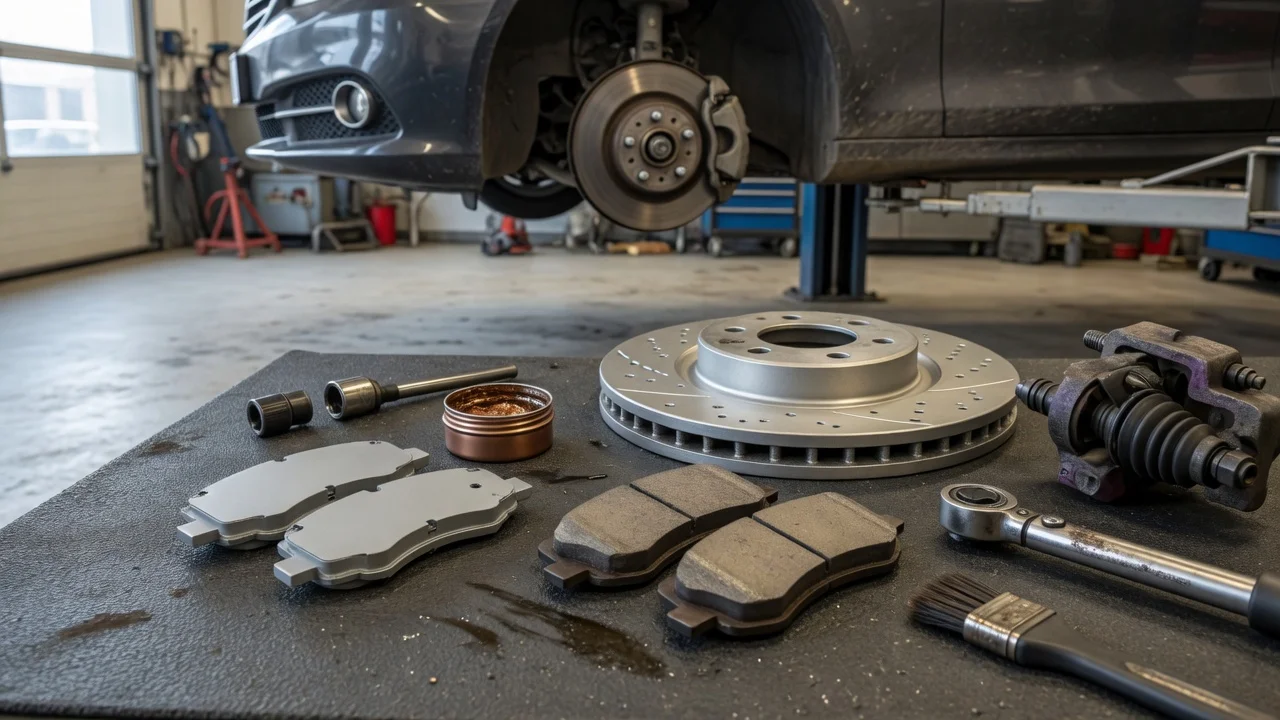
Pads are replaced in sets covering both wheels on the same axle so that braking stays balanced. Where a car uses an electronic wear sensor, the sensor is often replaced together with the pads, particularly once it has triggered a warning. Check the service information for the specific vehicle rather than assuming the old sensor can be reused.
The rotors should be measured during the job. Each rotor has a minimum thickness specification, and rotors that are below it, scored or warped are usually replaced at the same time as the pads. On models with an electronic parking brake, the rear caliper may need to be put into a service or maintenance mode, using a diagnostic tool or a procedure set out in the vehicle documentation, before the rear pads can be changed. The procedure depends on the model and year.
New pads are normally bedded in after installation, meaning they are given a series of controlled stops so the pad material transfers evenly onto the rotor. Brake work is safety-critical. Anyone who is not confident with the procedure, torque specifications and any electronic steps should have the work done by a qualified technician.
What this guide cannot confirm
No model-specific documentation or test data was supplied, so the following details are not stated here and should be confirmed in the owner's manual, official service information or with a dealer or qualified workshop for the exact vehicle:
Part numbers for any specific model, year or brake package; Minimum pad and rotor thickness specifications; Recommended inspection or replacement intervals; Torque values and any model-specific service procedures; Prices for parts or labor; Performance comparisons between particular brands or pad compounds