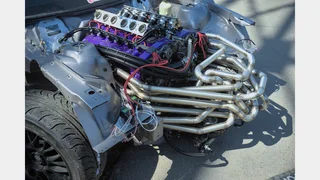
Oil leak from the manifold

Oil appearing near the manifold can be alarming, but the source is often a slow seep rather than a catastrophic failure. On many engines, the intake area sits close to valve covers, camshaft solenoids, and positive crankcase ventilation plumbing. Identifying the exact wet spot requires tracing the highest point of residue, not just cleaning the lowest puddle. This guide explains how to separate a true manifold-related leak from a nearby seep and how to interpret the evidence safely.
Direct answer
An oil leak from the manifold usually means engine oil is escaping from a sealing surface, a pressurized line, or a crankcase vapor path adjacent to the intake or exhaust manifold. The manifold itself is primarily an air passage, so raw oil pooling directly beneath it often comes from a valve cover gasket above, a camshaft position sensor seal, or a turbocharger oil feed on forced-induction engines. The direct answer is to locate the highest wet point on the engine, because gravity carries oil downward and airflow can spread it sideways along flanges.
A genuine manifold-area leak may also appear as an oily film inside the intake tract rather than an external drip. Positive crankcase ventilation carries suspended oil mist into the intake, where it can settle around the throttle body or plenum. If the residue is external and near the exhaust side, the smell of burning oil on hot metal is a useful clue. Do not assume a failed intake gasket is the cause; many manifold leaks are misdiagnosed seepage from above or from nearby pressurized oil passages.