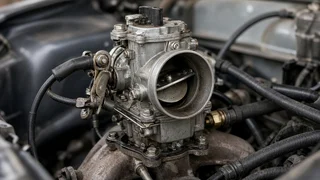
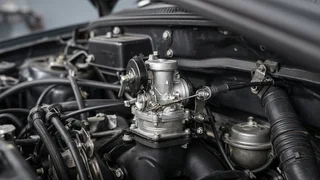
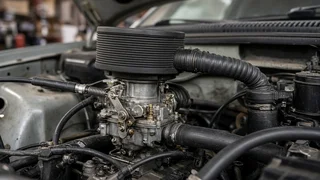
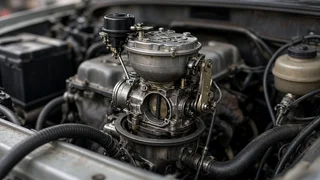
Quadrajet carburetor with manual choke
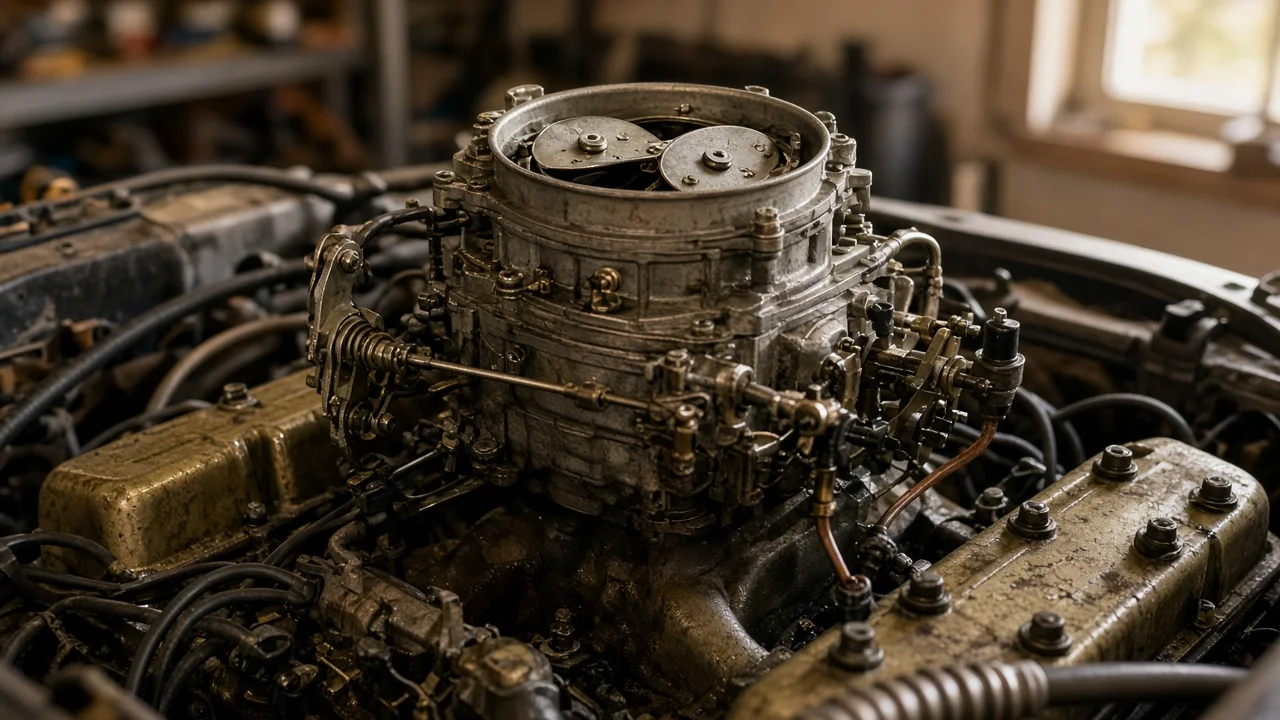
A Quadrajet carburetor with a manual choke gives the driver direct control over the cold-start mixture instead of relying on an automatic choke coil or divorced thermostat. On Rochester spread-bore designs, the primary venturi area is deliberately small for strong signal, while the large air valve handles higher demand. When a conversion or replacement uses a manual choke cable, the driver pulls the knob to close the choke plate and pushes it back as warmth builds. This arrangement matters for owners tuning a vintage engine, diagnosing hard starts, or comparing throttle response.
Essential answer
The essential answer is that a Quadrajet equipped with a manual choke replaces an automatic choke mechanism with a control cable operated from the cabin. The cable attaches to the choke lever while its sheath is secured to a bracket, allowing the driver to pull the knob and rotate the choke plate toward closed. That action restricts airflow through the primary venturis and causes the carburetor to deliver a richer air-fuel mixture during cranking. Once the engine fires, the driver eases the cable inward so the plate opens and the idle setting transitions toward normal warm operation.
A key difference is calibration. An automatic choke responds to engine temperature or an electric heating element, with linkage travel changing as the thermostatic spring relaxes. A manual choke depends entirely on the operator, so the cold-start mixture is adjusted by feel rather than by a preset curve. This can improve control on modified engines where heat from headers, different intake manifolds, or altered camshaft vacuum signals makes an automatic choke behave inconsistently. However, cable routing must remain smooth, and the choke plate must fully open to avoid an over-rich condition after warm-up.