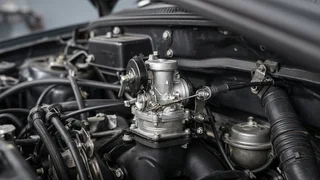
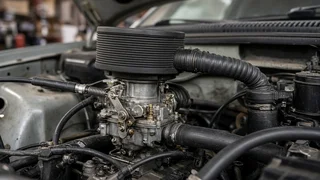
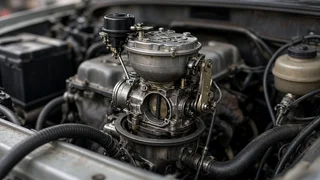
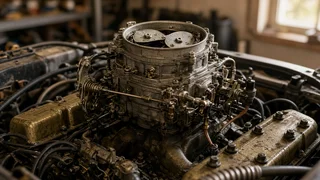
What is a manual choke carburetor and how it works
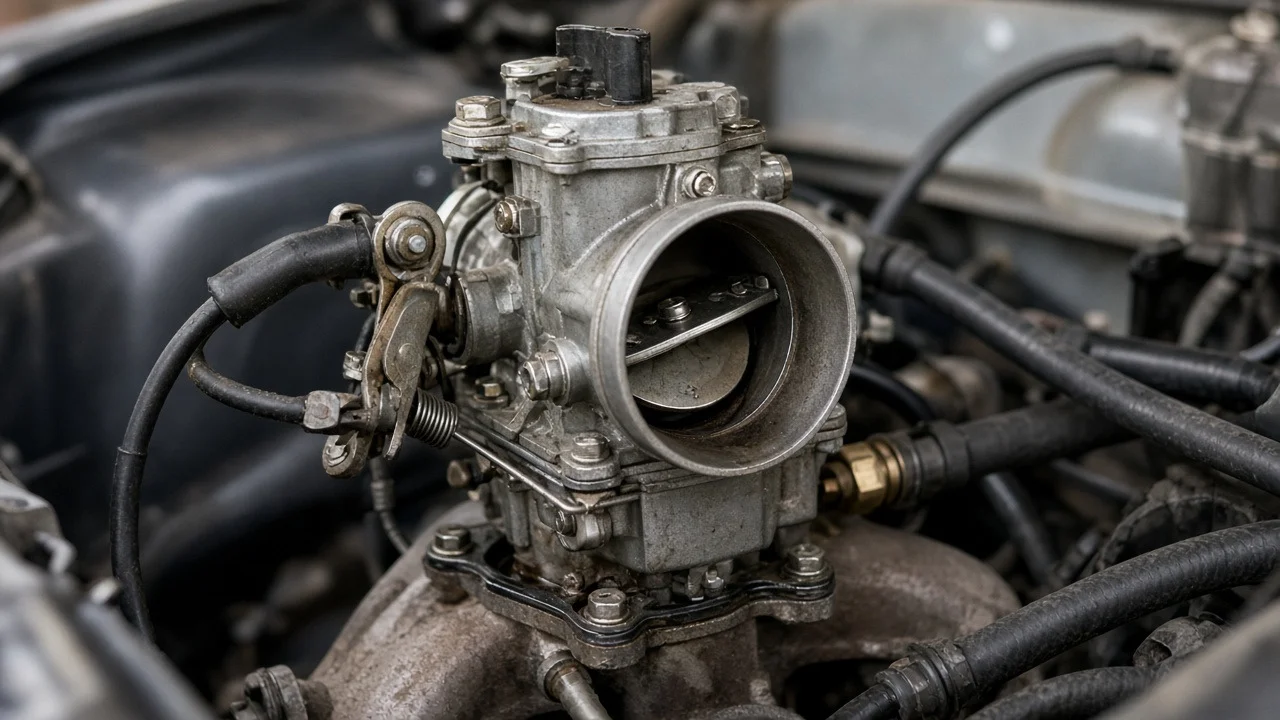
A manual carburetor choke gives the driver direct control over cold-start fuel enrichment. Instead of relying on an automatic system, a cable connected to a lever or knob inside the cabin lets the operator restrict airflow into the carburetor. This creates a richer air-fuel mixture that helps the engine fire and stay running when it is cold. Knowing how the choke plate and control cable work helps owners avoid hard starts, flooding, and rough warm-up behavior.
Meaning
In automotive terms, a manual choke carburetor is a fuel metering assembly that uses a driver-operated control cable to move a choke plate inside the air entry. The choke plate is a restrictive flap that partially blocks incoming air. When closed, it increases vacuum acting on the fuel circuit, so the engine receives a richer cold-start mixture. This design was common on vehicles and equipment built before automatic electric or water-heated chokes became standard.
The phrase can confuse owners because the component is a carburetor equipped with a manual choke, not a separate type of engine part. The control cable links a knob, lever, or pull handle in the passenger area to the linkage on the carburetor body. Moving the control changes the position of the plate. Because operation depends on mechanical input from the driver, understanding the cable routing and linkage travel is central to operating the system correctly.
How it works
Cold gasoline does not vaporize as readily as warm fuel, so a cold engine needs extra fuel relative to air. When the driver pulls the manual choke control, the choke plate closes and reduces airflow. The closed plate raises intake vacuum across the main and idle fuel circuits, pulling additional liquid fuel from the float bowl through the discharge ports. This rich mixture compensates for fuel that condenses on cold intake surfaces and keeps combustion stable.
As the engine warms and coolant heat reaches the carburetor area, the driver gradually pushes the control back in. This opens the choke plate, allowing normal air entry and leaning the mixture toward the correct ratio. The idle setting and the position of the fast-idle cam often work together with the plate. A slightly raised fast idle during warm-up helps prevent stalling while the rich mixture is still needed. The driver must coordinate these movements to avoid leaving the engine overly rich once it reaches operating temperature.
Key differences
The main difference is between a manual carburetor choke and an automatic choke. A manual system depends on the operator to open and close the plate at the right time. An automatic choke uses a bimetallic spring, an electric heater, or engine coolant to open the plate progressively as temperature rises. Automatic chokes require less attention but add complexity. A manual choke gives direct control, which can be useful on engines that idle in cold weather or sit for long periods.
Another distinction is between the choke plate and the throttle plate. The choke plate sits near the top of the air horn and restricts air before the venturi. The throttle plate is closer to the intake manifold and controls the volume of the air-fuel mixture entering the cylinders. Pulling the choke does not hold the throttle open; it restricts air and often engages a separate fast-idle linkage. Knowing this separation helps explain why an engine may race slightly when the choke is engaged even though the driver has not touched the accelerator.
Understanding a problem
Hard starting on a cold engine can occur when the choke plate does not close fully. Worn linkage travel, a stretched control cable, or a misadjusted clamp can prevent the plate from seating. If the plate stays open, the cold-start mixture stays too lean, and the engine may crank without firing or start briefly and stall. Inspect the cable movement and confirm that the plate changes position at the carburetor before assuming an ignition fault or fuel pump problem.
A choke that is left closed too long creates a different condition: an overly rich mixture that can cause black exhaust smoke, rough running, or fuel-fouled spark plugs. After warm-up, the engine may surge or feel sluggish if the plate does not open fully. Check that the control knob returns smoothly and that the choke plate reaches a vertical or fully open position. Because some choke linkages are specific to particular carburetor models, confirm the correct adjustment for that vehicle before changing parts.