Mercedes Sprinter Steering Angle Sensor Calibration
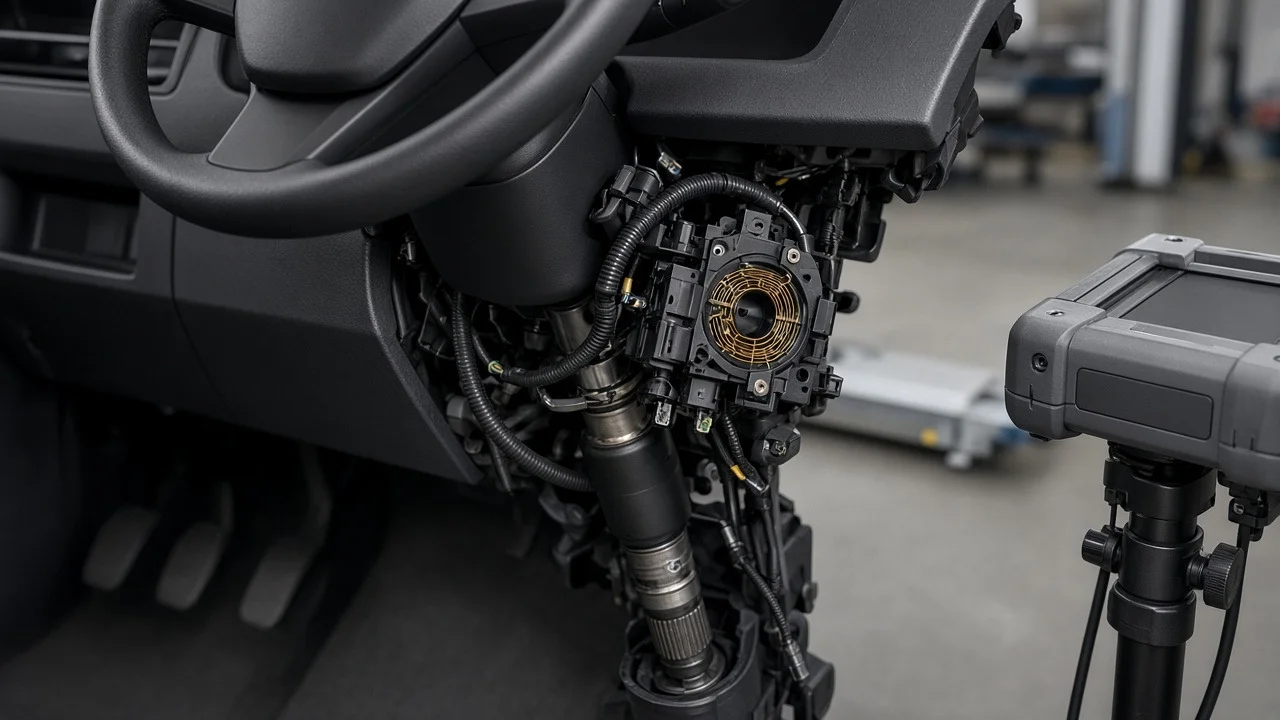
A Mercedes Sprinter steering angle sensor calibration question often begins with a warning light, a stability-control message, or steering that no longer feels centered after suspension work. The sensor reports hand-wheel position so systems such as electronic stability control and steering-assist features can compare driver intent with vehicle motion. When the stored reference drifts or is lost, recalibration realigns the electronic zero point with the true straight-ahead condition. On a Sprinter, basic re-centering procedures can sometimes help, yet full calibration usually needs a compatible scan tool because the control module must learn the correct zero position under defined conditions.
Essential answer
The essential answer is that Mercedes Sprinter steering angle sensor calibration is the process of teaching the steering control electronics the correct straight-ahead reference after the sensor value has shifted, been replaced, or lost its learned setting. The procedure also allows related systems to interpret steering rotation accurately. Because the Sprinter is a commercial vehicle with stability and traction functions, the calibrated angle is not just a convenience. Wheel alignment, suspension geometry, and the sensor zero must agree; otherwise the module may still see a deviation even when the van drives straight.
A practical first step is to confirm whether the issue is a simple center-point reset or a full sensor initialization. Steering-angle zeroing can sometimes be attempted by turning the wheel lock to lock or driving briefly after a battery disconnect, but this is not the same as entering the calibration routine with a diagnostic device. On a Sprinter, electronic stability and steering-related warnings generally require the proper scan-tool path. Without confirming the vehicle-specific procedure, the condition may return because the stored offset, mounting position, or communication data was not correctly updated. Calibration should follow mechanical checks so the suspension is not fighting the electronic reference.
The scan-tool routine records the sensor value, wheel alignment state, and often vehicle speed or steering movement inputs while the front wheels are set straight. If the control unit does not accept the learned value, the next step is to inspect the sensor’s signal and wiring, but a fault code is evidence to interpret, not proof that the sensor has failed. Manufacturer-dependent codes require vehicle-specific confirmation before replacing components. For an owner, the most useful conclusion is that calibration is a software-level alignment between the steering sensor and the chassis control systems after the physical steering and suspension condition has been verified.