Mercedes Sprinter Steering Angle Sensor Fault

A Mercedes Sprinter steering angle sensor fault typically appears through warning messages, altered steering effort, or stability-control behavior that does not match the road conditions. The cluster wording often points to a plausibility problem, learned offset loss, or communication interruption rather than a definitively broken part. Understanding what the sensor measures and how the van interprets that signal helps owners separate simple initialization needs from deeper wiring, mounting, or chassis concerns. A diagnostic reading is a starting point, not an automatic component replacement order.
Direct answer
The immediate answer is that this fault usually means the steering angle signal has become implausible, missing, or outside a stored reference range. The sensor reports steering wheel position and rate of turn so the stability and traction systems can compare driver intent with actual vehicle yaw. When that comparison fails, the Sprinter may store a steering angle sensor fault and reduce or suspend functions that rely on accurate steering position. The condition is often intermittent and may clear after a proper reset procedure.
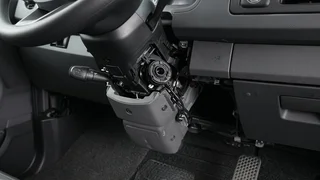
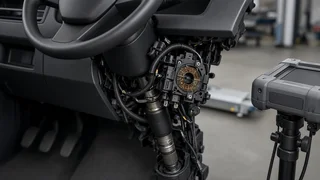
However, the repair path is not the same for every Sprinter configuration. The signal may arrive from a dedicated sensor in the column or from a module integrated with clock spring and switch functions. Manufacturer-specific code definitions require confirmation for the exact model and control unit involved. Because the warning may appear after a battery disconnect, wheel alignment, steering component work, or simply as an aged calibration drifts, the useful first step is evaluating recent work and checking whether the sensor can be relearned before replacing hardware.
Interpreting symptoms and test results
A stored steering angle sensor fault should be read alongside live data such as steering wheel angle, sensor voltage, and status of the initialization routine. If the displayed angle stays frozen while the wheel is turned smoothly, the concern may be sensor supply, ground, or communication wiring. If the reading moves but is offset from the actual wheel center, the fault may reflect a lost calibration rather than a failed component. Checking ride height and wheel alignment can matter because a steering correction made to offset a pull will change the relationship between the wheel position and the vehicle centerline.
Mechanical conditions also create misleading sensor data. Joint play, a loose mounting point, or altered suspension geometry can produce sensor values that do not match the yaw response expected by the control module. A careful inspection of column mounting and steering linkage is therefore useful before condemning the sensor. Always confirm the applicable test criteria and operating conditions; without that, a code can only indicate the system has detected a discrepancy, not which element is responsible for it.