Maruti Wagon R recommended engine oil
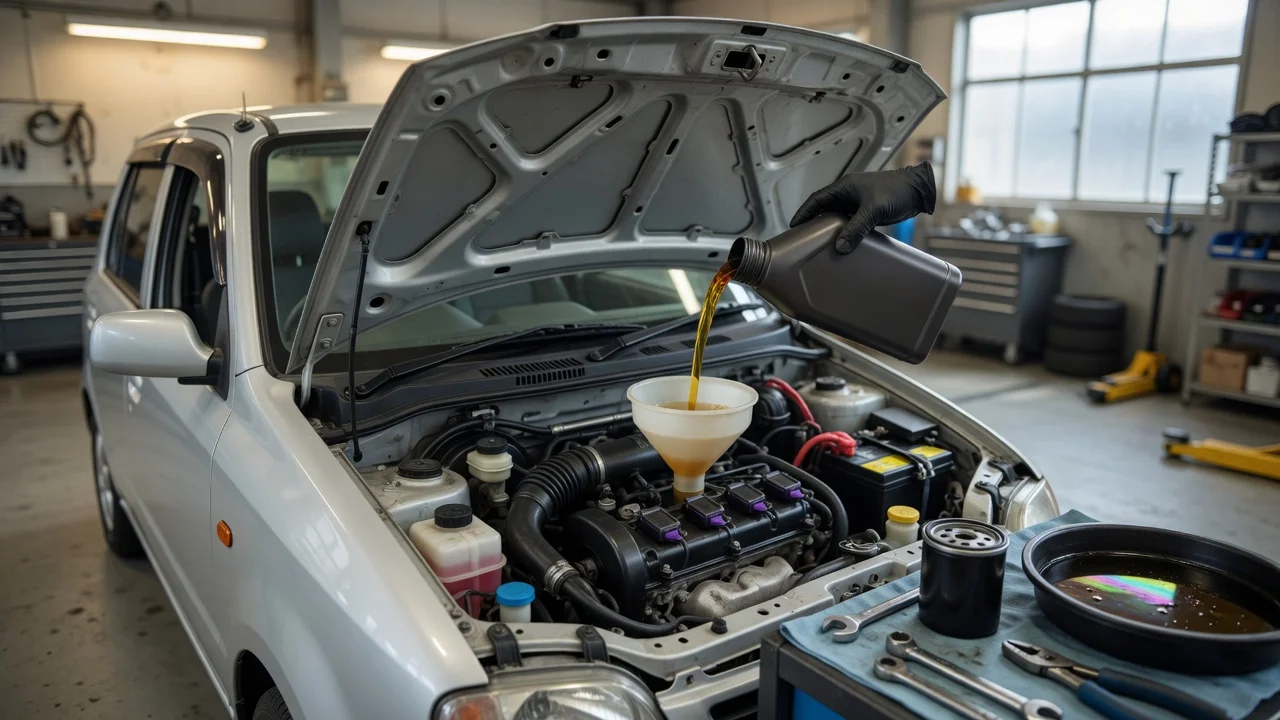
What oil the Wagon R needs
The recommended engine oil for a Maruti Suzuki Wagon R is the SAE viscosity grade and oil-quality standard listed for that specific vehicle in its owner’s manual. The same grade is often repeated on the engine oil filler cap. There is no single oil that applies to every Wagon R.
The correct fill changes with model year and generation, the petrol or CNG engine fitted, and the market the car was built for. A grade that suits one K-series Wagon R can be wrong for another. Treat a workshop poster, a parts-counter suggestion, or a generic “hatchback 5W-30” listing as a starting point only until it matches the manual for your car.
What changes the answer
Older and current Wagon R engines do not share one lubrication chart. Indian-market cars have used more than one K-series petrol engine across generations, and factory CNG versions sit beside petrol ones. Maruti Suzuki also specifies oil by climate and operating condition in some manuals, so a viscosity that is approved for temperate use may sit beside a different winter grade.
Generation and model year: first-, second- and third-generation Wagon R cars use different engines and different published oil charts. Powertrain: petrol and factory CNG variants can differ in specified grade, drain interval, or both; CNG use often shortens the oil-change interval even when the viscosity is the same. Market: a Wagon R sold in India, Japan or another export market may carry a different SAE grade or quality standard for the same model name. Service condition: severe use (short trips, heavy traffic, dusty roads, frequent cold starts) is often called out in the manual as a reason to change oil sooner, not as a reason to ignore the specified grade.
How to read the official spec
Open the lubrication or engine-oil section of the owner’s manual and note three items: the SAE viscosity (for example a 0W-16, 0W-20 or 5W-30 class, whatever is printed for your engine), the quality standard (API, ILSAC and/or a Maruti Suzuki or Suzuki specification), and the sump capacity with filter if you are filling at home. If those pages are missing, the oil filler cap is the next on-car check; an authorised Maruti Suzuki workshop can confirm the same data from the vehicle identification number.
When you buy oil, match both the viscosity and the quality standard. A bottle that has the right SAE number but an older or lower API/ILSAC rating is not a documented substitute. Genuine Maruti Suzuki oil and independent brands are both acceptable when they meet the published spec; the manual is the reference, not the brand on the cap.
What this guide cannot pin down
This article does not reproduce a model-year viscosity table, oil capacity in litres, or a named API/ILSAC rating for any Wagon R engine. Those figures are vehicle-specific and were not verified here against a dated owner’s manual. Stating a single grade as “the” Wagon R oil would overstate what can be supported.
If the manual, filler cap and dealer record disagree, follow the owner’s manual for that VIN and ask the selling dealer or an authorised workshop to put the specified grade in writing before the next service. Using a thicker or thinner oil than specified can affect cold starting, oil pressure, consumption and, on a car still in warranty, whether a lubrication-related claim is accepted.
Next step
Find the SAE grade and quality standard for your Wagon R in the owner’s manual, confirm it on the filler cap if it is printed there, and buy oil that meets both. Book the drain at the interval in the service schedule, using the shorter severe-use or CNG interval when that is what the manual describes for how the car is actually driven.