Loose Car Battery Terminal: What It Means and What to Do
The short answer
If a battery terminal on your car is loose, fix it before relying on the vehicle. A terminal is the metal clamp that connects a battery cable to one of the battery's posts. When that clamp doesn't grip the post firmly, current flows unreliably or not at all. In many cases the fix is to clean the post and clamp, then tighten the clamp nut until the terminal can't be twisted or lifted by hand. If the clamp is cracked, stretched, badly corroded, or still won't grip after tightening, the terminal or cable needs replacing, not just more force on the nut.
One qualification matters. Tightening the terminal fixes the connection but doesn't prove the battery or charging system is healthy. If symptoms continue after the terminal is secure, the cause may lie elsewhere.
Why a loose terminal causes problems
Starting an engine draws a large current through the battery cables. A loose or dirty connection adds resistance at the exact point where that current has to pass. The battery may test as charged, yet not enough current reaches the starter motor or the vehicle's electrical system. A poor connection can also limit how well the alternator recharges the battery while driving.
Typical symptoms include: • The engine cranks slowly, clicks, or doesn't crank at all; • Dash lights flicker, dim, or reset when you try to start; • Intermittent electrical faults, such as the radio or clock resetting; • Warning lights that come and go; • A stall or loss of electrical power after hitting a bump, if the clamp briefly loses contact
These symptoms overlap with those of a weak battery, a failing starter, or a charging fault. A loose terminal is a common and easily checked cause, which is why it's worth ruling out first.
How to check and tighten it safely
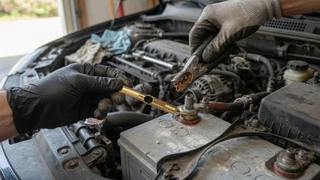
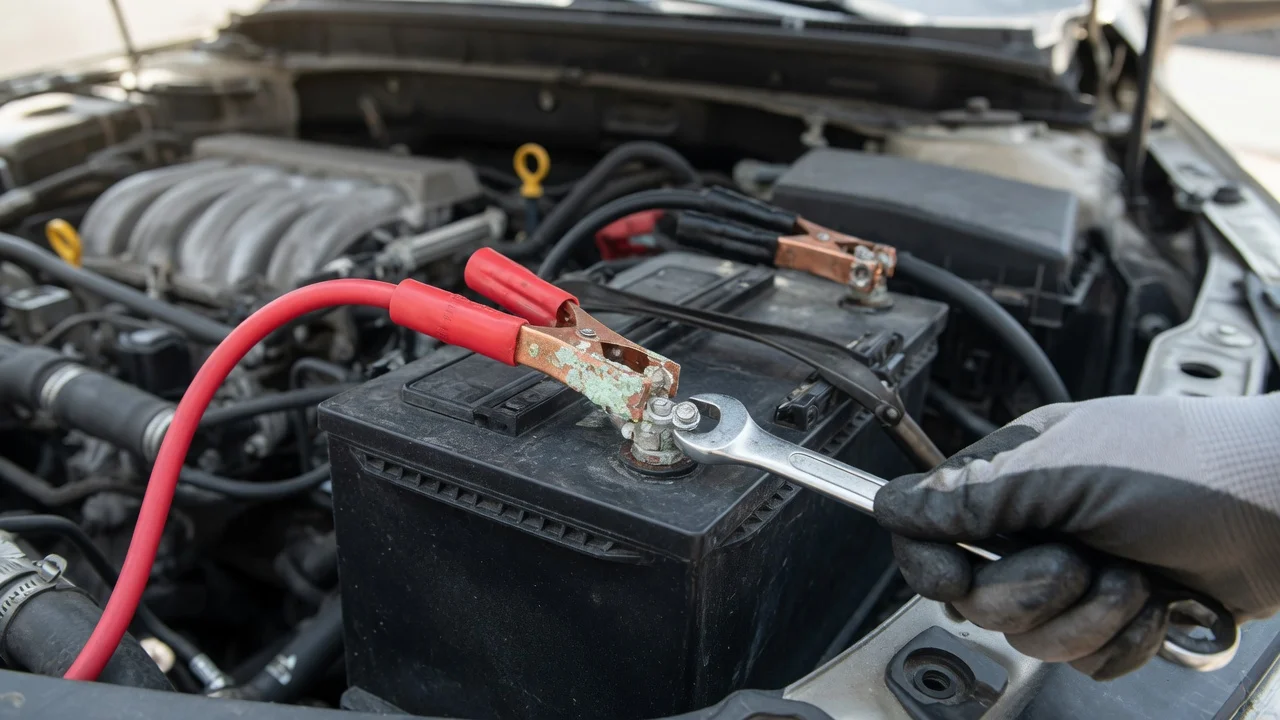
Battery procedures and terminal designs vary by vehicle, so check the owner's manual for your model before starting. The general approach is: • Turn the ignition off and remove the key, or switch off a keyless system. • Wear eye protection and gloves. Battery acid and corrosion residue are harmful to skin and eyes. • Identify the negative terminal, usually marked with a minus sign and often a black cable, and the positive terminal, marked with a plus sign and often red or covered. • Try to twist each terminal by hand. If it rotates or lifts on the post, it's loose. • If you need to remove the terminals for cleaning, disconnect the negative first and reconnect it last. This reduces the risk of a short circuit if a tool touches the car's metal body while you work on the positive side. • Don't let a metal tool touch both posts, or the positive post and bodywork, at the same time. • Clean white, green, or blue corrosion from the posts and clamps before refitting. • Seat the clamp fully down on the post and tighten the nut until the terminal can't be moved by hand. Avoid overtightening, which can crack the clamp or damage the battery post.
Some manufacturers specify a tightening torque for the terminal nuts. That figure varies by vehicle and battery type and isn't covered here. Use the value in your vehicle's service information if you have access to it.
When tightening isn't enough
A terminal that keeps working loose, or won't clamp down even when fully tightened, usually has a problem beyond the nut. Common causes include: • A clamp that has spread or deformed from earlier overtightening; • A cracked clamp or a stripped bolt; • A worn or damaged battery post; • A battery that isn't secured by its hold-down, so movement keeps stressing the cable; • Corrosion that has eaten into the clamp or crept into the cable
In these cases, repair or replacement of the terminal, cable, or battery is the right fix. Using shims or foil to pack out a worn clamp is an improvised measure, not a lasting repair.
Vehicle-specific cautions
Some vehicles have extra considerations, depending on the model, model year, and equipment: • Many cars with automatic start-stop systems have a battery monitoring sensor fitted to the negative terminal. Handle it carefully, and check the manual for any steps needed after disconnecting the battery. • Disconnecting the battery can reset radios, clocks, window auto-up functions, or learned engine idle settings on some vehicles. Some older radios need a security code. • Hybrid and electric vehicles also have a 12-volt battery, but it may be located away from the engine bay. They also carry high-voltage systems, usually marked with orange cabling. Work only on the 12-volt battery as described in the owner's manual, and leave high-voltage components to qualified technicians.
What this guide doesn't cover
This guide covers general practice. It doesn't include terminal torque values, battery locations, or reset procedures for specific vehicles, because these vary by make, model, and market. Your owner's manual or a qualified technician is the best source for those details. If the car still won't start or shows electrical faults after the terminals are clean and tight, have the battery and charging system tested.