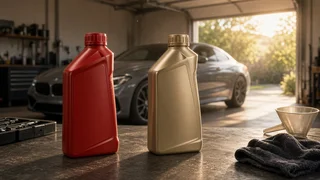
Kirkland Engine Oil vs Mobil 1: Which One Fits Your Car?
The Short Answer
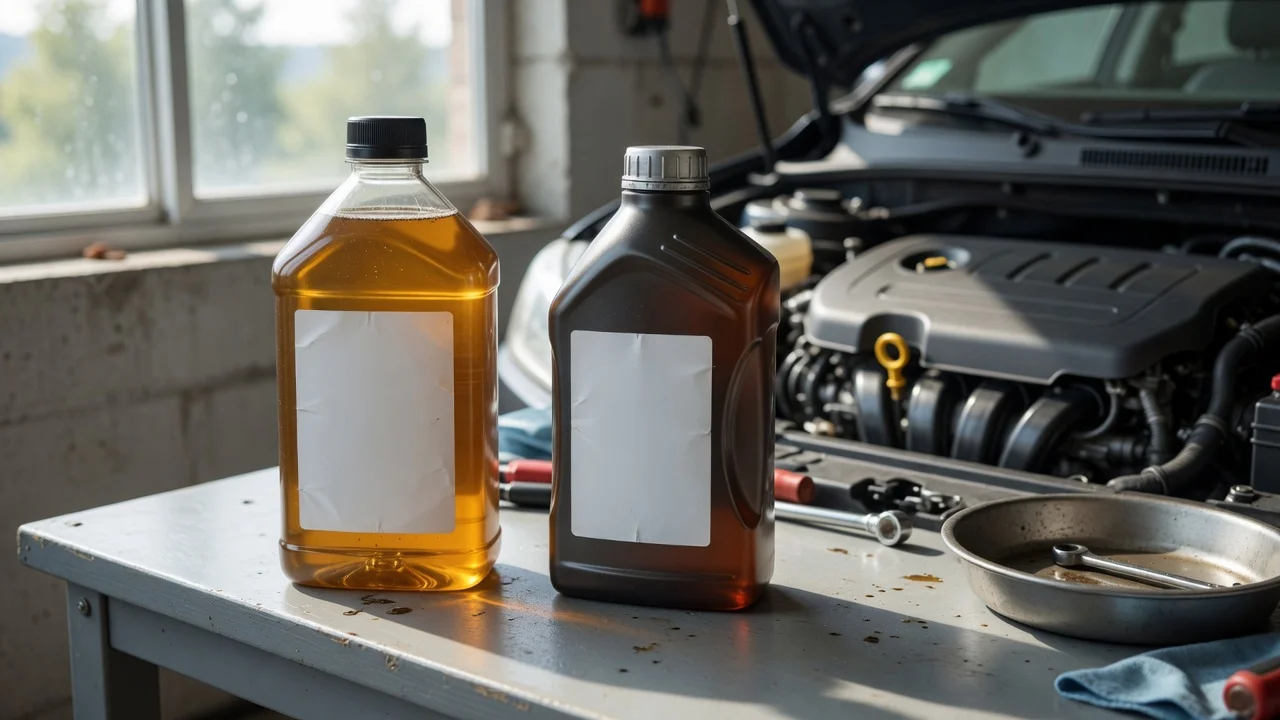
For many everyday gasoline cars, Kirkland Signature full synthetic oil and a comparable Mobil 1 grade can both be suitable, provided the bottle carries the certifications and viscosity grade your owner's manual requires. Kirkland's main advantage is a lower price per quart, which is typical of store brands. Mobil 1's main advantage is a much wider product line, and some of its grades carry specific carmaker approvals that a store brand may not.
An important qualification: neither oil is better for every engine. If your vehicle requires a specific manufacturer approval, such as a European carmaker's oil specification, that requirement decides the choice. Brand name and price come second. Also, no independent laboratory comparison of these two oils was supplied for this article. Any claim that one protects an engine measurably better than the other cannot be supported here.
Key Terms Explained
Viscosity grade (for example, 0W-20 or 5W-30): Describes how the oil flows when cold (the number before the W) and at operating temperature (the number after it). Use the grade listed in your owner's manual. API service category (for example, API SP): A performance standard from the American Petroleum Institute. Oils that meet it display the API "donut" symbol on the bottle. ILSAC standard (for example, GF-6): A related standard for gasoline passenger-car oils, shown by the API "starburst" symbol. Manufacturer approval: A carmaker's own specification, such as GM's dexos or European specifications from Volkswagen, Mercedes-Benz, BMW or Porsche. These go beyond the general API and ILSAC standards and are licensed product by product.
The Differences That Matter
Criterion | Kirkland Signature Full Synthetic | Mobil 1; Seller | Costco store brand | ExxonMobil's flagship synthetic line; General certifications | Mainstream grades are marketed with current API and ILSAC certification; confirm the symbols on the bottle you buy | Most mainstream grades carry current API and ILSAC certification; confirm the symbols on the bottle; Manufacturer-specific approvals | Limited or variable; check the label for the exact approval your car needs | Selected products are formulated and licensed for specific carmaker approvals, including some European specifications; Grade selection | A small range of common passenger-car viscosities | A broad range, including high-mileage, extended-performance and European formulas; Availability | Costco warehouses and Costco online; selection varies by location | Widely sold at auto parts stores, mass retailers and service shops; Price | Generally lower per quart, usually sold in multi-bottle packs | Generally higher per quart; prices vary by product and retailer
The table compares labeling and product-line characteristics, not measured performance. Specific approvals and grades can change between production runs and markets, so the label on the bottle in front of you is the authority. This article does not list exact approvals for each grade because current product data was not supplied.
Certification Versus Performance Claims
An API SP or ILSAC GF-6 symbol means the oil has passed the same minimum standard set of tests, whatever the brand. It does not mean two certified oils perform identically. Formulations can exceed the minimum by different margins. Without published results from the same test methods, run on the same viscosity grade, there is no fair basis for ranking Kirkland against Mobil 1 on wear protection, deposit control or longevity.
Comparisons online often mix data that cannot be compared directly: different viscosity grades, different test procedures, or used-oil analyses from different engines and drain intervals. Treat such comparisons with caution unless the conditions match.
Who Makes Kirkland Oil?
Costco does not prominently publicize the blender of its motor oil, and reports about the manufacturer have not been officially confirmed by the brand. For buying purposes, the more useful question is whether the bottle carries the certifications and approvals your engine requires.
Warranty Considerations
In the United States, federal warranty law generally prevents a carmaker from voiding a warranty just because you used a non-branded or store-brand oil, as long as the oil meets the specifications in your owner's manual. Keep receipts showing the oil you bought and the dates of each change. Rules differ in other markets, so check your warranty terms if you live outside the US.
Which Should You Choose?
Common gasoline car that needs a mainstream grade such as 0W-20 or 5W-30 with API and ILSAC certification: Kirkland is a reasonable, lower-cost choice if you already shop at Costco and the label matches your manual. Car that requires a specific approval, such as dexos or a European specification: Choose the oil whose label shows that exact approval. That may be a particular Mobil 1 product, or another brand that carries the approval. Performance, turbocharged or European engine with a narrow oil requirement: Look for the exact specification code in your manual. Mobil 1's broader range makes a matching product easier to find. Flexible buying needs, such as topping up on a road trip or using a quick-lube shop: Mobil 1's wider retail availability is a practical advantage. Extended drain intervals beyond your manual's schedule: Neither oil should be run longer than your manufacturer recommends unless the product and your vehicle maker both support it.
Gaps in the Evidence
Three things were not supplied for this comparison: independent side-by-side test results, current per-quart pricing, or grade-by-grade approval lists for either brand. As a result, this article cannot state that one oil outperforms the other, quote price differences, or confirm which approvals a given bottle carries today. Your owner's manual and the bottle label settle those questions for your vehicle.