Valvoline Oil vs Mobil 1: Which Should You Use?
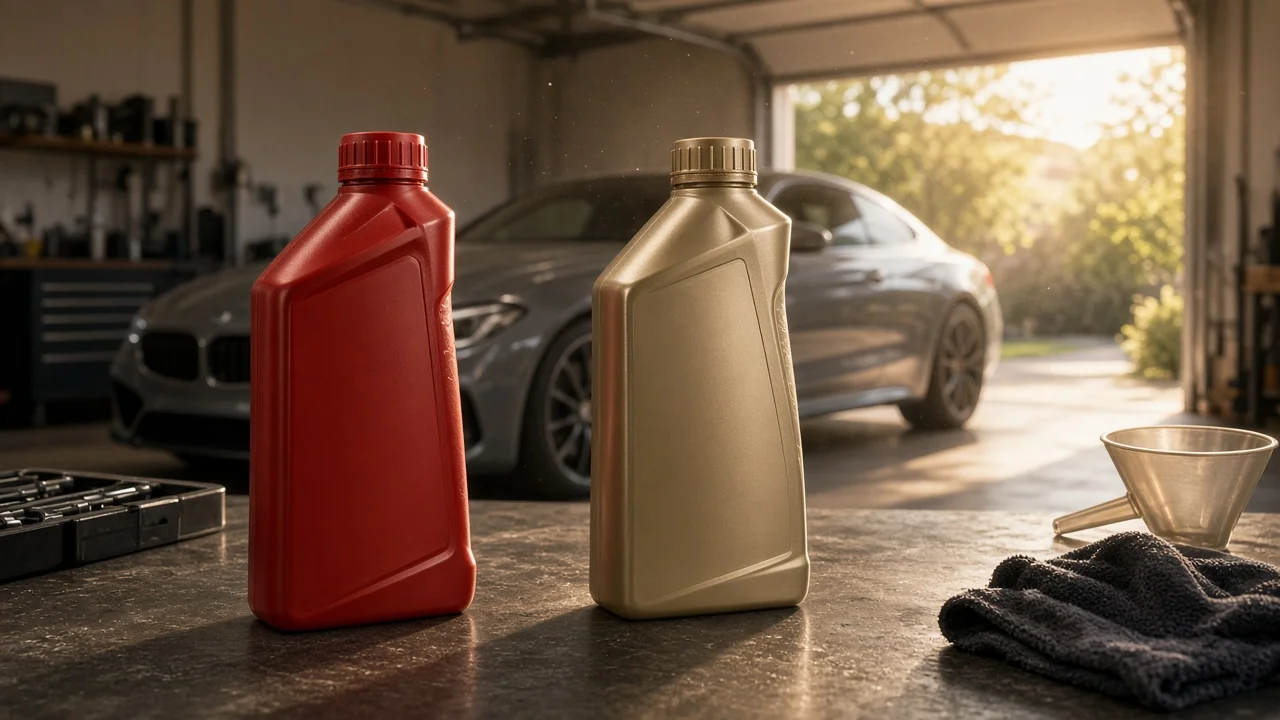
Short answer: for most cars, a Valvoline full synthetic and a Mobil 1 full synthetic in the correct viscosity, carrying the same industry and manufacturer approvals, will both protect your engine well. Neither brand is universally better. The deciding factors are whether a specific bottle meets the specification your vehicle requires, which product tier you are comparing, and the price and availability where you shop. Brand matters less than matching the specification printed in your owner's manual. The comparison only makes sense like for like. Valvoline sells conventional, synthetic blend, high-mileage and full synthetic oils, while Mobil 1 is ExxonMobil's synthetic line. Comparing Valvoline conventional with Mobil 1 synthetic is comparing two different categories, not two brands.
Who Makes Each Oil
Mobil 1 is ExxonMobil's flagship synthetic motor oil brand. It is widely used as factory fill by several vehicle manufacturers and is known for its broad list of manufacturer approvals, particularly for European and performance engines. ExxonMobil's conventional oil is sold under a different name, so everything with the Mobil 1 label is synthetic.
Valvoline is one of the oldest motor oil brands in the US. Its oils come from Valvoline Global Operations, which is now a separate company from the Valvoline quick-lube service chain, although that chain still uses Valvoline oil. Valvoline's range covers every major tier, from conventional oil to full synthetic, and it is especially well known for its high-mileage formulas.
Product Lines Compared by Tier
Tier | Valvoline | Mobil 1; Conventional | Offered | Not offered under the Mobil 1 name; Synthetic blend | Offered | Not offered under the Mobil 1 name; High mileage | Offered in blend and full synthetic forms (MaxLife family) | Offered as a full synthetic; Standard full synthetic | Offered | Offered (core Mobil 1 line); Extended-interval synthetic | Offered in some lines | Offered (Extended Performance and longer-interval products); European and OEM-specific formulas | Offered for selected specifications | Broad range for European and performance specifications
Product names, formulations and the claims printed on the bottle change over time, so treat this table as a map of each lineup rather than a promise about any single product. Always confirm the details on the label you are actually buying.
What Actually Determines Whether an Oil Is Right
The single most important factor is the lubricant specification your engine calls for. That specification has three parts, and any oil you choose, from either brand, needs to satisfy all three.
Viscosity grade: the numbers such as 0W-20 or 5W-30. The first number describes cold-start flow and the second describes thickness at operating temperature. Use the grade your manual specifies for your engine and climate. Industry standard: in the US this is usually an API service category, such as API SP, often paired with an ILSAC rating such as GF-6. These appear in the API service symbol (the "donut") and the API certification mark (the "starburst") on the bottle. Manufacturer approval: some automakers require oil tested and approved against their own standard, such as GM dexos, Volkswagen, Mercedes-Benz, BMW or Porsche specifications. If your manual lists one of these, the bottle must name that exact approval, not just claim it is "suitable."
For a typical modern gasoline engine that only requires API and ILSAC certification, both brands' full synthetics generally qualify, and the choice comes down to price and preference. For engines that require a specific manufacturer approval, check each bottle individually. Mobil 1 tends to cover a wider range of European approvals, but Valvoline also carries approvals for many common requirements, and coverage varies by product and viscosity.
Identifying What Your Vehicle Needs
Before comparing brands, identify your engine correctly. The same model can use different engines across model years, generations and trims, and oil requirements can differ between a base engine, a turbocharged option and a hybrid. Diesel engines usually require a different specification altogether.
Owner's manual: the most reliable source for viscosity, specification and fill quantity for your exact engine. Oil filler cap or engine bay label: many vehicles print the recommended viscosity here. VIN: the vehicle identification number lets a dealer or parts counter confirm the exact engine fitted. Service records: previous dealer services may note the oil specification used.
Choosing by Situation
Newer car under warranty with a manufacturer approval requirement: buy whichever brand's bottle lists that exact approval in your required viscosity. If only one brand stocks it locally, that answers the question. European or high-performance engine: Mobil 1 is often the easier choice because its lineup covers many European and performance specifications, but verify the specific approval code either way. Everyday commuter car requiring only API and ILSAC certification: either brand's full synthetic is a sound choice. Compare cost per quart within the same tier and buy what is convenient. Older, higher-mileage engine with minor leaks or oil consumption: Valvoline's high-mileage range is a popular option, and Mobil 1 also offers a high-mileage synthetic. High-mileage oils typically add seal conditioners, but they do not repair worn or damaged seals. Older vehicle specified for conventional oil on a tight budget: Valvoline offers conventional and blend oils, while Mobil 1 does not. A synthetic that meets the same specification can also be used if you prefer. Longer service intervals: extended-performance synthetics from either brand are designed for longer intervals, but your interval should still follow the vehicle maker's schedule and the oil-life monitor, if fitted.
Warranty Considerations
In the US, an automaker generally cannot void your warranty because you used one brand of oil instead of another. What it can require is that the oil meets the specified viscosity and standard and that maintenance is done on schedule. Keep receipts that show the oil's brand, viscosity and approval, along with the date and mileage of each change. That record matters far more than whether the bottle says Valvoline or Mobil 1.
Can You Mix Valvoline and Mobil 1?
Oils certified to the same API standard are formulated to be compatible with one another, so topping up Valvoline with Mobil 1, or the reverse, will not harm the engine. Mixing does dilute the specific additive package of each oil, though, so for a full change it is best to stick with one product that meets your specification. If you need to top up between changes, use the same viscosity grade and, ideally, an oil carrying the same approvals.
Service Interval, Fill Quantity and Level Checks
Switching brands does not change how you maintain the engine. The service interval comes from the vehicle maker's schedule or oil-life monitor, adjusted for severe use such as frequent short trips, towing, dusty roads or extreme temperatures. A longer interval printed on an oil bottle does not override the manufacturer's schedule, particularly while the vehicle is under warranty.
Fill quantity is set by the engine, not the brand. Use the capacity listed in your manual, which usually differs depending on whether the filter is changed. After a change, check the level on the dipstick or electronic gauge once the oil has settled, and add small amounts at a time to avoid overfilling. Between changes, check the level regularly with the car parked on level ground, following the manual's guidance on whether to check with the engine warm or cold. Some engines normally consume a small amount of oil, so periodic level checks matter regardless of which brand you use.
Bottom Line
Valvoline and Mobil 1 are both established brands with full synthetic oils that suit the vast majority of modern engines. Start with your owner's manual, find the required viscosity, industry standard and any manufacturer approval, and choose the bottle from either brand that lists all three. If both qualify, let price, availability and your engine's age decide. Mobil 1 is often the simpler pick for European and performance engines with strict approval requirements, while Valvoline's wider range, including conventional and high-mileage options, gives budget-conscious owners and drivers of older vehicles more choice.