Japanese Roadsters and Two-Seater Sports Cars: What They Are and How They Differ
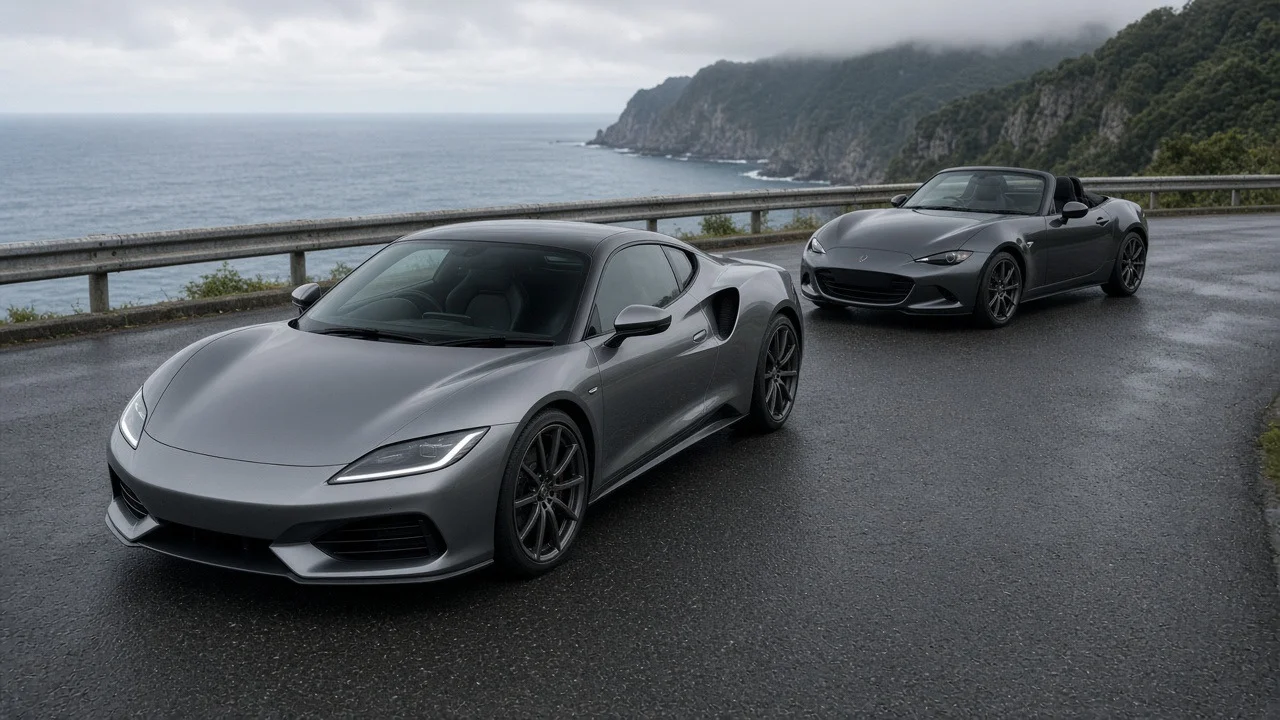
Japanese roadsters and two-seater sports cars are small, driver-focused cars from Japanese makers that seat only two people. A roadster is the open-top version of the idea, usually with a folding soft top. A two-seat sports car can also be a fixed-roof coupe or a targa. The best-known current example in the US is the Mazda MX-5 Miata. The Toyota GR Supra and Nissan Z are the main two-seat coupes in recent model years. Older and import-only models make the wider category much larger than what a US dealer sells today. One qualification matters most. Several popular Japanese sports cars, such as the Toyota GR86 and Subaru BRZ, have a small rear seat. That makes them 2+2s, not strict two-seaters. Whether they belong on your list depends on whether you mean two seats exactly or simply a compact sports car.
Roadster, two-seat coupe or 2+2: what the terms mean
Body configuration is the clearest way to sort these cars. The terms below are used loosely in marketing, so check the actual seating and roof design of the specific model year rather than relying on the name alone.
Body configuration | Seats | Roof | Japanese examples (by generation); Roadster / convertible | 2 | Folding soft top, sometimes with an optional removable hardtop | Mazda MX-5 Miata soft top, Honda S2000, Toyota MR2 Spyder, Nissan 350Z and 370Z Roadster; Retractable hardtop | 2 | Power-folding hard roof or roof panel | Mazda MX-5 Miata RF; Targa / T-top | 2 | Removable roof panels, fixed rear structure | Some Toyota MR2 generations, first-generation Acura NSX-T; Two-seat coupe | 2 | Fixed roof | Toyota GR Supra (current generation), Nissan Z, Nissan 350Z/370Z coupe, Acura NSX; 2+2 coupe | 2 front plus small rear seats | Fixed roof | Toyota GR86, Subaru BRZ, earlier Toyota Supra generations
Japanese two-seaters in recent US model years
US availability changes from one model year to the next. Production runs end, special editions replace regular trims, and some versions are sold only in certain markets. Confirm the current lineup with a dealer before treating any of these as available new.
Mazda MX-5 Miata: the most direct answer to "Japanese roadster." It is a lightweight front-engine, rear-wheel-drive two-seater sold as a soft-top roadster and as the RF, which has a power-retracting hard roof section. Manual and automatic transmissions have been offered, depending on trim and model year. It is the most affordable entry point into this segment among new cars. Toyota GR Supra: the current generation is a two-seat coupe, unlike earlier Supras with rear seats. It was developed alongside the BMW Z4 and shares engines and much of its hardware with that car. US versions have used turbocharged four- and six-cylinder engines. Toyota has announced plans to end production of this generation, so new-car availability depends on timing. Nissan Z: a two-seat coupe with a front-mounted twin-turbocharged V6 and rear-wheel drive, offered with manual or automatic transmissions depending on trim. A higher-performance Nismo version has also been sold. There is no factory roadster version of this generation.
Discontinued and classic Japanese two-seaters
Much of the interest in Japanese 2-seater sports cars centers on models that are no longer built. These are bought used, and condition and history matter more than original specifications.
Honda S2000: a front-engine, rear-wheel-drive roadster with a high-revving four-cylinder engine and a manual transmission. It was sold in the US for roughly a decade from the 2000 model year and is widely regarded as a modern classic. Toyota MR2: a mid-engine two-seater built across three generations. The first two were coupes, with T-top versions offered in some years. The final generation, the MR2 Spyder, was a soft-top roadster. Acura NSX: a mid-engine sports car sold by Honda's premium brand. The first generation used a V6 and included the NSX-T targa. The second generation added hybrid assistance and all-wheel drive before production ended. Nissan 350Z and 370Z: two-seat coupes with V6 engines and rear-wheel drive, each offered as a roadster for part of its run. Mazda RX-7: Mazda's rotary-engine sports car. Seating varied by generation and market, with some versions sold as two-seaters and others with small rear seats. Early roadsters such as Datsun's Fairlady-based models of the 1960s laid the groundwork for later Japanese open two-seaters.
Kei roadsters and Japan-market imports
Japan also built very small two-seaters under its kei car rules. These rules limit engine size and exterior dimensions in exchange for tax and insurance benefits at home. Examples include the Honda Beat, Suzuki Cappuccino, Daihatsu Copen and Honda S660. These were not sold new in the US. Older examples can be imported under the federal exemption for vehicles at least 25 years old. Newer ones generally cannot be registered for road use. State registration rules vary, and parts and service support are more limited than for US-market models.
How Japanese two-seaters differ from one another
Beyond the roof and seating, a few characteristics separate these cars and determine which one suits a given buyer.
Engine layout: most are front-engine and rear-wheel drive, which gives predictable handling and simple packaging. The MR2 and NSX place the engine behind the seats, which shifts weight toward the middle of the car but reduces cargo space. The RX-7 used a rotary engine, which is compact and smooth but has its own maintenance needs. Powertrain options: choices range from naturally aspirated four-cylinders in lighter roadsters to turbocharged sixes and V6s in heavier coupes, plus hybrid assistance in the second-generation NSX. Manual transmissions remain available on some current models, but not on every trim. Market segment: the MX-5 sits at the affordable, lightweight end. The Supra and Z are more powerful and more expensive grand-touring-leaning coupes. The NSX was positioned against exotic cars. Equipment level: trims differ in suspension tuning, limited-slip differentials, brakes, seats and infotainment. These differences can change how a car feels more than the badge does, so compare trims, not just models. Regional availability: some engines, trims and body styles were sold only in Japan or Europe. A version you read about may never have been offered in the US.
Choosing among Japanese roadsters and two-seaters
Start by deciding whether open-air driving is essential. If it is, the choice narrows to roadsters and retractable hardtops. Currently that mostly means the MX-5 new, or the S2000, MR2 Spyder and Z roadsters used. If a fixed roof is acceptable, the Supra and Z offer more power and a quieter cabin. If you occasionally need to carry a third person or extra luggage, a 2+2 such as the GR86 or BRZ may be the more practical choice even though it is not a strict two-seater.
For used and classic cars, condition outweighs nominal specifications. Look for documented maintenance and signs of rust. Check whether the car has been heavily modified or tracked, and whether the soft top and roof seals are in good condition. Prices for well-kept examples of sought-after models have risen as they have become collectible, so compare similar cars by model year, mileage and originality rather than by model name alone.
Daily practicality is worth weighing honestly. Two-seaters typically offer limited cargo space, a firmer ride and more road noise, especially in soft-top form. Insurance costs can also be higher than for an ordinary car. Many owners accept these trade-offs for the driving experience, but test-driving the specific body style you plan to own is the most reliable way to judge them.