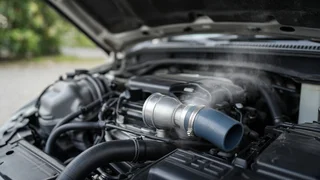
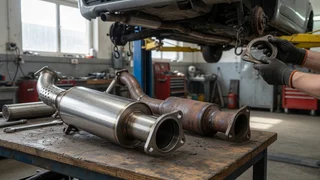
Intercooler boost leak and split pipe symptoms
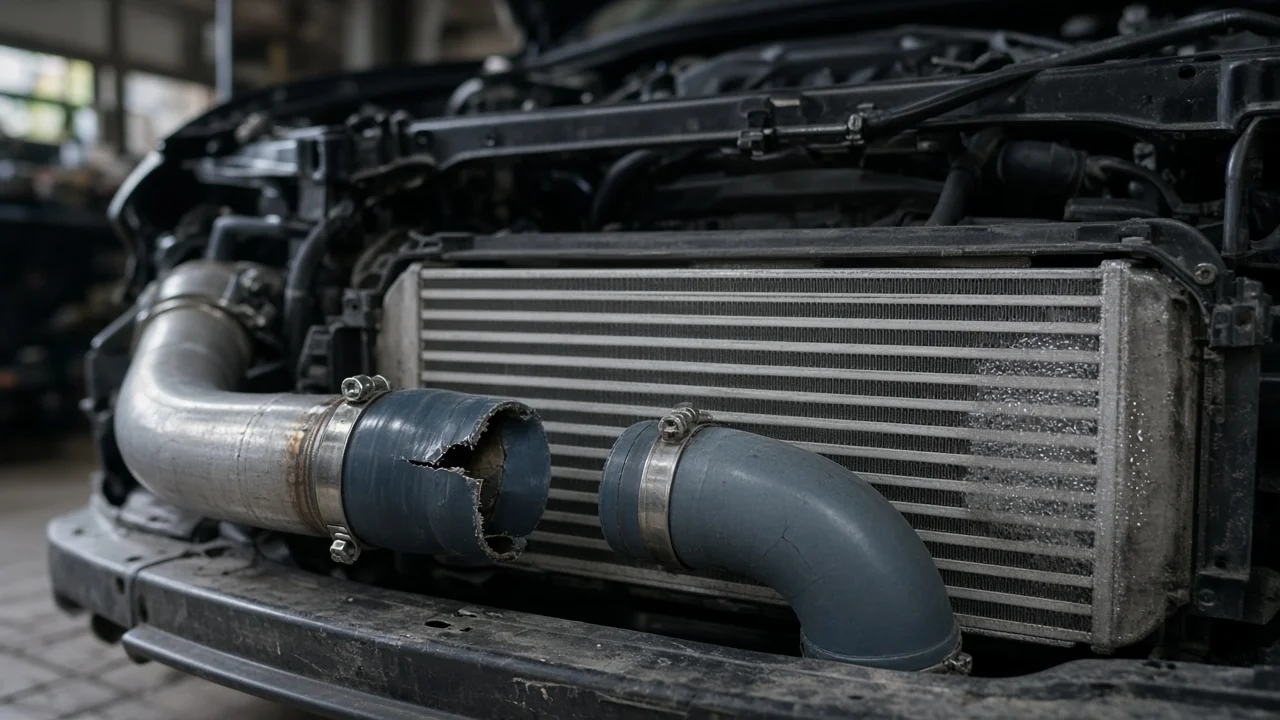
A turbo intercooler sits between the compressor outlet and the intake manifold, cooling the compressed charge air before it enters the cylinders. When a hose connection loosens, a pipe splits, or a seal fails, the pressurized intake tract loses boost pressure and the engine receives air the computer has not fully accounted for. The result can feel like a sudden loss of power, poor throttle response, whistling under load, or rough acceleration. Because several faults create similar behavior, reading the signs carefully is the most reliable way to separate an intercooler boost leak from other turbo system or intake problems.
Direct answer
The direct answer is that an intercooler boost leak or split pipe usually produces a loss of power under load, an audible hiss or whistle from the engine bay, and sometimes an irregular idle or hesitation when the throttle opens quickly. The leak allows charge air to escape after the turbo has compressed it, so boost pressure at the intake manifold falls below requested levels. Oil mist near a hose connection or a visible crack in a plastic pipe is also a strong clue, because the turbo system normally contains a light film of crankcase vapor.
Turbo intercooler pipe split symptoms can be confused with other failures, including a sticking wastegate, a faulty bypass valve, or a restricted air filter. The deciding difference is usually the location and character of the noise and the way the fault changes with load. A split pipe often becomes louder as boost builds, while a charge-air temperature sensor or fueling issue may cause sluggishness without the same rush of escaping air. Inspecting the pressurized side from the compressor outlet to the intercooler and back to the throttle body is therefore the first practical step.
Interpreting symptoms and test results
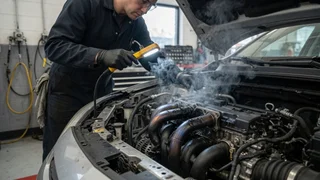
When a scan tool records an underboost condition or a fuel trim code, the reading supports the possibility of a leak but does not prove a specific part has failed. The engine computer measures airflow and pressure in the intake tract, and a split intercooler hose can create unmetered or missing air that drives fuel corrections away from normal. However, the same code can appear with a weak turbocharger control system, a damaged sensor, or a restricted exhaust. A smoke test or a careful pressure test of the charge-air path is a more discriminating way to localize the source.
Oil contamination at a hose coupling is a useful observation because it often marks the exact place where air and crankcase vapor are escaping. A soft, swollen, or loose silicone coupler near the intercooler inlet or outlet can leak only at higher boost, making the fault intermittent and harder to hear at idle. After confirming a pressure loss, the most sensible order is to inspect clamps and flexible joints first, then check the intercooler body and hard pipes for impact damage. Each result narrows the diagnosis: a clamp issue may be corrected simply, while a split in the core usually requires component replacement.