Importing a Car into Australia: How the Approval Process Works
Bringing a vehicle into Australia is possible, but it is a regulated process rather than a simple shipping job. The central point is that most road vehicles need a federal import approval before they are shipped, and that approval is only granted if the vehicle fits one of the recognised eligibility pathways. Clearing the border is also only part of the job. The car must still meet state or territory registration requirements before it can be driven on public roads. This guide explains how those stages fit together and where the main differences lie, especially for anyone importing from a left-hand-drive market such as the United States.
The short answer
You can import a car into Australia if it qualifies under the federal road vehicle standards framework, you obtain import approval before the car leaves the origin country, and you complete customs, biosecurity and tax obligations on arrival. After that, the vehicle must pass the relevant state or territory registration process. Whether a particular car qualifies depends mainly on its age, whether that model has been approved for the Australian market, the importer's personal circumstances, and whether it can be made to comply with Australian standards. Two cars that look similar can have very different outcomes because of model year, market variant or drivetrain.
Who regulates vehicle imports
Responsibility is split across several bodies, and confusion between them causes many problems for first-time importers.
Federal vehicle standards regulator: administers the Road Vehicle Standards legislation, decides which import pathway applies and issues import approvals. Australian Border Force: handles customs clearance, collects import charges, and enforces the ban on importing goods containing asbestos. Federal biosecurity authorities: inspect vehicles for contamination such as soil, plant material, seeds and insects. State and territory road agencies: decide whether the vehicle can be registered and driven, including inspections and any local rules on modifications or left-hand drive.
Federal import approval does not guarantee state registration. Each step has its own requirements, and passing one does not satisfy the next.
Import approval comes first
Import approval is the federal permission to bring a road vehicle into the country. Apply for it and receive it before the vehicle is shipped. Arranging shipping first and seeking approval afterwards is a common and expensive mistake. A vehicle that arrives without approval can face delays, storage costs, penalties, re-export or other enforcement action.
The application asks which pathway the vehicle is being imported under. It also asks for supporting details such as identification of the vehicle, evidence of its build date and, depending on the pathway, proof of ownership history or other eligibility evidence. Because requirements and fees are set by the regulator and can change, check the current application conditions directly with the regulator before committing to a purchase.
The main eligibility pathways
Under the current federal framework, vehicles generally enter through one of a few routes. The right route determines what has to be done to the car before and after arrival.
Pathway | Typical use | What it generally involves; Register of Approved Vehicles (type-approved) | New vehicles supplied by manufacturers for the Australian market | Vehicle is already approved as a type, so it is not usually a private import route; Specialist and Enthusiast Vehicles (SEV) | Used or low-volume vehicles not sold new in Australia but assessed as eligible | Model must be listed as eligible; vehicle is usually modified and checked by a Registered Automotive Workshop before being entered on the register; Concessional pathways | Specific circumstances, such as older vehicles or vehicles personally owned and used overseas by the importer | Eligibility depends on meeting the concession criteria; some still need work or inspection before registration; Other approvals | Vehicles for racing, display, testing or other non-road purposes | Usually restricts how the vehicle may be used and may prevent road registration
Older vehicles are commonly handled through a concession based on age, where vehicles manufactured long enough ago can be imported without meeting all current standards. Personal import concessions focus on vehicles the importer has genuinely owned and used overseas for a minimum period, rather than vehicles bought shortly before relocating. The exact qualifying criteria for each concession are set by the regulator. Confirm them for the specific vehicle rather than relying on rules of thumb from forums or older guides, because the framework has been substantially reformed in recent years.
How SEV and workshop compliance work
The Specialist and Enthusiast Vehicles scheme suits many enthusiast imports, particularly used Japanese-market cars and other models never sold new in Australia. A model must first be assessed and placed on the SEV register, a list of eligible vehicle types defined by details such as make, model, build period and sometimes variant. A car that is not on the list, or that falls outside the listed build range, may not qualify even if a closely related version does.
Vehicles imported this way normally pass through a Registered Automotive Workshop. These are approved businesses that inspect the vehicle, carry out any modifications needed to meet applicable Australian standards, and complete the paperwork that allows the car to be entered on the Register of Approved Vehicles. Typical work can include lighting, seatbelts, child restraint anchorages, tyres, emissions-related items or speedometer changes, depending on the vehicle. The scope varies widely, so get a quote from a workshop before buying.
Left-hand drive and imports from the United States
Australia drives on the left, and its road vehicle rules are built around right-hand-drive vehicles. Left-hand-drive vehicles face extra restrictions. Depending on the pathway and the state or territory, a left-hand-drive car may need professional conversion to right-hand drive, may only be eligible under certain concessions such as those for older vehicles, or may be registered with conditions. This matters most for anyone importing from North America or continental Europe.
Many US-market models were never sold in Australia in any form. In practice, US-sourced cars are often either older vehicles imported under an age-based concession, or models that specialist businesses convert to right-hand drive and remanufacture to Australian requirements. For a modern US-market vehicle bought privately, check eligibility carefully before purchase, as there may be no straightforward pathway at all.
Biosecurity inspection
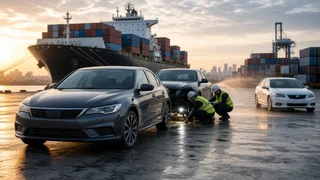
Australia applies strict biosecurity controls to imported vehicles. Cars are inspected for soil, mud, plant matter, seeds, insects and animal material, including in wheel arches, underbody cavities, engine bays, radiators, air filters and interiors. A vehicle found contaminated will usually need cleaning at the importer's expense before it is released. Professional cleaning of the underbody and engine bay before shipping can reduce the risk of delays, but it does not remove the need for inspection on arrival.
Asbestos restrictions
Importing goods containing asbestos is prohibited in Australia, and this applies to vehicles and parts. Asbestos has historically been used in components such as brake linings, clutch materials, gaskets and some heat insulation, particularly in older vehicles or those from markets with different regulations. The importer is responsible for ensuring the vehicle does not contain asbestos. Older cars and vehicles from manufacturers or countries with uncertain material histories deserve extra attention. Where there is doubt, importers commonly arrange inspection, testing or replacement of suspect parts before shipping.
Taxes and import charges
Imported vehicles are generally subject to customs duty and Goods and Services Tax. Higher-value vehicles may also attract Luxury Car Tax. How these apply depends on factors including the vehicle's value, country of origin, any applicable trade agreements, and whether a concession applies, for example for some personal effects when relocating. Rates and thresholds are set by the federal government and can change. Treat any figure you see in a general guide or older forum thread as a starting point for your own enquiry, not a quote. A customs broker can calculate the charges for a specific vehicle.
Shipping options
Vehicles usually arrive either by roll-on/roll-off shipping, where the car is driven onto a specialised vessel, or in a shipping container, sometimes shared with other cars or household goods. Roll-on/roll-off is often simpler for running vehicles. Container shipping can offer more protection and suits non-running cars or those with valuable contents, though personal items inside the vehicle can complicate customs and biosecurity checks. Whichever method you choose, keep the shipment details consistent with the import approval and customs documentation.
Registration after arrival
Once the car has cleared customs and biosecurity, and any required workshop compliance is complete, it still needs registration in the state or territory where it will be used. Requirements differ between jurisdictions. They commonly include a safety or roadworthiness inspection, identity checks against the vehicle's records, proof of import approval and compliance status, and compulsory third-party insurance. Some jurisdictions also apply their own rules to modified vehicles or left-hand-drive vehicles. Check with the local road agency early, because a car that is legal to import is not automatically easy to register in every state.
A typical sequence of steps
Identify the exact vehicle, including model year, market variant and drive side. Work out which import pathway it could qualify under, and confirm eligibility with the regulator or a specialist. If the SEV route applies, get a Registered Automotive Workshop to assess and quote the compliance work. Check asbestos risk and arrange inspection or part replacement if needed. Apply for and receive import approval before shipping. Clean the vehicle thoroughly and arrange shipping. Complete customs clearance, pay import charges and pass the biosecurity inspection. Complete workshop compliance and entry on the Register of Approved Vehicles where required. Register the vehicle with the state or territory road agency.
When importing makes sense
Importing tends to suit enthusiasts seeking models never sold locally, owners relocating with a vehicle they have genuinely owned and used overseas, and collectors of older vehicles. It is less likely to make financial sense for an ordinary late-model car that is readily available in Australia, once approval, compliance work, shipping, taxes and registration are added up. In every case, the decisive question is eligibility. Confirm the pathway before buying or shipping, and the rest of the process becomes a matter of paperwork and cost rather than risk.