Identifying an Allison Transmission Valve Body
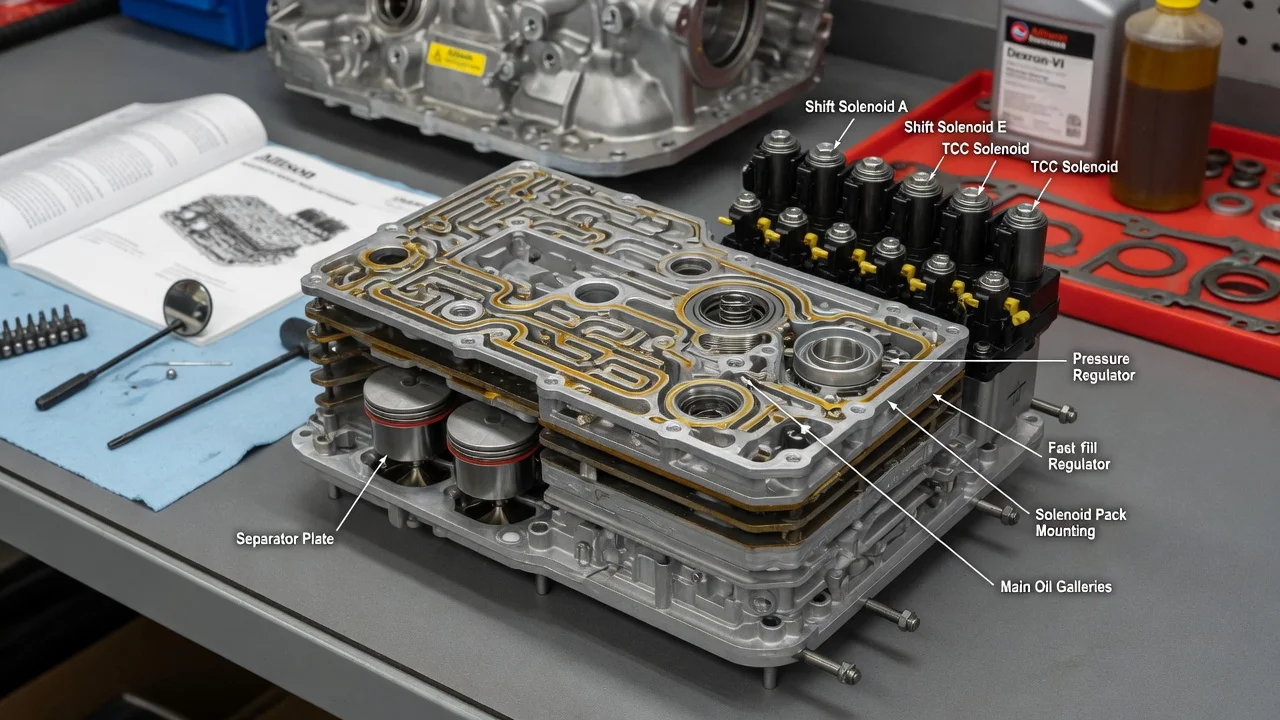
An Allison transmission valve body is the hydraulic control assembly that directs fluid to the clutches based on commands from the transmission control module. You need to identify the correct one when you diagnose a shift complaint, price a repair or order a replacement. The answer depends on the exact transmission model, generation and vehicle application. That means identification starts with the transmission itself, not with the part.
The Short Answer: Start With the Transmission ID
The most reliable way to identify an Allison valve body is to read the identification plate or tag on the transmission case. It typically lists the transmission model, serial number and assembly part number. Record these along with the vehicle identification number, model year and engine. Markings on the valve body itself, whether cast, stamped or printed on a label, are useful for confirmation. They can be hard to read with the unit installed, and they do not replace the transmission data. A valve body that looks identical is not proof of correct fitment.
Also be clear about what is being sold. Some suppliers use the term valve body for a complete control assembly that includes solenoids and an internal harness. Others mean a bare hydraulic body without electrical parts. Because the hydraulic and electronic sides are matched, a part that bolts on can still be wrong for your transmission's control generation or calibration.
How the Valve Body Works in an Allison Unit
The transmission pump creates hydraulic pressure. The valve body contains spool valves, springs and machined passages that route that pressure. Solenoids mounted on or in the assembly respond to signals from the control module. They regulate line pressure and apply or release specific clutches to change gears. Allison automatics use clutch-to-clutch shifting, so the timing of one clutch releasing while another applies depends on precise hydraulic control. The module uses speed sensor and temperature inputs to manage this timing and adapt shifts over time. On the Allison 1000 and 2000 family used in many pickups and medium-duty trucks, the control valve assembly sits at the bottom of the case, under the oil pan.
The valve body sits between the electrical command and the mechanical clutch. A shift problem can therefore start in the wiring, a solenoid, a sticking valve, worn clutches, the pump, or low or degraded fluid. Replacing the valve body without diagnosis may not fix the complaint.
What Changes the Identification
The transmission family is the first major variable. The 1000 and 2000 series are used in heavy-duty pickups, medium-duty trucks, vans and motorhomes. The 3000 and 4000 series appear in heavier trucks, buses and specialty vehicles. Even within one application, gear count changed over time. General Motors heavy-duty pickups, for example, moved from five-speed to six-speed Allison units and later to a ten-speed design. Different gear counts use different hydraulic circuits, so their valve bodies are not interchangeable.
Within a single model, several other factors matter: the electronic control generation, power takeoff provisions, optional retarders on some heavier units, vocational calibrations and engineering revisions that superseded earlier part numbers. Service history matters too. A transmission that was replaced, remanufactured or updated may no longer match what the vehicle originally came with. In that case, the plate on the installed transmission is a better guide than the original build specification.
What the Owner Can Do
Begin by gathering identification data: • Note the VIN, model year and engine. • Find the transmission ID plate, clean it gently without scraping off characters, and photograph it. • Record the model, serial number and assembly number exactly as shown. • Check service records for any previous transmission replacement, rebuild or valve body work. • If the pan is already off for service, photograph any markings on the valve body and the solenoid and connector layout. These help a supplier or technician confirm the match.
Before you buy parts, collect diagnostic evidence. Read stored diagnostic codes with a scan tool that can access the transmission module, not just engine codes. Describe the shift behavior precisely: which shifts are affected, whether the problem is harsh, delayed or slipping, and whether it happens cold, hot or under load. Check the fluid level using the procedure for your specific transmission, since the method and the required temperature vary. Confirm the fluid meets the specification in your owner's manual or Allison's approved fluid requirements, such as TES-295 or TES-668. Low, overheated or incorrect fluid can produce symptoms that resemble a valve body fault.
Repair options range from replacing a single solenoid or harness, to replacing the valve body or control assembly, to rebuilding or replacing the transmission. After control-side work, the module's adaptive values may need to be reset or relearned with suitable software. Ask any supplier to confirm fitment against your transmission serial and assembly number, not just the vehicle year and model.
Limitations and Next Step
A symptom alone cannot confirm a failed valve body, and many diagnostic codes point to a circuit or condition rather than a specific part. Confirming the cause usually takes electrical testing, solenoid checks and sometimes hydraulic pressure testing. Part numbers are also superseded over time, so cross-referencing an old number may require current parts catalog data. Installing an unverified part can create new problems and may affect warranty coverage.
As a next step, take your identification details, codes and symptom notes to an Allison authorized service dealer or a transmission specialist who works on your model. They can look up the correct control assembly and calibration, perform the tests that separate a valve body fault from other causes, and recommend the repair that fits your transmission and its service history.