Identifying an Allison Transmission Shift Solenoid
Owners usually start looking for an Allison shift solenoid after a warning light, a stored code or a harsh or missing shift. Identifying the right part is harder than it sounds. Allison builds several transmission families for pickups, medium-duty trucks, buses and vocational equipment, and each uses its own solenoid arrangement. This guide covers how to work out which solenoid you are dealing with, where it is generally located, and why a symptom alone does not confirm that a solenoid has failed.
The Short Answer
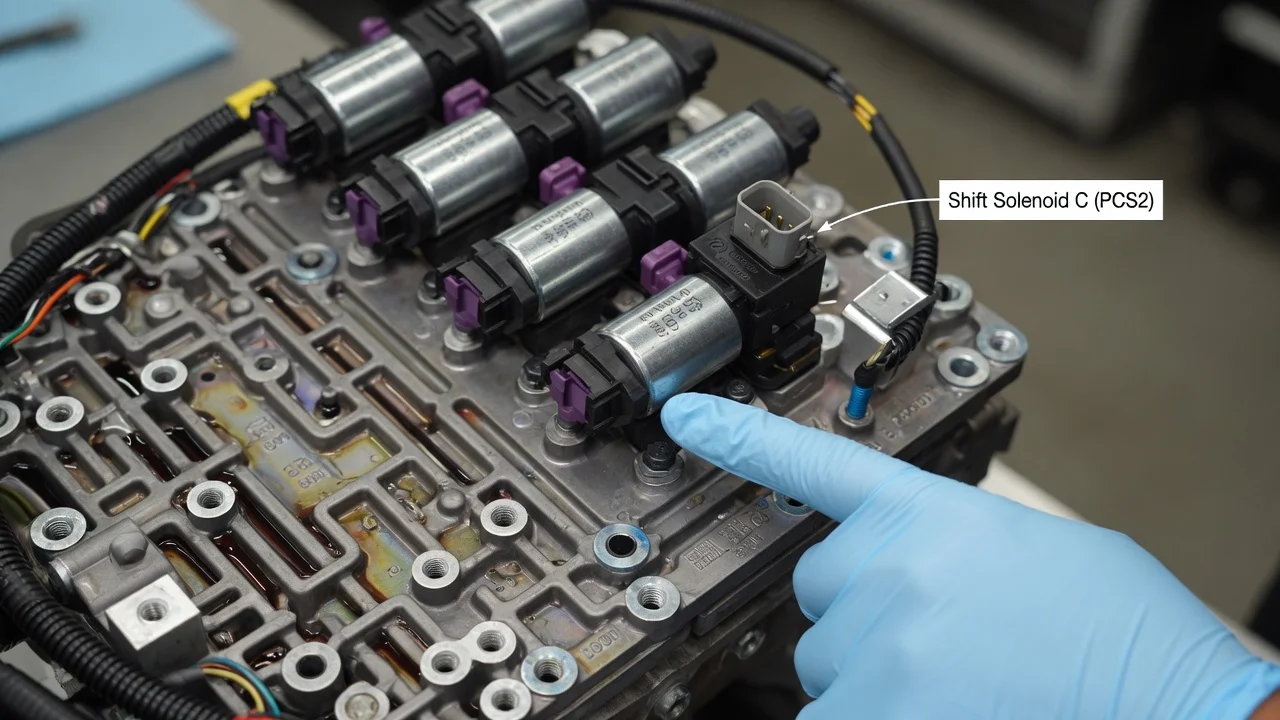
An Allison shift solenoid is an electrically controlled valve that directs hydraulic pressure to the clutches responsible for each gear. On most Allison automatics, the solenoids are mounted on the control valve body inside the transmission, above the oil pan. They are not visible from outside the case, so getting to them normally means draining the fluid and removing the pan. To identify the exact solenoid, you need three pieces of information: the transmission model and serial number from the Allison identification plate, the solenoid designation used in the service information for that model, and the part number printed or stamped on the solenoid itself. A stored diagnostic code can point you to a particular solenoid circuit, but it only identifies a starting point for testing. It does not tell you which part to buy.
How the Solenoids Work and Where They Sit
The transmission control module chooses a gear based on vehicle speed, throttle position, load and other inputs, then switches the solenoids on or off or varies their current. Each solenoid opens or closes a fluid passage in the valve body. That routes pressure to apply or release clutch packs, and the combination of applied clutches determines the gear. Allison designs generally use two kinds of solenoid. On/off shift solenoids select which clutches are fed. Pressure control solenoids, sometimes called variable bleed or modulated solenoids, regulate how firmly and how quickly a clutch applies. Many units also have a separate solenoid for torque converter clutch lockup.
These solenoids often look alike. Service literature tells them apart by letter or number designations, such as shift solenoid A or B, or a numbered pressure control solenoid. They are bolted or clipped to the valve body and connected to an internal wiring harness. That harness passes through the case to an external connector leading to the control module. So when you ask where the shift solenoid is located, the practical answer for most Allison units is underneath the vehicle, inside the pan, on the valve body. The exact position of each solenoid on that body depends on the model.
Which Allison Unit You Have Changes the Answer
Transmission type matters more than anything else here. Allison units in heavy-duty pickups, those in medium-duty trucks and motorhomes, and the larger units in buses and heavy vocational vehicles have different valve bodies, solenoid counts, connectors and control generations. Even within one family, solenoid layout and part numbers can change between model years and control-system updates. Some later transmissions sold under the Allison name in pickups have a different internal design from the earlier units they replaced. A part listing that only says it fits an Allison transmission is not enough to confirm fitment.
Start with the identification plate on the transmission case. It lists the model, serial number and assembly or part number. Record all three, along with the vehicle's VIN and build date if it is a pickup or chassis-cab. Fluid specification also varies by model and application. Allison publishes its own fluid approvals, and some vehicle manufacturers specify a particular fluid for the Allison units they install. Check the owner's manual or service information before refilling after any work in the pan.
What Symptoms and Codes Can and Cannot Tell You
Shift behavior that points toward the solenoid control system includes delayed or harsh engagement, flare between gears, being stuck in one gear, a default limp mode, or a missing gear. Diagnostic codes in the P07 range that mention a shift solenoid circuit or solenoid performance are common on these transmissions. Heavier commercial Allison controls may also report codes through their own shift selector display or diagnostic interface. A circuit code means the control module detected an electrical fault such as an open, a short or an out-of-range reading. A performance code means the expected gear ratio or pressure response did not happen.
None of these, on their own, prove the solenoid is bad. The same codes and symptoms can come from a damaged harness or connector, a corroded pass-through connector, low or degraded fluid, a sticking valve in the valve body, worn clutches, an incorrect fluid level after service, or a control module or software problem. Replacing a solenoid without testing the circuit can leave the original fault in place.
Practical Steps for Owners
Begin with the information you can collect without opening anything. Read and record every stored code with a scan tool that can communicate with the transmission control module, not only the engine module. Note when the problem occurs: cold or hot, under load, during upshifts or downshifts, and whether it clears after the vehicle is restarted. Check the fluid level and condition using the procedure for your specific transmission. Some Allison units use an electronic level check through the selector or a scan tool rather than a traditional dipstick, and the correct reading depends on fluid temperature. Gather the service history as well, including recent fluid changes, the fluid used, filter replacements and any previous valve body or harness work.
Next, inspect what is accessible. Look at the external transmission connector and nearby wiring for damage, rubbing, oil intrusion or corrosion. If you are comfortable doing the work and have the correct service information, the designated circuit can be tested for resistance and continuity at the connector, using the specifications for that exact model. If the pan comes off, examine the fluid and filter for debris. Then compare the solenoid in question against the valve body diagram and read its part number directly from the component. Order replacements using that number together with the transmission serial number.
Repair options generally include replacing an individual solenoid, replacing a solenoid set or complete valve body assembly, repairing wiring, or reprogramming the control module. In some cases a full transmission repair is needed when internal clutch damage is found. Which option makes sense depends on what the testing actually shows.
Limitations and When to Get Help
This guide cannot give you resistance values, torque figures, solenoid positions or part numbers for your specific transmission. Those depend on the exact model, serial range and control generation, and guessing them risks damaging the valve body or ordering the wrong part. Vehicle-specific service information is necessary before you test circuits, remove the valve body or refill the transmission. Some Allison units also need a relearn or adaptive reset with suitable software after solenoid or valve body work, and skipping it can cause poor shift quality even when the repair itself was correct.
Involve a transmission specialist or an Allison-authorized service facility if codes return after basic checks, if multiple solenoid codes appear at once, if the fluid shows heavy debris or a burnt smell, or if the vehicle is used commercially and downtime or warranty coverage is at stake. Give them the model and serial number, the codes, a description of the symptoms and the service history. That shortens diagnosis and reduces the chance of replacing parts that were never the cause.