Allison Transmission Pressure Control Solenoid Location
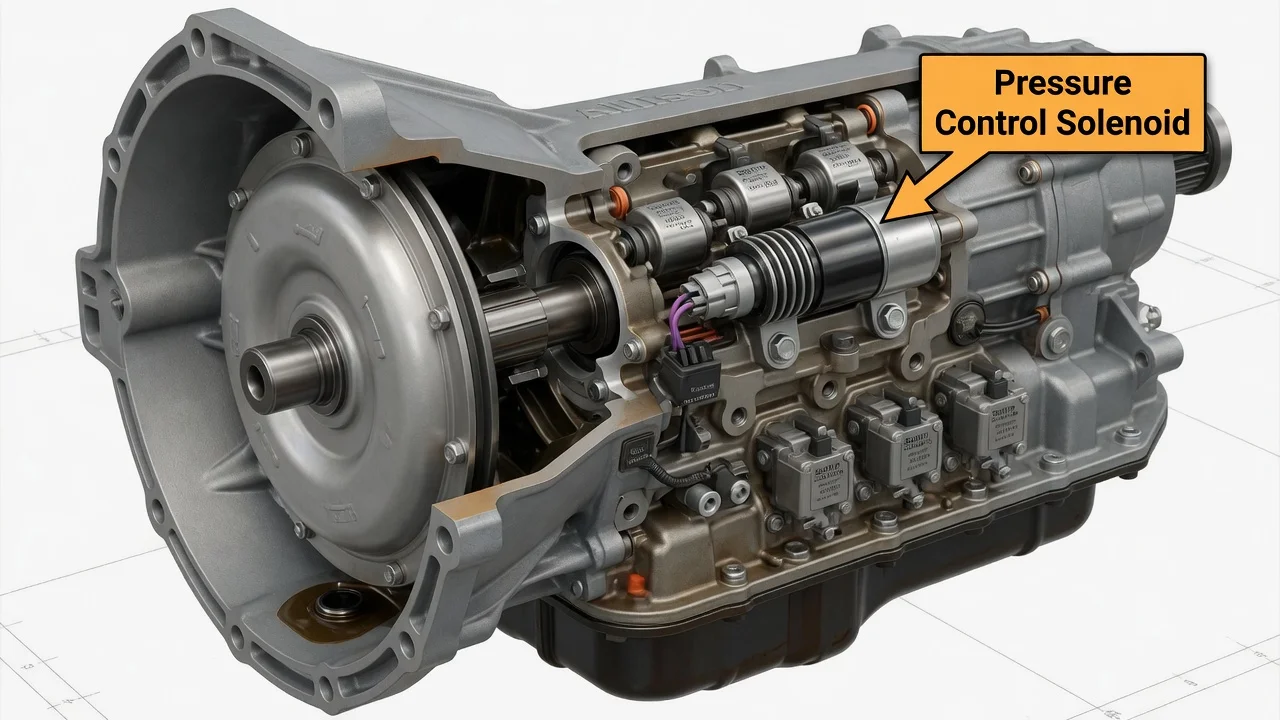
If a code or a shift complaint points you toward a pressure control solenoid on an Allison automatic, the first practical question is where that part actually lives. On the Allison units commonly found in heavy-duty pickups, medium-duty trucks and motorhomes, the answer is broadly similar. The exact layout, part designations and service steps still depend on the transmission model and its controls generation. This guide explains the location, the job these solenoids do and how to approach the problem without guessing.
Where the pressure control solenoids are located
Most owners encounter one of two groups of Allison transmissions. The 1000 and 2000 series are used in pickups and light-to-medium trucks. The larger 3000 and 4000 series are used in heavier trucks, buses and motorhomes. On these families the pressure control solenoids are not mounted on the outside of the case. They are part of the hydraulic control assembly, often called the valve body or control module, which is bolted to the underside of the transmission inside the oil pan. To see or reach them, you generally drain the fluid and remove the pan, and sometimes the filter, before the solenoid bank on the valve body is exposed.
The solenoids are wired through an internal harness to a connector at the transmission case. The external harness from the transmission control module plugs into that connector. As a result, a fault reported for a solenoid can originate in the solenoid itself, the internal harness, the case connector, the external wiring or the control module.
How pressure control solenoids work
On electronically controlled Allison transmissions, the control module commands electro-hydraulic solenoids that regulate oil pressure to the clutches. A pressure control solenoid does more than switch on or off. It modulates pressure so a clutch applies or releases at a controlled rate. During a shift, one clutch releases while another applies, and the solenoids trim pressure so the handoff is smooth and correctly timed. Depending on the design, other solenoids in the same assembly handle main line pressure or torque converter clutch apply rather than individual shift clutches.
These solenoids meter fluid through small passages, so they depend on clean fluid at the correct specification and on stable voltage and sound wiring. Contamination, worn valve bores, low fluid or electrical problems can produce symptoms that resemble a solenoid failure. The control module also adapts shift timing over time. A battery disconnect, software reflash or recent repair can therefore change shift behavior temporarily while the module relearns.
What changes the answer for your truck
Transmission type and generation matter most. A 1000 or 2000 series unit differs from a 3000 or 4000 series in size, pan design, solenoid count and how the control module is packaged. Within one family, earlier and later controls generations, five-speed and six-speed versions, and different vehicle manufacturers' installations can change which solenoids are present and how they are identified. Confirm the exact model from the transmission identification plate and your vehicle records before buying parts.
Naming is another trap. On many pickups, generic OBD-II codes refer to pressure control solenoids by letter, such as A, B or C, while transmission service literature may use numbered designations. The relationship between a letter and a specific solenoid on the valve body is not universal. Use the service information for your exact model and year to map a code to a physical position. Fitment also varies: solenoids, valve body assemblies and internal harnesses are model-specific, and a part that looks identical may be calibrated differently.
The vehicle installation affects access too. On a pickup the pan is usually reachable from underneath once the truck is safely supported. On a motorhome or vocational truck, frame members, exhaust components, skid plates or driveline parts may need to be moved or worked around first.
What the owner can do
Start with information rather than parts. Read and record all stored and pending diagnostic codes with a scan tool that can communicate with the transmission control module, because basic readers may miss manufacturer-specific codes. Note exactly when the problem appears: cold or hot, during which gear change, under load or after a stop. Also note whether the transmission drops into a fail-safe mode and holds a fixed gear. A clear record of shift behavior is often more useful to a technician than a single code.
Check the fluid level using the method specified for your transmission. Procedures differ by model: some use a dipstick at a specified fluid temperature, while others use a fill plug or an electronic level check. Confirm that the fluid in the unit meets the required fluid specification, and look at its condition for a burnt smell, dark color or debris. Inspect the visible external harness and the connector at the case for damage, corrosion or a loose lock.
Review the service history, including when fluid and filters were last changed, whether a non-specified fluid was ever added and what repairs were done recently. If you decide to inspect the valve body yourself, expect fluid to spill, keep everything clean and follow the model's torque and refill procedure. Disturbing the valve body without the right information can create new problems. Depending on what testing shows, repair options range from wiring repair and fluid service to replacing an individual solenoid or the complete control valve assembly.
Limitations and when to get professional help
This article describes the general layout of common Allison designs. It cannot identify which solenoid is at fault on your vehicle or replace the model-specific service procedure. A code that names a pressure control solenoid means the module detected a problem in that circuit or in the result it expected. It does not confirm that the solenoid has failed. Reaching a conclusion requires electrical testing of the solenoid and circuit, pressure testing and sometimes checks of the control module itself.
Get vehicle-specific service information or bring in a transmission specialist in any of these cases: codes return after clearing, the unit stays in a limp mode, several solenoid codes appear at once, or the fluid shows metal or burnt material. The same applies if the truck tows or does commercial work, where a failure carries more risk. An experienced heavy-duty transmission shop can confirm the diagnosis, check for available control software updates and recommend the appropriate repair.