Identify the barcode format used for a VIN
Vehicle VINs often appear as printed text, but many manufacturers also encode the same 17-character sequence in a machine-readable symbol on stickers or metal plates. The barcode format used for a VIN is typically Code 128, although Data Matrix and PDF417 also appear on some automotive documents and labels. Understanding this helps when scanning a window sticker or B-pillar tag. The symbol is not the VIN itself; it is a data carrier that encodes the vehicle identification number along with possible trim code, model year, assembly plant, and factory equipment details.
Essential answer
The essential answer is that a VIN barcode is usually Code 128, a linear one-dimensional symbology capable of encoding all 17 alphanumeric characters of the vehicle identification number. Unlike Code 39, Code 128 is compact and supports the full uppercase letters and digits without excessive width. This format is common on Federal Safety Certification labels and some manufacturer build sheets. The symbology is not mandated universally by a single law, so a vehicle-specific label can use a different format depending on the market specification and the supplier that printed the tag.
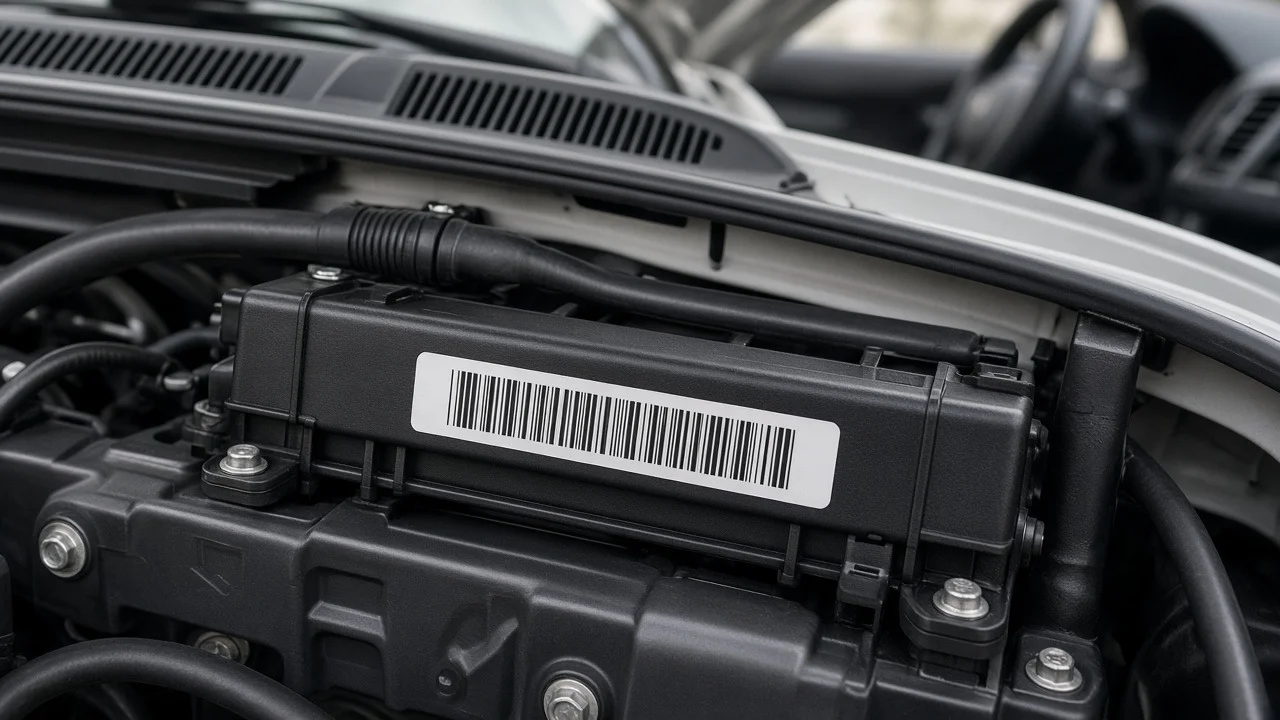
A VIN barcode is a representation of the vehicle identification number, not a separate identification system with different meaning. When scanned, the output should match the stamped or printed text on the VIN plate. Some systems use a two-dimensional Data Matrix or PDF417 to fit more factory equipment and trim code information into the same space. Therefore, identifying the exact barcode type requires looking at the label shape: a tall, narrow linear code typically indicates Code 128, while a square or grid pattern indicates a 2D format.
Identification and location
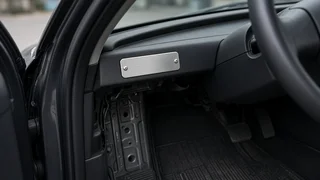
The most reliable place to find a barcoded VIN label is on the driver-side door jamb or B-pillar. The label often sits next to the recommended tire pressure information and lists the model year, assembly plant, and market specification in plain text. On that sticker, the barcode may run horizontally beneath the VIN text or vertically along one edge. Some imported vehicles place an additional barcode on the lower corner of the windshield or on a strut tower plate under the hood.
A VIN barcode can sometimes be confused with other printed codes on the same label, such as a parts number barcode or a paint and trim code. A true VIN barcode should decode to the exact 17-character sequence, including the check digit in the ninth position. Before relying on a scanner, compare the decoded output to the stamped VIN on the dash or door frame. If the two differ, the label may be damaged, replaced, or from a different vehicle configuration.