Husky Digital Tire Pressure Gauge (5-in-1)
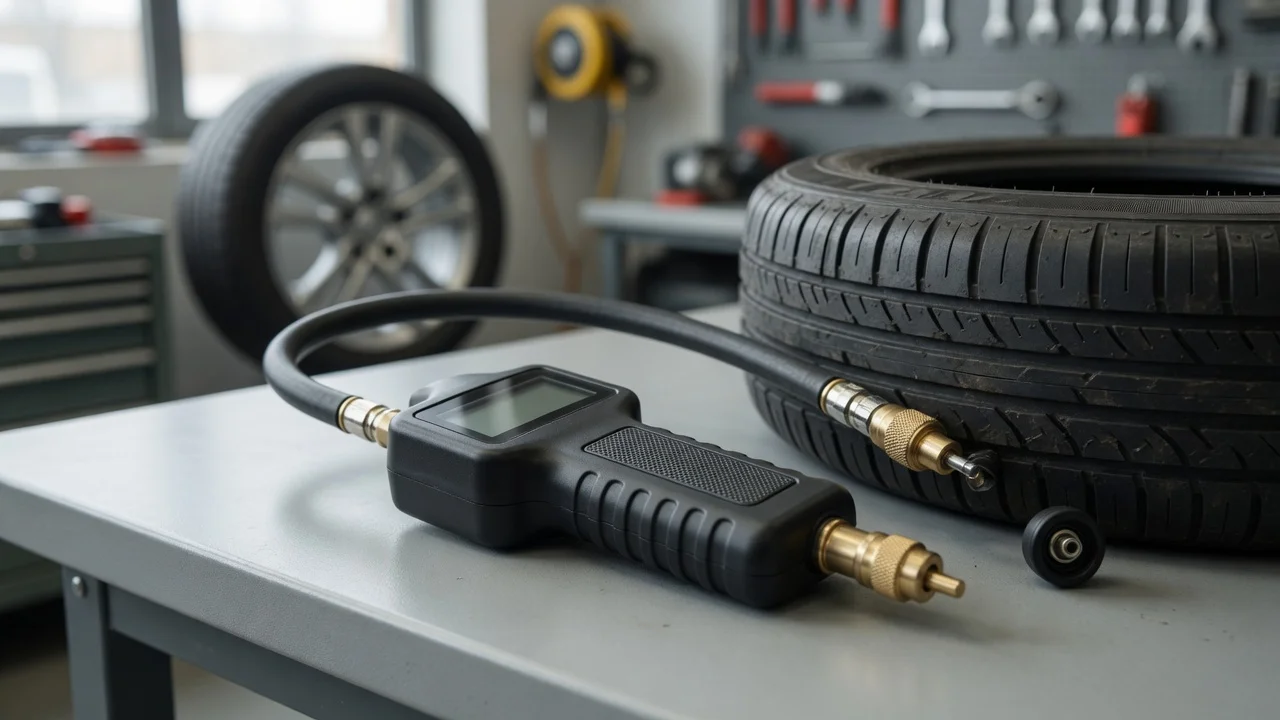
What the Husky 5-in-1 digital tire pressure gauge is
The Husky digital tire pressure gauge in its 5-in-1 form is a handheld accessory intended to read tire pressure and support a few related roadside or garage tasks. The exact answer to any question about it depends on the specific model and packaging, because Husky has offered different versions over time. In general, a 5-in-1 design combines a digital pressure readout with functions such as a tread depth gauge, a flashlight, an emergency glass-breaking tip, and a seatbelt cutter. Not every model includes every function, so the term 5-in-1 should be checked against the item in hand or the retailer listing.
Main functions that may be included
A common arrangement for this type of gauge is a compact body with a digital display at one end and a pressure-reading chuck at the other. The digital display gives a PSI, bar, kPa, or kg/cm² reading depending on the selected unit. Additional built-in tools can include a small LED light for reading a valve stem in the dark, a sliding tread depth probe, a pointed metal tip for breaking a side window in an emergency, and a recessed blade for cutting a seatbelt. These extras are secondary to the pressure-reading function and do not change how the gauge itself is used.
How to use the pressure-reading function
Remove the valve cap from the tire, press the gauge chuck firmly onto the valve stem, and hold it square to the stem. A firm, brief press is usually enough for the display to settle on a reading. If the gauge hisses continuously or the reading jumps, reseat the chuck. The displayed value should be compared with the vehicle manufacturer’s recommended pressure, which is normally printed on a label in the driver’s door jamb rather than on the tire sidewall. The sidewall figure is a maximum pressure, not the recommended setting.
Accuracy and practical limits
Digital gauges of this type are generally consistent enough for routine pressure checks, but they are not laboratory instruments. The reading can be affected by battery condition, temperature, angle of contact with the valve stem, and whether the chuck is fully seated. If the display is dim or the readings change significantly between back-to-back tests, replace the battery or check the valve core for debris. A gauge that reads within one or two PSI of a known reference is adequate for most passenger vehicles, but no specific tolerance should be assumed for every Husky 5-in-1 unit without checking its packaging or manual.
Compatibility and vehicle fit
The pressure-reading chuck on this style of gauge fits standard Schrader valves used on most cars, light trucks, SUVs, motorcycles, and many bicycle tubes. It is not designed for Presta valves unless an adapter is used. Because a 5-in-1 gauge may include a glass breaker and seatbelt cutter, its shape and weight can feel different from a simple pencil or dial gauge, but the pressure function itself does not require any vehicle-specific programming or calibration. Owners of vehicles with direct tire pressure monitoring systems can still use the gauge; it reads air pressure independently and does not communicate with the vehicle.
What to check before relying on it
Before storing one in a glovebox or center console, confirm the included functions match what the packaging states. Check that the battery is installed correctly and that the display backlight, if present, works. Test the gauge against a second gauge or a known shop reading to see whether the values agree closely. If the unit includes an emergency glass-breaking tip or seatbelt cutter, keep it secured so the sharp edges do not contact other items. The gauge should be kept dry and out of prolonged direct heat, which can affect the battery and the display.
Ownership trade-offs
A 5-in-1 design is convenient because it reduces the number of small tools kept in the car, but the added emergency features can make the gauge bulkier than a basic digital pressure reader. The battery is another consumable to monitor, whereas many pencil and dial gauges need no battery. For someone who only wants a quick monthly pressure check, a simpler gauge may be easier to use. For someone who values a single compact item with pressure, tread depth, light, and emergency functions, the combination can be useful, provided the pressure-reading part is still treated as the primary tool and checked for reasonable consistency.