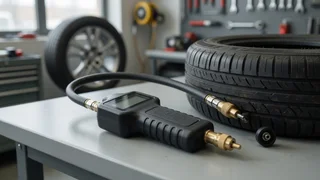
Husky Tire Pressure Gauge Manual

A Husky tire pressure gauge manual is the owner-facing reference for taking consistent inflation readings, interpreting the display, and storing the tool correctly. When the printed booklet is missing, drivers usually need the same practical information: how to seat the chuck, choose the right units, understand accuracy limits, and compare the result with the vehicle specification. This overview explains the gauge’s essential role without relying on model-specific claims. It covers the measurement range, connection behavior, calibration expectations, and reading habits that make tire checks repeatable, so the manual becomes a guide to confident pressure decisions rather than a collection of exact product details.
Essential answer
The essential answer is that a Husky tire pressure gauge manual describes how to obtain a usable pressure reading and interpret it against the inflation target on the tire placard. In the absence of a confirmed document, the useful scope is procedural: press the gauge’s chuck squarely onto the valve stem, hold it briefly to stabilize the reading, and note whether the value falls within the expected operating range. Because tire pressure changes with temperature and load, the manual’s core guidance is about repeatable measurement, not about approving a single fixed number for every driving condition.
A handheld gauge measures the air pressure inside the tire by allowing a small release of air to move an internal sensing element or digital sensor. The value shown can drift if the connection is poor, if the schrader valve does not open fully, or if the gauge has been knocked out of calibration. For that reason, the manual’s real function is to support a stable connection and a clean reading. Comparing morning cold pressures with the vehicle specification routinely gives more useful information than chasing an exact figure from memory.