How Toyota Trailer Sway Control Works
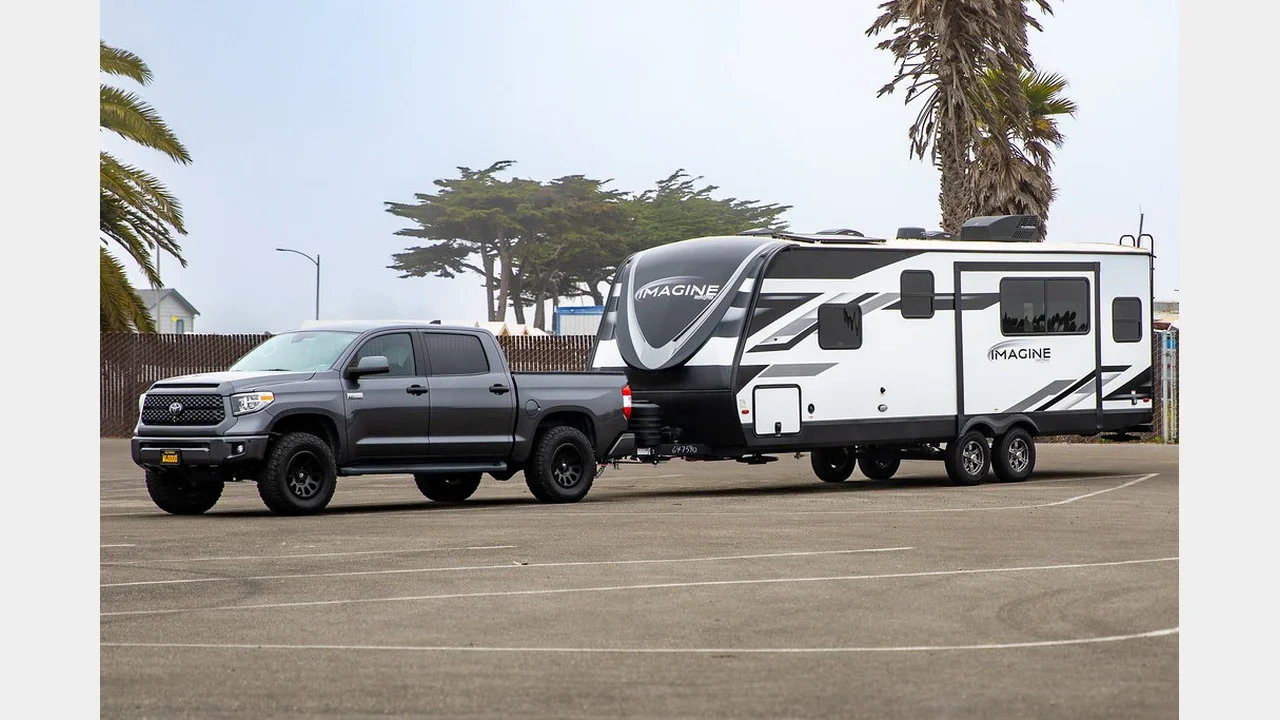
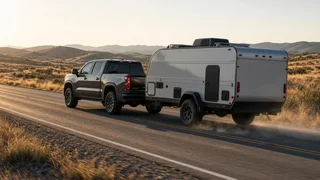
Toyota trailer sway control is an electronic stability feature that helps a driver manage a trailer before small lateral movements grow into a dangerous oscillation. It uses existing vehicle sensors, brake hardware, and engine controls to detect a repeating yaw pattern that differs from normal cornering. When the system identifies that pattern, it responds by selectively braking and reducing drive torque. This does not replace correct loading or proper towing setup, but it can reduce the severity of a sway event.
Direct answer
Toyota trailer sway control works by monitoring vehicle yaw, speed, steering, and lateral acceleration. When sensors detect the repeating side-to-side rhythm that indicates trailer sway, the stability controller briefly applies individual brakes and may cut engine torque to pull the combination straight. Owners often experience this as a quick, firm correction rather than a warning light.
The feature is an extension of the vehicle stability control system already used for cars and SUVs. It responds to the same electronic signals, but it looks for the slower oscillating pattern created by a trailer. The system cannot measure trailer angle directly in most configurations; it interprets vehicle motion as a proxy for what the trailer is doing.
Purpose and operation
The purpose is to stop trailer sway before it becomes a loss of control. Sway often begins after a wind gust, a passing truck, a steering correction, or an improperly loaded trailer. Once the vehicle begins a rhythmic yaw motion, the trailer can continue pushing the rear axle side to side. Toyota's system detects that repeating motion and intervenes earlier than a driver can usually correct with steering.
Operation follows a cause-and-effect sequence. Wheel-speed and yaw sensors detect the sway signature, the stability control module compares it with normal driving data, and the module commands braking on the side that opposes the motion. The vehicle may also reduce engine output. This creates a controlled straightening force. The system remains ready while towing, but it does not activate during steady, well-controlled driving.
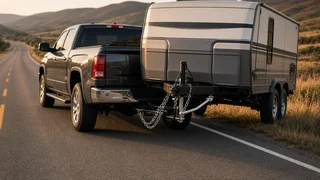
A trailer's weight distribution affects how much the system can do. Tongue weight, gross vehicle weight rating, and axle rating establish whether the tow vehicle has enough authority over the trailer. Under ideal conditions, trailer sway control can manage a modest disturbance. If the sway is driven by a severe imbalance or excessive speed, the electronic correction may not be enough, and only a disciplined reduction in speed and a stable load will settle the combination.
The system also works within the limits of the combined weight rating and vehicle configuration. Towing near the upper boundary reduces the margin available for corrective braking. That is why the feature should be understood as a supporting layer. It improves control when the rig is properly matched and loaded, but it does not compensate for a trailer that is too heavy or a hitch setup that places the tongue weight outside its safe range.
How to proceed
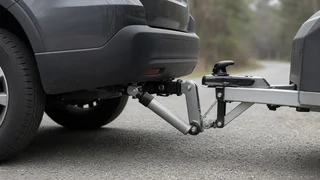
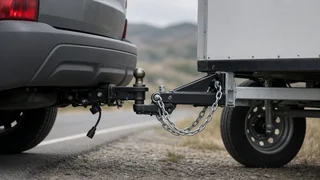
Before relying on the system, confirm that the tow vehicle, hitch, and trailer are matched to the manufacturer's ratings. Check payload, gross vehicle weight rating, and combined weight rating for the specific configuration. Verify that tongue weight falls within the recommended range, often near 10 to 15 percent of loaded trailer weight for a conventional trailer, and confirm the trailer is level when connected.
Load the trailer with heavier items low and near the axle. Secure cargo so it cannot shift. After connecting, perform a careful test at low speed in a safe area, braking gently and listening for hitch movement. A short drive can reveal whether the trailer is stable. If an electronic warning appears, reduce speed gradually, avoid sudden steering, and correct the load before continuing at highway pace.
Understanding a problem
If the vehicle feels as though it is being tugged side to side, the cause may be trailer loading, hitch setup, tire pressure, or crosswind. A light tongue weight lets the trailer pivot around the hitch instead of following the vehicle. A trailer riding nose-high can unload the rear axle and reduce traction. High speed can also make a trailer oscillate even when the initial setup is acceptable.
A warning light or a brief automatic brake intervention is an observation, not a diagnosis. It shows that the system detected a sway-like motion. Check tire pressures, load placement, hitch tightness, and whether the trailer axles are properly aligned. If the condition continues at normal highway speed, have the combination inspected so that a technician can separate a measured stability fault from an electronic sensor issue.