How to Use a Car Battery Load Tester
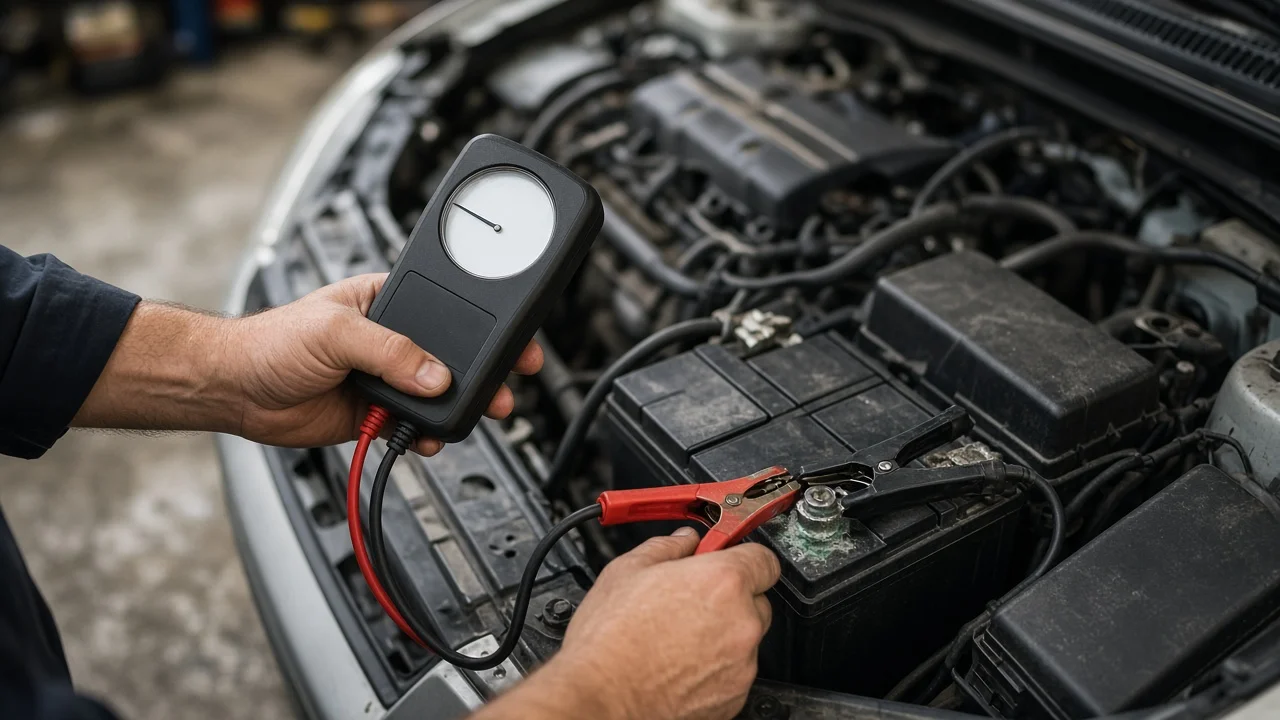
A load tester does more than read battery voltage; it checks whether the battery can hold usable system voltage under a controlled electrical demand. This matters because a partly charged battery may show promising voltage at rest and still collapse when the starter draws current. Using a car battery load tester correctly turns a simple bench measurement into a realistic assessment of reserve capacity. The process combines careful battery terminal connections, a brief high-current load, and a reading taken while the load is still applied. The result helps distinguish a discharged but serviceable battery from one that fails only when worked.
Direct answer
The essential answer is that you connect the tester clamps to the correct battery terminals, apply the rated load for a short interval, and read the voltage while the load remains engaged. A healthy, fully charged 12-volt automotive battery should generally hold a voltage well above a severe drop level during a brief test, but the exact pass threshold depends on battery size, temperature, and the tester scale. The load test works by simulating the amperage demand of a starter or other heavy circuit.
The measurement is meaningful only when the battery state of charge is adequate before testing. A battery that has just been discharged, or one that was recently charged, may give a misleading result because surface charge can lift the reading. In that case the tester may detect acceptable voltage drop even though the stored energy is weak. Repeated testing also heats the battery. For an accurate assessment, prepare the battery first and interpret the load voltage together with the resting voltage and charging output where possible.
How to proceed
Begin with the vehicle off and the key removed. Identify the positive and negative battery terminals, then clean loose corrosion so the clamps can bite into metal rather than scale. Connect the load tester leads with correct polarity: positive lead to positive terminal, negative lead to negative terminal. Check the tester capacity or selector against the battery's cold cranking rating when the unit is adjustable. This setting determines how much load the tester applies and prevents applying a demand far beyond the battery design.
Activate the load for a short interval, typically around ten to fifteen seconds, while watching the meter. Avoid touching the tester body or battery case with bare skin if heat develops, and stop if the battery or wiring becomes hot or emits odor. Record the voltage displayed near the end of the load, before releasing the switch. Then disconnect the negative lead first. If the result is marginal, verify the battery condition with a charging system test or a parasitic draw check rather than assuming the battery has failed.