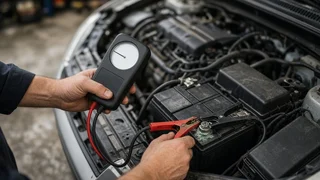
DIY Car Battery Load Tester
A DIY car battery load tester addresses a specific need: confirming whether a 12-volt automotive battery can hold system voltage under a realistic electrical demand, not just at rest. A multimeter alone often misleads because a failing battery may show normal voltage until current flows. Homemade designs apply a controlled, high-current draw while you observe voltage drop at the battery terminals. This approach helps separate a weak battery from charging output problems or excessive parasitic draw. The tester becomes a practical diagnostic tool, but its usefulness depends on understanding the load it applies and the limitations of the measurement.
Essential answer
A DIY car battery load tester is a home-built circuit that places a brief, heavy electrical demand on a car battery while voltage is measured. The core idea is to mimic the strain of a starter motor or other high-draw accessory. Typical builds use a high-wattage resistor or a bank of automotive bulbs, connected across the battery terminals with suitably heavy-gauge wire and a switch. The operator watches the voltage during the test; a healthy charged battery should maintain a reasonable level under load, while a weak one will sag sharply.
The scope is deliberately limited. A homemade unit can show whether the battery holds voltage during a controlled discharge, but it is not a calibrated professional carbon-pile tester that applies a specified current based on cold cranking amp ratings. The result is indicative rather than definitive. It works best for comparing known-good batteries, checking recovery after charging, or spotting a battery that fails under moderate load. Any interpretation should account for battery temperature, state of charge, and the actual current drawn by the chosen load, which the builder can estimate using the component’s wattage or fuse rating and the system voltage.