How to Unload a Packed Car Without Items Falling Out
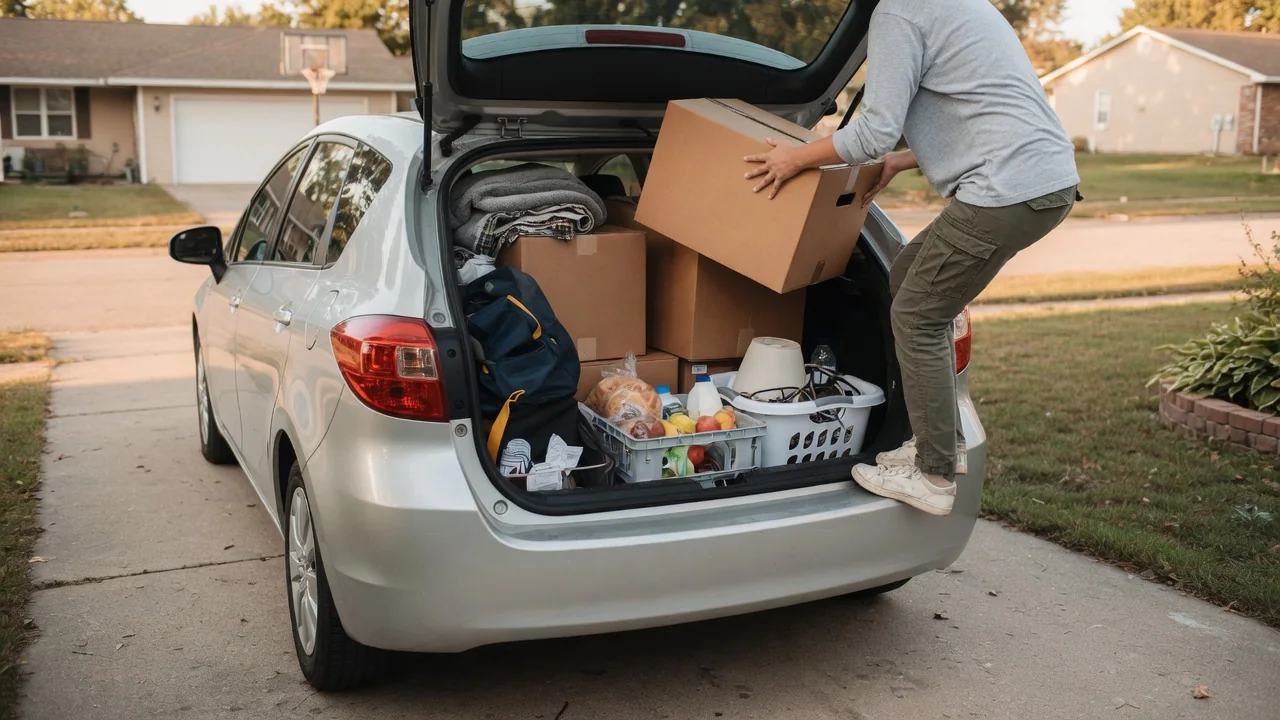
A car loaded to the roof behaves differently once it stops moving. Braking, cornering, and road vibration shift boxes and bags against the doors and the liftgate, so the load you packed is rarely the load you open. Knowing how to unload a packed car without items falling out comes down to two habits: planning the sequence and stabilizing cargo before anything moves.
Open slowly
Cargo settles toward whatever stopped it during the drive, and that is often a door panel or the inside of the liftgate. Before opening anything, look through the glass to see what is leaning on it. Then release the latch and open the door only a few inches, keeping your free hand or hip against the edge. If you feel weight pushing outward, hold the gap, reach in, and push the leaning item back or lift it out before swinging the door fully open.
Vehicle design changes how this works. A sedan trunk lid lifts away from the load, so little tends to spill, while a hatchback or SUV liftgate rises from a nearly vertical wall of cargo that can tip rearward. Power liftgates and power sliding doors move at their own pace, and how they can be paused or switched to manual operation varies by vehicle, so check the owner's manual. Parking on level ground also matters, because a nose-up slope encourages everything to slide toward the rear opening.
Remove top items first
A packed cargo area works like a stack, where upper items are held in place by friction and by their neighbors. Pulling a suitcase from the bottom removes that support and lets everything above it drop. Start with the highest and loosest pieces, such as jackets, pillows, and soft bags wedged near the headliner, then work downward layer by layer. Keep one hand on the item beside the one you are lifting, since it has often been leaning on its neighbor for the whole trip.
Sequence also applies across the vehicle, not just vertically. Unloading the rear seat area through the side doors first can relieve pressure on the load behind it, particularly when seatbacks are folded and cargo runs from the liftgate to the front seats. Heavy pieces such as coolers and toolboxes usually sit lowest and should come out last, when there is room to grip them properly. If a cargo net, tie-down strap, or retractable cover is holding things, release it only once the items it restrains are within reach.
Recheck hidden items
Once the visible load is out, small objects that migrated during the drive are the ones most likely to drop unnoticed. Bottles, chargers, and loose tools roll into door pockets, beneath the front seats, and into the gap between the seat base and the center console. Check the door sills before opening each remaining door, because anything resting against the lower door seal will fall onto the pavement the moment it swings out. A quick look with a flashlight helps in a dim garage or at night.
Storage locations differ considerably from one vehicle to another. Some have an underfloor compartment or spare tire well in the cargo area, others have bins beneath the rear seat cushions, in the floor behind the front seats, or a front trunk on certain electric models. Folded seatbacks can also trap flat items such as documents or tablets in the hinge gap. Raise the seats back into position carefully, watching that nothing is caught in the latch or the seat belt buckles, and confirm each seatback locks.
Everyday Use and Observations
The same approach scales down to ordinary errands. Grocery bags tip on the way home, and round items such as cans, melons, and bottles roll to the rear edge of the cargo floor, ready to fall when the liftgate rises. Sports gear, strollers, and folding chairs behave similarly because their shape makes them shift under braking. Glancing through the rear window before unlatching, and opening partway first, takes a few seconds and prevents most spills in a driveway or a crowded parking lot.
Observation during the drive tells you what to expect at the destination. A thump under hard braking, a rattle that starts after a turn, or a load that now blocks part of the rearview mirror all suggest something has moved. Note which side the sound came from and open that door with extra care. Over time, patterns appear: a particular bin always slides, or a sloped cargo floor sends items toward the opening. Organizers, non-slip mats, and the built-in tie-down points address those habits before the next trip.
Limits and Next Steps
Careful unloading cannot fully compensate for a load that was packed poorly. Items stacked above the seatback line, heavy objects placed high, and cargo pressed hard against glass are difficult to remove safely no matter how slowly a door opens. The vehicle itself also sets limits, since payload ratings, tie-down locations, and cargo barrier options are specific to each model and are listed in the owner's manual or on the door jamb placard. Anything too heavy or awkward to control alone is worth a second person.
The best next step is to treat unloading as feedback for the next loading. Remember what fell or shifted and pack those items lower, tighter, or inside a closed container. Put the things needed first at the destination in last, so they come out without disturbing the rest. If a liftgate strut no longer holds the gate up, or a door check lets the door swing freely, have it inspected, because a door that will not stay in position makes controlled unloading much harder.