How to Store Wet Sports Gear in a Car Temporarily
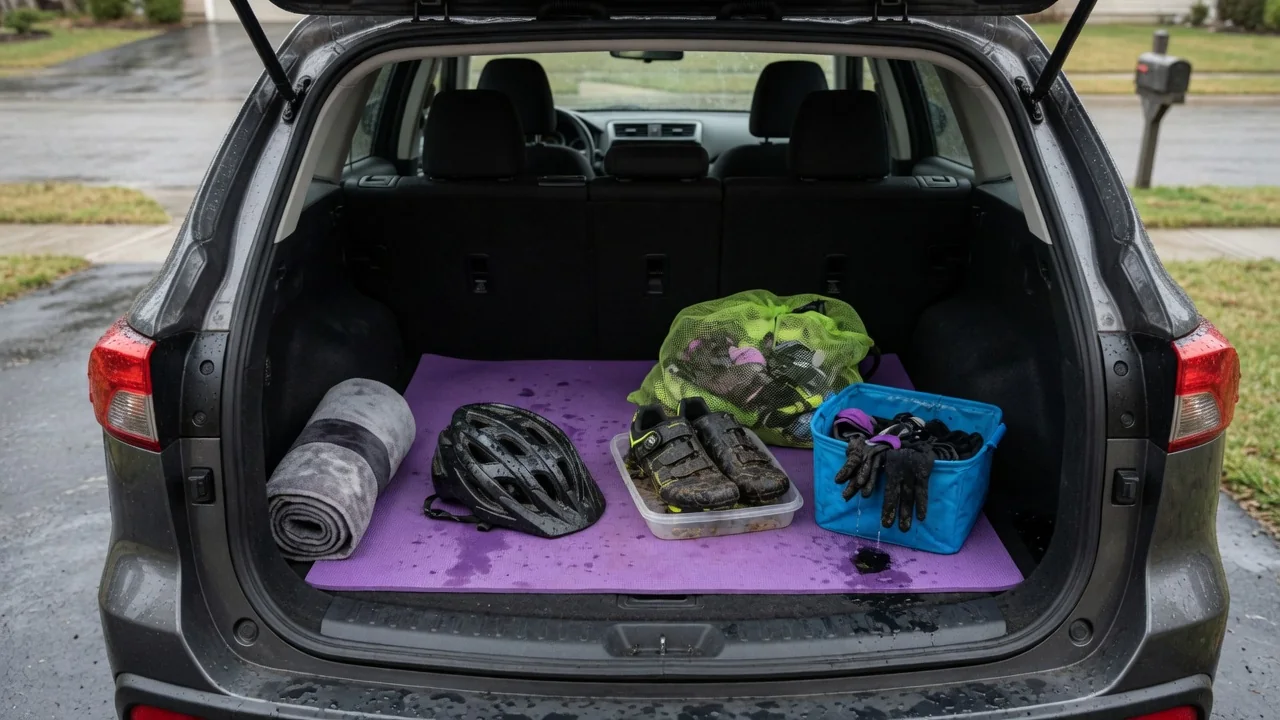
Knowing how to store wet sports gear in a car temporarily comes down to one idea: keep the water where you put it until you can clean and dry everything properly. Soaked cleats, wetsuits, pads, and towels release moisture into carpet, seat foam, and cabin air, so a little planning protects the interior on the drive home from the field, pool, or trail.
Use a barrier
A waterproof barrier keeps runoff from reaching materials that hold moisture. Automotive carpet sits over a padding layer that absorbs water like a sponge and dries slowly, so a few drips from a soccer bag can linger far longer than the surface suggests. A lidded plastic tote, a dry bag, or a rubber cargo liner with raised edges catches that water instead. Even a heavy trash bag works for one trip, provided the gear sits inside it rather than on top of it.
Placement matters as much as the container. A trunk or cargo floor is usually the better spot because cloth seats soak up water and leather can spot or stiffen when damp items rest on it. Check that the barrier is truly holding by looking for pooled water inside the tote and dry carpet beneath it. Vehicles differ here: some have a spare tire well or underfloor storage bin below the cargo panel, and water that slips past the edges can collect there unnoticed.
Ventilate
Sealing wet gear contains liquid, but anything left exposed keeps evaporating into the cabin. That humidity shows up quickly as fogged glass, especially on a cool evening after a game. Running the climate control on fresh air rather than recirculation brings in drier outside air, and using the air conditioning with the defrost setting helps pull moisture out of it. Cracking two windows slightly on opposite sides creates a cross-draft that carries damp air out during the drive.
Airflow options depend on the vehicle. A sedan's trunk is separated from the cabin, which limits fogging but also means little air moves around the gear, while hatchbacks, wagons, and SUVs share one air space with the cargo area. Some models have rear vents or pop-out windows that help; others do not. Once parked in a secure, sheltered place such as a garage, leaving the windows down slightly or the hatch open for a while lets leftover humidity escape.
Clean cargo area
Start with a tidy, dry cargo area so the wet load is the only moisture source to manage. Loose dirt, grass clippings, and sand turn to mud when dripped on and grind into carpet fibers. Paper items, spare clothing, and cardboard boxes wick water readily, so move them before loading. A clear floor also lets the tote or liner sit flat, which keeps collected water from running toward one edge and spilling during cornering or braking.
After unloading, wipe the liner or tote and let it dry before putting it back. Press a hand or a dry paper towel against the carpet where the gear sat; a cool, damp feel means water got through and the area needs blotting and airflow. Lift the cargo floor panel if the vehicle has one and look in the spare tire well and around any jack or tool tray. Some vehicles place a battery or electronic modules beneath or beside the cargo floor, which makes prompt drying more important.
Everyday Use and Observations
For anyone hauling gear after regular practices, a small permanent kit makes the routine automatic. A lidded tote, a couple of old towels, and a spare bag for muddy footwear take up little room and are always ready. Before loading, wring out towels and jerseys, knock mud off cleats, and drain water bottles and helmets away from the car. Less water going in means less to contain, and separating muddy items from merely wet ones makes cleanup at home simpler.
The car gives clear feedback on how well the routine is working. Windows that fog on the inside the next morning, a musty smell when the doors first open, or a film of condensation on the rear glass all point to moisture that stayed behind. Damp carpet that never seems to dry may also have another cause, such as a leaking hatch seal or a blocked drain, and those possibilities are worth a look if the problem continues when no wet gear has been carried.
Limits and Next Steps
Temporary means the drive home and little more. A closed car warms quickly in sun, and warmth plus trapped moisture encourages mildew and bacterial odor in fabrics, gloves, and padding. A sealed tote protects the interior but does nothing for the gear itself, which sours faster when shut in. Leather and some adhesives or foam in footwear and protective equipment can also suffer in heat, so unloading as soon as you arrive is the real finish line for this method.
Once home, wash or rinse the gear as its care labels direct and dry it fully in open air before it goes back into any bag. Leave the tote open to dry too. If the interior took on water, blot it, keep air moving through the cabin, and recheck the spot the following day. Odor or dampness that persists after several dry days suggests moisture in the padding, and a professional detailer or repair shop can assess that for the specific vehicle.