How to Transport Wet Umbrellas in a Car
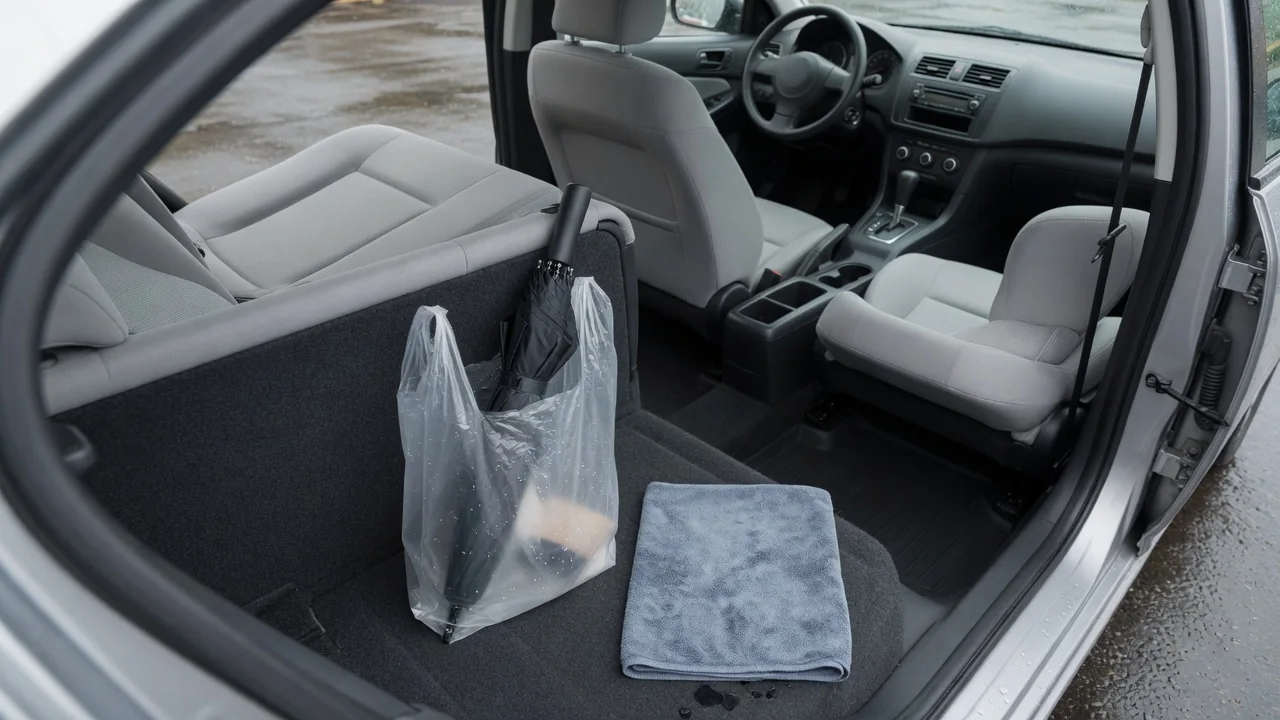
A dripping umbrella can leave a surprising amount of water on seats, carpet and door panels in the few seconds it takes to climb in. Knowing how to transport wet umbrellas in a car comes down to three habits: giving the umbrella a contained place to sit, getting rid of collected water promptly, and drying the floor coverings before moisture soaks deeper into the cabin.
Choose holder
The best holder is one that catches runoff rather than simply keeping the umbrella out of the way. A rigid plastic canister or tube with a closed bottom suits compact folding umbrellas and can sit in a door pocket or cupholder if it fits. Full-length umbrellas usually need a long waterproof sleeve or a narrow tray that lies in a footwell or cargo area. Whatever the style, look for a sealed base, an opening wide enough to load quickly, and material that will not absorb water itself.
Placement matters as much as the container. A holder should stay clear of the pedals, the seat tracks and any side airbag deployment areas, and it should not roll under braking. Some vehicles have a built-in umbrella slot in the door or a drained compartment, while many others have nothing dedicated, so check the owner's manual and the door openings before buying an accessory. In vehicles without a suitable spot up front, the rear footwell behind the passenger seat or a cargo tray is often the most practical location.
Empty water
Before the umbrella goes inside, a few firm shakes outside the door opening remove most of the loose water held in the canopy folds. Closing it with the tip pointing down and fastening the strap keeps the remaining moisture running toward one end, which is the end that should sit at the bottom of the holder. This simple step reduces how much water the container has to manage and limits drips on the door sill, the seat bolster and the window switches as the umbrella passes over them.
A sealed holder only works if it is emptied. Water left standing in a canister or sleeve evaporates slowly into the cabin, which can show up as fogged glass on the next cold morning and a stale odor over time. Pour it out when you park, then leave the container open so the inside can dry. At home, open the umbrella fully in a garage, porch or bathroom to air dry, since a canopy stored damp and folded can mildew and the metal ribs may corrode.
Dry mats
Floor mats take the water that misses the holder, along with whatever comes in on shoes. Rubber or molded all-weather mats with raised edges hold liquid on the surface, so they can be lifted out carefully, tipped away from the car and wiped with a towel. Carpeted mats absorb moisture and need more time; remove them, blot with a dry towel or microfiber cloth, and let them dry flat in moving air before refitting. Make sure any retaining clips or hooks are engaged again so the driver's mat cannot slide toward the pedals.
Check what is under the mat as well. Press a hand into the carpet beneath; if it feels cool or damp, water has gotten past the mat and into the pile or the padding below, which dries much more slowly than the surface suggests. Running the climate system with air directed to the floor, and with the air conditioning engaged where the vehicle allows it, helps pull moisture out of the cabin. On a dry day, parking with the windows slightly open in a secure place speeds things up.
Everyday Use and Observations
In daily use, the routine that works is the one that takes only seconds in a downpour. Keeping the holder in the same position, with its opening facing the door you use, means the umbrella goes straight in without being laid across a seat first. A small absorbent towel stored in the door pocket or glovebox handles stray drips on leather, cloth or the center console. Passengers benefit from the same arrangement, so a second sleeve in the rear seat area is worth considering for family vehicles.
A few signs show whether the arrangement is working. Windows that mist up quickly after a rainy trip, a musty smell when the car has been closed overnight, or water marks on cloth upholstery suggest that moisture is staying inside. Seat fabric and leather respond differently: cloth holds dampness and may show rings, while leather sheds water but can spot if left wet. Door pocket shapes, footwell depth and cargo layouts differ widely between sedans, SUVs and pickups, so expect to adjust the setup to the vehicle.
Limits and Next Steps
A holder and a towel deal with umbrella runoff, but they cannot explain every wet floor. If carpet is damp after the car has sat in the rain with no umbrella inside, or water appears on only one side, the source may be something else, such as a door or sunroof seal, a blocked body drain or condensation from the air conditioning system not draining outside. Those causes vary by vehicle design and need inspection rather than guesswork, because the visible puddle is only evidence of where water ended up.
Persistent dampness deserves attention because padding under the carpet can stay wet for a long time, encouraging odor and mold and, in some vehicles, sitting close to wiring or electronic modules under the seats or floor. If the carpet does not dry within a reasonable time with ventilation, or the smell returns, a professional detailer or repair shop can lift the trim and dry the underlayment properly. For ordinary rainy days, though, a sealed holder, prompt emptying and dry mats keep the interior in good condition.