How to Store a Partially Restored Car
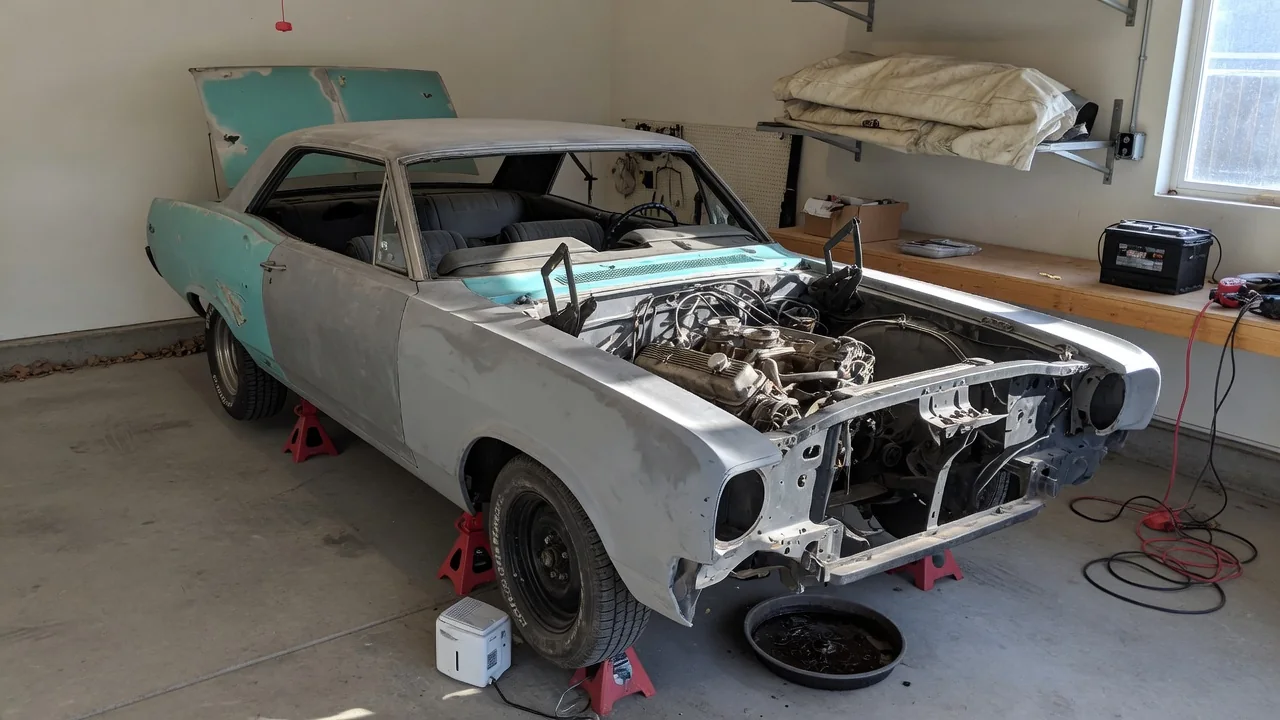
A car in the middle of restoration is more vulnerable than a finished car or an untouched original. Bare metal, open seams, disconnected systems and boxes of removed parts all create openings for corrosion, loss and confusion. Knowing how to store a partially restored car comes down to three things: keeping moisture away from exposed surfaces, keeping loose parts organized and protected, and setting checkpoints so the project can resume without unpleasant surprises.
Moisture control
Moisture is the main threat to a partially restored car because restoration work often removes the coatings that normally protect steel. Freshly stripped panels, blasted surfaces, weld seams and areas where filler or primer has only been partly applied can develop surface rust when humidity is high or condensation forms. Condensation is a particular concern in unheated garages and outbuildings, where overnight temperature swings can cause water to settle on cold metal even without rain or leaks. Many primers are also not intended as long-term protection; some are porous and can absorb moisture if left without a sealing coat. Checking the product data sheet for any primer or coating already applied is more reliable than assuming it will hold up indefinitely.
Practical measures start with the building itself. A dry, enclosed space is generally better than a damp slab or dirt floor, which can release moisture upward, and a plastic vapor barrier under the car can help where the floor stays damp. Ventilation, a dehumidifier or desiccant products can lower humidity, and a hygrometer shows whether those efforts are working rather than leaving it to guesswork. Exposed bare metal can be protected with a temporary rust-preventive coating or a suitable primer until bodywork resumes. Car covers should be breathable; a non-breathable plastic tarp pressed against the body can trap moisture underneath and make corrosion worse. Open cavities, missing glass and removed trim leave paths for water and dust, so temporarily closing them with breathable material is worth considering.
Loose parts
A partially restored car is usually surrounded by components that have been removed, cleaned, sent out for work or bought as replacements. The risk is not only physical loss but also lost information: which bracket goes where, which side a part came from and which fasteners belong to which assembly. Bagging and labeling parts by system or location at the time of removal, along with photos showing how assemblies looked before disassembly, makes reassembly far less dependent on memory. Sturdy lidded containers kept off the floor on shelving protect parts from spills, moisture and accidental damage, and a simple written inventory or spreadsheet linking each container to its contents saves time when a specific item is needed months later.
Different materials need different protection. Cleaned or plated steel parts benefit from a light film of oil or rust inhibitor, or from storage in sealed bags with a desiccant pack. Chrome and polished trim should be wrapped individually so pieces do not scratch each other. Rubber seals, weatherstripping and upholstery are usually best kept away from direct sunlight, heat sources and electric motors, which can produce ozone that degrades rubber. Glass is safer stored upright and padded rather than stacked flat with weight on it. Large panels such as doors, fenders and hoods need stable support so they do not tip over, get dented or take a set, and their edges and mounting points should be protected from impact.
Checkpoints
Checkpoints turn unfinished car restoration storage from a one-time setup into a managed stage of the project. The first checkpoint comes before the car is parked: record the current state of the work in notes and photos, including what has been completed, what is pending, which parts are elsewhere, such as at a machine shop or plater, and which decisions are still open. This record matters most when a project pauses for a long time, because details that seem obvious today are easily forgotten.
The second set of checkpoints concerns the car's own systems. If the engine and drivetrain are installed, follow the vehicle's service information on long-term storage where it exists: whether fuel should be stabilized or drained, whether the battery should be removed or kept on a maintainer, and how intake, exhaust and fluid openings should be capped to keep out moisture, dust and rodents. Brake lines that have been opened should be sealed, since glycol-based brake fluid absorbs moisture from the air. How the car is supported, on stands or on its wheels with tires properly inflated, depends on whether the suspension is complete and on what the service manual recommends.
Periodic inspections are the third checkpoint. A regular walk-around to check humidity readings, look for new surface rust, signs of rodents or insects, roof or wall leaks and the condition of covers and containers allows small problems to be caught early. A recurring reminder and a short log of each visit provide a clear history when work resumes. How often to check depends on the climate, the building and how much bare metal is exposed, so there is no single correct interval.
Practical implications and limits
In practice, the right level of effort depends on how long the pause will last and what stage the car is in. A short break between bodywork steps may only need a dry room, a cover and capped openings, while a pause of many months justifies more deliberate protection of bare metal, a complete parts inventory and a planned inspection routine. Time spent on storage setup also affects later costs: corrosion on prepared panels can mean repeating stripping and preparation, and missing hardware can stall reassembly while replacements are tracked down.
General guidance has limits. Materials, coatings and system designs vary between vehicles, and some products specify how long they can remain uncoated or exposed. The manufacturer's service information and the data sheets for any coatings, fluids or sealants used on the project should take priority over general advice. Commercial or shared storage facilities may also have their own rules about fuel, batteries and flammable materials. Finally, no storage method stops deterioration entirely; it only slows it. Treating stored components as something to recheck when the project restarts, rather than assuming they are unchanged, is the safest approach.