How to store a car outdoors long term
Storing a car outdoors for months creates a different set of challenges than parking it overnight. Weather exposure, temperature swings, moisture, sun, and animal activity all work against a stationary vehicle, while fluids, rubber, and electrical systems need attention before the car sits. Long term outdoor car storage works best when you treat it as preparation rather than abandonment: the essential answer is to clean and protect the exterior, stabilize fluids and battery, manage tire load and air pressure, and cover the vehicle with a breathable weather-resistant layer. Outdoor car storage solutions should reduce trapped humidity and sun damage while leaving the vehicle safe to return to service.
Direct answer
The core approach to long-term outdoor car storage is to stop active deterioration before it starts. Wash and dry the vehicle thoroughly, address any existing paint damage or leaks, change the oil if storage will approach or exceed a normal service interval, fill the fuel tank, and add a fuel stabilizer according to its directions. Inflate the tires to the pressure recommended for storage or the maximum listed on the sidewall if that is supported by the tire information, then disconnect or maintain the battery. Protect the interior from mildew by removing food, moisture, and paper items, and place a breathable protective cover over the car only after the surface is clean and dry.
A car sitting outside is not simply parked; it is accumulating condensation, ultraviolet exposure, and slow chemical changes. Outdoor winter car storage adds freeze-thaw cycles that can find any trapped water in seams, seals, or door drains. Classic car outdoor storage demands extra care because older paint, chrome, rubber, and electrical connectors often tolerate moisture less gracefully. The same principles apply to daily drivers and seldom-used vehicles: reduce moisture, prevent battery discharge, keep tires from flat-spotting, and use ventilation so a protective cover does not become a greenhouse or a humidity trap.
How to proceed
Begin with a shaded or well-drained parking spot, ideally on pavement rather than bare soil or grass. Wash the underside and body, dry all door jambs and seal areas, and apply wax or a sealant to painted surfaces. Inspect weatherstripping, cowl drains, and sunroof channels for debris that can hold water. Change the engine oil and filter if the vehicle is near a service interval, because used oil contains acids and moisture. Fill the fuel tank to reduce air space and condensation, then add stabilizer before running the engine briefly so treated fuel reaches the injection system or carburetor. Set the parking brake only if it will not bind; in many outdoor storage conditions chocks are safer.
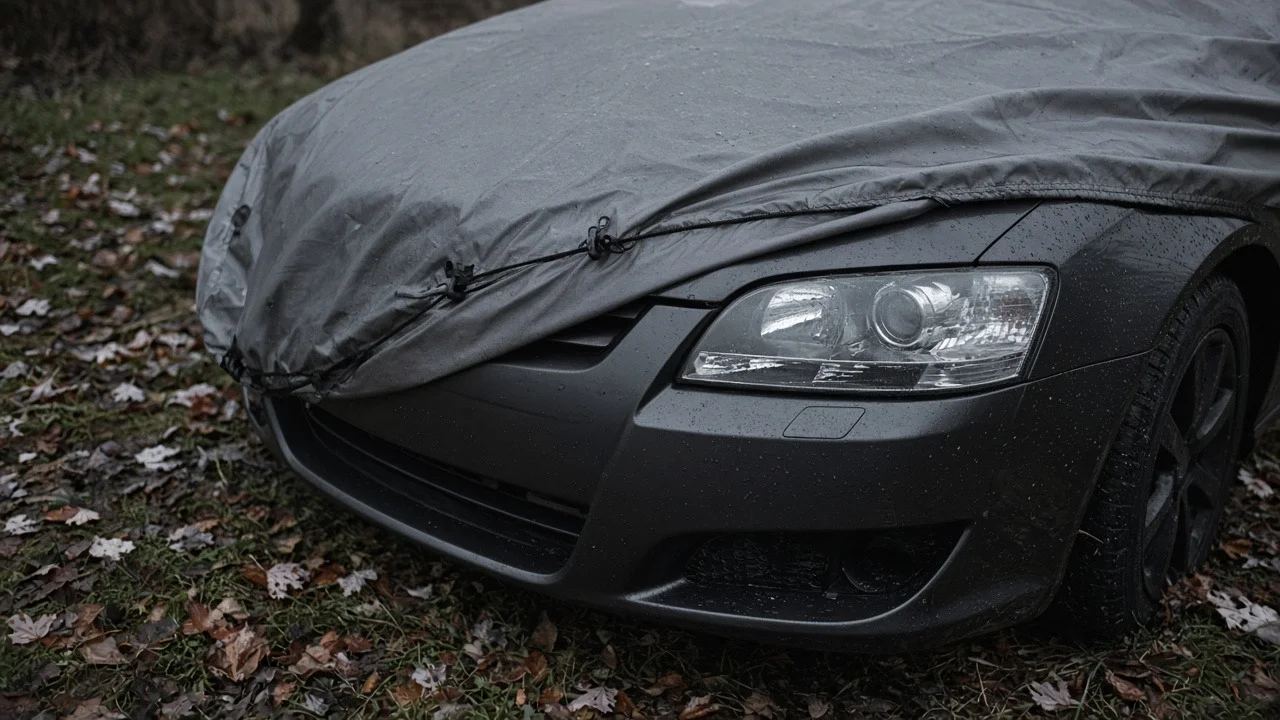
For the electrical system, either connect a maintenance charger designed for the battery type or disconnect the negative cable after confirming the vehicle does not require constant memory or security functions. Check tire pressures and consider raising pressures modestly within safe guidelines to reduce flat-spotting during long stationary periods. Inside the car, remove anything that can absorb moisture or attract pests, close windows and vents fully, and place a moisture-absorbing product if the cabin will stay sealed. Cover the vehicle with a breathable cover sized for the body and secure it against wind. Recheck the battery, tires, and cover after severe weather or every few weeks.